Rust and Corrosion Recalls: Which Cars and Which States
Which recalls name rust or corrosion, which states each covers, the 2026 Honda frame recall, which cars match the worst structure complaint years, and what to check when buying used.
Key takeaways
- 678 NHTSA recalls name corrosion or rust as the cause, covering 72.3 million vehicles, and 59% are reported repaired. They reach brake lines, subframes, control arms, fuel lines, hood latches and even windshield wipers.
- Many of these recalls cover only certain states. 106 limit the remedy to vehicles sold or registered where roads are salted, and 18 states plus Washington, D.C. appear in all seven we compared. Whether your car qualifies depends on the recall’s exact wording about where it was sold or registered.
- NHTSA’s “structure” complaints are not rust complaints: they cover doors, trim, body panels and frames. Some of the worst years do match corrosion recalls, such as the 2004–2005 Toyota Sienna (spare tire carrier cable) and the 2000 Toyota Tundra (rear crossmember), but the 2016–2017 Ford Explorer’s structure recalls are for trim, not rust.
- Honda’s June 2026 recall of about 880,000 Pilot, Ridgeline, Passport and Acura MDX models (26V365) is limited to 23 states and Washington, D.C. Check your VIN: recall repairs are free, including for rust-related defects.
Rust is a recall issue as well as a cosmetic one: NHTSA’s file contains hundreds of recalls where corroded brake lines, subframes, control arms, fuel lines and latches can cause a loss of control or a fire, and many apply only to cars sold or registered in states that salt their roads. Most lists of cars that rust are opinion; this guide uses NHTSA’s recall and complaint files to show which recalls name corrosion, which states they cover, and which cars and years they apply to.
Corrosion recalls: what rusts and how many cars
We count a recall when NHTSA’s own summary or subject names corrosion or rust. They fall under many parts of the car, and rust is not just a body problem:
| NHTSA component | Recalls | Vehicles |
|---|---|---|
| Visibility (wipers, mirrors, glass) | 108 | 3,507,483 |
| Suspension | 78 | 14,280,980 |
| Electrical system | 77 | 2,437,967 |
| Service brakes, hydraulic | 65 | 9,915,841 |
| Structure (frame, body) | 48 | 16,054,370 |
| Fuel system, gasoline | 41 | 6,731,649 |
| Steering | 30 | 2,401,181 |
Source: NHTSA recalls file and US DOT completion data, retrieved Oct 6, 2026; computed by PlainVIN. A vehicle in more than one recall is counted in each.
Looking at the parts named in the recall text, the same few failures repeat. Recalls and vehicle counts overlap, because one recall can name several parts:
| Part | Recalls | Vehicles |
|---|---|---|
| Control arms, trailing arms, links, subframes, crossmembers, axles | 70 | 16,205,365 |
| Fuel lines, tanks, straps, pumps | 55 | 7,797,812 |
| Brake lines, hoses, tubes, boosters | 26 | 4,955,552 |
| Hood latches | 10 | 4,663,563 |
| Springs and shocks | 18 | 4,254,504 |
| Wipers | 17 | 2,933,210 |
| Spare tire carriers | 5 | 1,410,566 |
Some of the largest, with NHTSA’s campaign numbers and repair rates:
- Nissan Altima 2013–2018 (20V315): if the primary hood latch is released, the secondary latch may corrode and stick, so the hood could open while driving. About 1.83 million vehicles, 49% repaired. See doors and hoods that open while driving for the other latch recalls.
- Toyota Tacoma 2005–2011 (14V604): a rear leaf spring may fracture from stress or corrosion and puncture the fuel tank. About 711,000 vehicles, 48% repaired. See our suspension recalls guide.
- GM Chevrolet Equinox and GMC Terrain 2014–2015 (22V165): corroded wiper module ball joints can stop the wipers. About 682,000 vehicles, 49% repaired.
- Mazda3 2010–2013, Mazda5 2012–2015, CX-5 2013–2016 and CX-3 2016 (16V644): the lift gate stays may corrode and the gate fall. About 580,000 vehicles, 65% repaired.
- Ford Fusion and Lincoln MKZ 2013–2015 and 2015 Edge (15V250): salt corrosion of bolts can let the steering gear motor detach, causing a loss of power steering assist. About 487,000 vehicles, 91% repaired.
- Subaru Outback, Legacy, Impreza, WRX and Forester (14V311): brake line corrosion may leak brake fluid and lengthen stopping distances. About 461,000 vehicles, 45% repaired. Our brake problems guide covers the other brake recalls.
| Filed | Vehicles (NHTSA wording) | Problem | Units | Repaired |
|---|---|---|---|---|
| May 2020 20V315000 | Certain model year 2013-2018 Nissan Altima vehicles | Unintentional Release of Primary Hood Latch | 1,831,818 | 49% |
| Jun 2026 26V365000 | Certain 2016-2022 Honda Pilot, 2017-2023 Ridgeline, 2019-2023 Passport, and 2014-2020 Acura MDX vehicles that were sold in Connecticut, Delaware, District of Columbia, Illinois and others | Rear Suspension Components May Fail | 880,514 | – |
| Mar 2022 22V165000 | Certain 2014-2015 Chevrolet Equinox and GMC Terrain vehicles | Windshield Wipers May Fail | 681,509 | 49% |
| Jan 2022 22V024000 | Certain 2014-2016 Rogue vehicles | Electrical Connector Under Dash May Corrode | 664,779 | 63% |
| Sep 2020 20V543000 | Hyundai | ABS Unit may cause Engine Compartment Fire | 652,024 | 96% |
| Jul 2021 21V537000 | Certain 2013-2017 Explorer vehicles originally sold, or ever registered, in Connecticut, Delaware, Illinois, Indiana, Iowa, Kentucky, Maine, Maryland, Massachusetts, Michigan and others | Rear Suspension Toe Link Fracture | 631,176 | 67% |
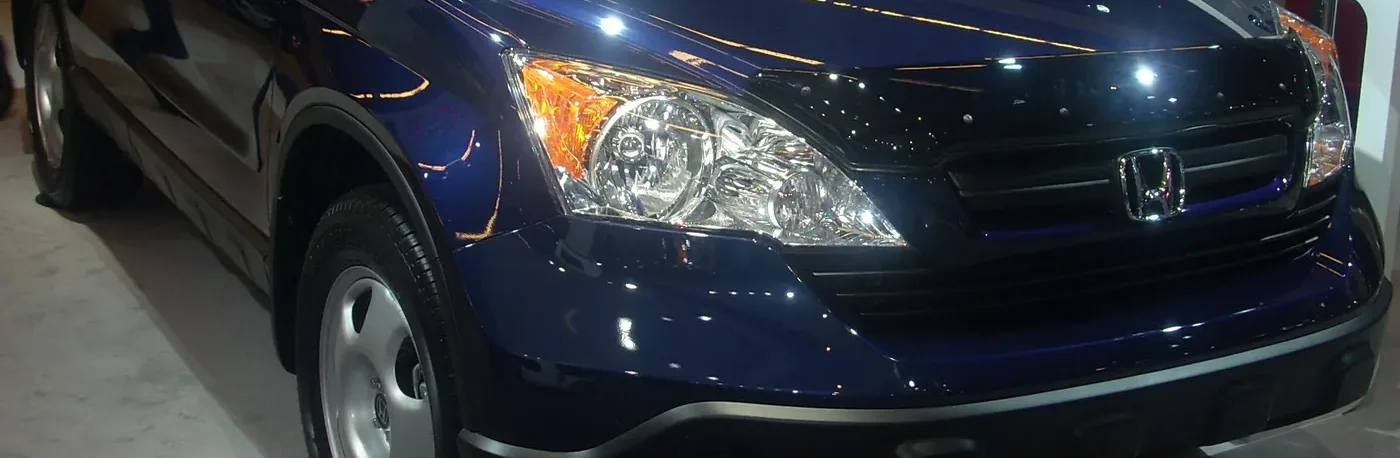
| Mar 2023 23V228000 | Certain 2007-2011 CR-V vehicles that were sold, or ever registered in Connecticut, Delaware, Illinois, Indiana, Iowa, Kentucky, Maine, Maryland, Massachusetts, Michigan, Minnesota and others | Rear Trailing Arm May Detach from Frame Corrosion | 616,128 | 50% |
| Dec 2019 19V904000 | Certain 2006-2010 Ford Fusion, Mercury Milan, Lincoln Zephyr and MKZ vehicles | ABS Valve May Remain Open after ABS Event | 600,166 | 32% |
| Sep 2016 16V644000 | Certain model year 2010-2013 Mazda3 and Mazdaspeed3 vehicles manufactured November 18, 2008, to June 8, 2013, 2012-2015 Mazda5 vehicles manufactured October 26, 2010, to June 22 and others | Rear Lift Gate may Fall if Lift Gate Stays Corrode | 580,455 | 65% |
| Jun 2017 17V358000 | Certain 2013-2017 Santa Fe and Santa Fe Sport vehicles | Secondary Hood Latch may Bind and not Latch | 437,400 | 81% |
Vehicle descriptions are NHTSA’s own summary wording; “repaired” is the share the manufacturer reports as fixed, and new campaigns start near zero. Source: NHTSA recalls file and US DOT completion data, retrieved Oct 6, 2026.
Is your state covered? The salt-state recalls
Several of the biggest corrosion recalls apply only to vehicles tied to certain states, because the defect shows up where road salt is used. We compared seven of them. Eighteen states and Washington, D.C. appear in all seven: Connecticut, Delaware, Illinois, Indiana, Maine, Maryland, Massachusetts, Michigan, Minnesota, New Hampshire, New Jersey, New York, Ohio, Pennsylvania, Rhode Island, Vermont, West Virginia and Wisconsin. Four more vary: Iowa and Missouri are in six of the seven, and Kentucky and Virginia are in four.
| Recall | What corrodes | Vehicles covered | Units | Repaired |
|---|---|---|---|---|
| Honda 23V228 (2023) | Frame, so the rear trailing arm can detach | 2007–2011 CR-V | 616,128 | 50% |
| Honda 26V365 (2026) | Rear subframe and suspension components | 2014–2020 Acura MDX, 2016–2022 Pilot, 2017–2023 Ridgeline, 2019–2023 Passport | 880,514 | n/a |
| Ford 21V537 (2021) | Road salt corrodes a ball joint, so the rear toe link can fracture | 2013–2017 Explorer | 631,176 | 67% |
| Ford 15V250 (2015) | Steering gear bolts | 2013–2015 Fusion, MKZ; 2015 Edge | 487,301 | 91% |
| Subaru 14V311 (2014) | Brake lines | 2005–2009 Outback and Legacy, 2008–2011 Impreza, 2008–2014 WRX, 2009–2013 Forester | 461,338 | 45% |
| Toyota 14V273 (2014) | Spare tire carrier cable | 2004–2011 Sienna | 419,520 | 37% |
| Hyundai 13V354 (2013) | Crossmember, so a control arm can come loose | 2006–2010 Sonata, 2006–2011 Azera | 364,502 | 56% |
Source: NHTSA recall records, retrieved Oct 6, 2026. Ford’s other Explorer toe-link recalls (19V435, 20V675, 26V101) don’t name corrosion; see our suspension guide.
The records show why you should read the wording. Honda’s recall covers vehicles “sold, or ever registered” in the listed states, so a CR-V that moved south may still qualify. Subaru’s covers vehicles “currently, or formerly, registered” there. Toyota’s and Hyundai’s cover vehicles “originally sold in, or currently registered in” them, so a car that was first sold in a salt state but registered somewhere else could be treated differently. NHTSA’s record for Honda’s recall gives the cause:
“An accumulation of road salt may cause the frame to corrode and possibly detach the rear trailing arm.”NHTSA recall record for Honda campaign 23V228, nhtsa.gov
Structure complaints: which cars and years
| Model | Model years | Complaints naming it | Share of the model’s complaints |
|---|---|---|---|
| Ford Explorer | 1984–2026 | 5,245 | 15.2% |
| Toyota Sienna | 1996–2022 | 2,752 | 31.2% |
| Ford Escape | 2001–2025 | 2,296 | 8.4% |
| Toyota Tacoma | 1995–2026 | 2,198 | 26.1% |
| Ford F-150 | 1985–2026 | 2,113 | 5.5% |
| Dodge RAM 1500 | 1993–2012 | 2,029 | 16.4% |
| Toyota 4Runner | 1985–2025 | 1,807 | 30.7% |
| Toyota Camry | 1986–2024 | 1,782 | 9.8% |
| Nissan Altima | 1993–2025 | 1,752 | 11.3% |
| Toyota Tundra | 1999–2026 | 1,730 | 25.0% |
| Honda Odyssey | 1995–2026 | 1,406 | 11.0% |
| Jeep Grand Cherokee | 1990–2026 | 1,333 | 4.5% |
Counts of owner reports, not verified defects or rates; models that sold in larger numbers draw more complaints. The share compares with all complaints for that model over the same model years. Source: NHTSA owner complaints file, retrieved Oct 6, 2026; computed by PlainVIN.
| Vehicle | Complaints naming it | Share of that year’s complaints |
|---|---|---|
| 2004 Toyota Sienna | 962 | 47% |
| 2020 Ford Escape | 670 | 42% |
| 2017 Ford Explorer | 657 | 39% |
| 2016 Ford Explorer | 589 | 24% |
| 2001 Dodge RAM 1500 | 548 | 49% |
| 2000 Toyota Tundra | 529 | 52% |
| 2005 Toyota Sienna | 499 | 44% |
| 2002 Ford Explorer | 486 | 15% |
| 2013 Ford Explorer | 438 | 20% |
| 2005 Ford Escape | 434 | 31% |
| 2004 Ford Explorer | 426 | 33% |
| 2005 Chrysler Pacifica | 413 | 33% |
| 2015 Ford Explorer | 410 | 23% |
| 2005 Jeep Grand Cherokee | 405 | 20% |
Source: NHTSA owner complaints file, retrieved Oct 6, 2026; computed by PlainVIN.
NHTSA’s “structure” category is broader than rust: it covers the frame and body, doors, hatches, pillars and trim. We can’t tell from the category whether a complaint is about corrosion. Checking the worst years against the recall file shows the difference:
- Toyota Sienna 2004–2005 (47% and 44% of complaints): a corrosion match. Toyota recalled the 2004–2011 Sienna in 2014 because the spare tire carrier cable corrodes from road salt (14V273), after an earlier 2010 recall for the same cable (10V160, about 600,000 vehicles).
- Toyota Tundra 2000 (52%): a corrosion match. A 2009 recall covers rear crossmember assembly corrosion (09V444, about 110,000 vehicles).
- Ford Explorer 2016 and 2017 and Ford Escape 2020: not rust. Their structure recalls are for exterior A-pillar trim that may detach (24V031, about 1.89 million vehicles, 21% repaired), roof rail covers (21V316, 26V448) and liftgate hinge covers (25V829).
- Dodge Ram 1500 2001, Ford Escape 2005 and Chrysler Pacifica 2005: heavy structure complaint shares, but no structure or corrosion recall for those years in NHTSA’s file.
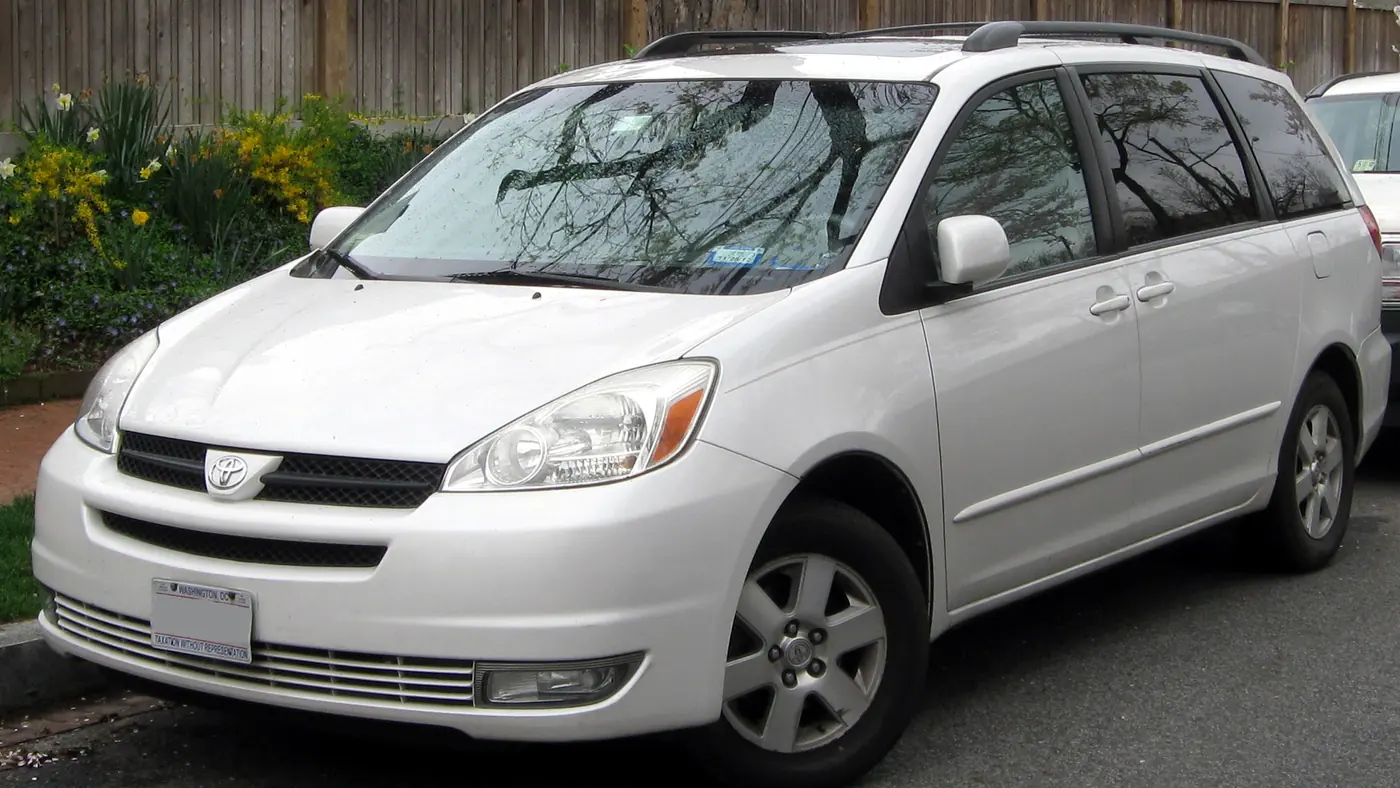
“If the carrier cable is corroded due to road salt, the spare tire may separate from the vehicle, increasing the risk of a crash.”NHTSA recall record for Toyota campaign 14V273, nhtsa.gov
Corrosion recalls in 2026
| Filed | Vehicles (NHTSA wording) | Problem | Units | Repaired |
|---|---|---|---|---|
| Jun 2026 26V365000 | Certain 2016-2022 Honda Pilot, 2017-2023 Ridgeline, 2019-2023 Passport, and 2014-2020 Acura MDX vehicles that were sold in Connecticut, Delaware, District of Columbia, Illinois and others | Rear Suspension Components May Fail | 880,514 | – |
| Jul 2026 26V481000 | Certain 2020-2021 CLA, 2019-2022 A-Class, 2022-2023 C-Class, 2024 CLE, 2020-2026 GLA/GLB, and 2023-2024 GLC vehicles | Rollaway Risk from Door Switch Failure | 310,667 | – |
| Jun 2026 26V389000 | Certain 2020-2026 Land Rover Defender, 2021-2026 Discovery, and 2022-2026 Range Rover vehicles | Driver's Air Bag May Not Deploy in a Crash | 250,857 | – |
| Sep 2026 26V590000 | Certain 2018 Tiguan, 2018-2019 Atlas, and 2019-2021 Audi Q3 vehicles | Loss of Steering Control from Bolt Failure | 208,724 | – |
| Apr 2026 26V252000 | Certain 2018-2022 Outlander PHEV and 2014-2020 Outlander vehicles | Liftgate Gas Springs May Rupture | 108,046 | 2% |
| Aug 2026 26V514000 | Certain 2024 Tacoma Hybrid and 2024-2025 Tacoma vehicles | Front and Rear Shock Absorber Reservoirs May Detach | 48,280 | – |
| Feb 2026 26V113000 | Certain 2012–2013 Buick Regal Turbo and GS trim-level vehicles that were sold or ever registered, in Connecticut, Delaware, District of Columbia, Illinois, Indiana, Iowa and others | Rear Toe Links May Fracture | 17,050 | 22% |
| Jan 2026 26V031000 | Certain 2024-2025 Chevrolet Blazer EV vehicles that may have been repaired incorrectly under recall 25V433 | Damaged Parking Brake Wiring Harness | 20 | 80% |
Vehicle descriptions are NHTSA’s own summary wording; “repaired” is the share the manufacturer reports as fixed, and new campaigns start near zero. Source: NHTSA recalls file and US DOT completion data, retrieved Oct 6, 2026.
The largest is Honda’s June 2026 recall of about 880,000 2016–2022 Pilot, 2017–2023 Ridgeline, 2019–2023 Passport and 2014–2020 Acura MDX vehicles sold or registered in 23 states and Washington, D.C. (26V365). A corroding rear subframe can lead to failure of rear suspension components such as the rear control arm, and NHTSA’s record warns of “a loss of vehicle handling and control.” CBS News reported Honda’s estimate that only about 1% of the recalled vehicles actually have the defect; owners still need the inspection. Other 2026 recalls in the table include Land Rover’s recall of Defender, Discovery and Range Rover models whose driver’s air bag clockspring connector may corrode (26V389, covered in our air bag guide) and a BMW “park outside” recall for a starter that may corrode and overheat (26V441). Our park-outside recall list covers the fire-risk recalls.
Buying or owning a car that could rust
- Check your VIN for recalls at NHTSA or with our VIN decoder, which links to your model year’s recalls. Rust-related recall repairs are free at a franchised dealer.
- Know where the car has lived. If it was sold or registered in a state on a recall’s list, ask the dealer whether it qualifies, and read the recall’s wording about original sale versus current or former registration.
- Buying used? Ask for the registration history and inspect the underbody: frame rails, subframes, brake lines and suspension mounts. Our used car inspection checklist covers the walk-around, and the flood damage check covers corrosion from water damage.
- Don’t assume no recall means no problem. Manufacturers also run service campaigns and warranty extensions for rust that don’t appear in NHTSA’s recall file, so our counts don’t include them. A frame that is rusting without a recall is still worth reporting.
- Report it. If a part failed from rust, file a complaint with NHTSA; complaint patterns are how regional recalls begin. See the most common car problems for how structure compares with other problem areas.
Corroded liftgate stays are covered in our liftgate and hood strut recalls guide.
Complaint and recall figures are PlainVIN’s analysis of NHTSA’s files and update when we refresh the data; complaints are owner reports, not verified defects. A recall is counted as corrosion-related when its subject or summary names corrosion or rust. This guide is general information, not mechanical advice for a specific vehicle.
Frequently asked questions
Which cars have the worst rust problems?
NHTSA’s data doesn’t measure rust directly, so it can’t rank cars by rust. It does show recalls where corrosion is named as the cause, including the 2007–2011 Honda CR-V frame (23V228), 2004–2011 Toyota Sienna spare tire carrier cable (14V273), 2006–2010 Hyundai Sonata crossmember (13V354) and 2013–2018 Nissan Altima hood latch (20V315).
Is there a recall for rusty frames?
Yes. Honda recalled about 616,000 2007–2011 CR-Vs in 2023 (23V228) because road salt can corrode the frame and detach the rear trailing arm, and about 880,000 2016–2022 Pilots, 2017–2023 Ridgelines, 2019–2023 Passports and 2014–2020 Acura MDX models in 2026 (26V365) for rear subframe corrosion. Both are limited to certain states.
Which states are covered by the rust recalls?
It depends on the recall. Eighteen states and Washington, D.C. appear in all seven corrosion recalls we compared: Connecticut, Delaware, Illinois, Indiana, Maine, Maryland, Massachusetts, Michigan, Minnesota, New Hampshire, New Jersey, New York, Ohio, Pennsylvania, Rhode Island, Vermont, West Virginia and Wisconsin. Iowa, Missouri, Kentucky and Virginia are in some but not all.
Does my car qualify if I bought it in a non-salt state?
Check the recall’s wording. Honda’s covers vehicles “sold, or ever registered” in the listed states, so a car that lived there at any time may qualify; Toyota’s and Hyundai’s cover vehicles “originally sold in, or currently registered in” them. Ask a dealer or check your VIN.
Are rust repairs covered by a recall?
If your car is covered by a corrosion recall, the repair or inspection is free at a franchised dealer. Rust outside a recall is not covered by NHTSA recalls, although manufacturers sometimes run separate service campaigns or warranty extensions.
What does ‘structure’ mean in NHTSA complaints?
It is the category for the frame and body, doors, hatches, pillars and trim. It includes rust but is much broader, so a high structure complaint share doesn’t necessarily mean a rust problem.
How do I check if my car has a corrosion recall?
Enter the 17-character VIN at nhtsa.gov/recalls or on the automaker’s owner site. Our VIN decoder also links to your model year’s recall page.
About the PlainVIN Recalls & Safety Desk
This desk covers recall campaigns and completion rates, owner complaints filed with NHTSA, and NHTSA 5-Star Safety Ratings.
Every figure in this guide links to its primary source. See our editorial policy, how we use AI and corrections log.
How this page was madeSources, processing, limits, review and changes
Data sources
- NHTSA owner complaints file (component: structure) and recalls file, including campaigns 23V228, 26V365, 21V537, 15V250, 14V311, 14V273, 13V354, 20V315, 14V604, 22V165, 16V644, 10V160, 09V444, 24V031 and 26V389
Retrieved Oct 6, 2026 - NHTSA recall record, Honda campaign 23V228
nhtsa.gov - NHTSA recall record, Toyota campaign 14V273
nhtsa.gov - CBS News, Honda recalls more than 880,000 vehicles for suspension issue (June 10, 2026)
cbsnews.com
Processing
- Complaints are counted per component. One complaint can list several, so component totals add up to more than the total.
- Fuel cost = miles per year ÷ EPA combined mpg × EIA weekly price for your region.
Limitations
- Complaint counts are owner reports, not verified findings or failure rates. There is no sales denominator.
- Recall campaigns are listed for the model year. Only NHTSA and the automaker know whether a specific car was repaired.
- Recent model years are still collecting reports.
Review
Researched by Daniel B. and Olivia C., technical check by Ethan B., edited by Sophia M. (see the editorial team page). Drafted with AI assistance and checked against primary sources by the Recalls & Safety desk.
Changelog
- 2026-10-06 Data refreshed from the official files.
Keep reading