Air Bag Problems and Recalls Beyond Takata: Light On, Won’t Deploy
What the air bag warning light means, the recalls for air bags that may not deploy or may deploy by mistake, the 2026 recalls and the cars still mostly unrepaired, beyond Takata.
Key takeaways
- An air bag warning light means the system has found a fault, and the air bags may not deploy in a crash. Federal rules require a readiness indicator for exactly this reason, and the car will still drive, so the risk is easy to ignore.
- Takata is only part of the story. 739 air bag recalls are not about an inflator rupturing: 341 involve air bags that may not deploy, covering 36.8 million vehicles.
- Toyota’s 2020 recall of 2.9 million Corollas, Matrix and Avalons for a faulty air bag control unit, Nissan’s 2016 recall of 3.3 million cars for a seat sensor error, and GM’s 2016 recall of 3.6 million vehicles are the largest. Several 2026 recalls are only 8–29% repaired.
- Honda’s May 2026 recall (26V332) covers about 98,900 vehicles whose passenger seat weight sensor can crack and short circuit, causing air bags to deploy unintentionally. Check your VIN: air bag recall repairs are free.
If your air bag warning light is on, the car’s air bag system has detected a fault and your air bags may not deploy in a crash, even though the car drives normally. Most of what is written about air bag recalls is about Takata inflators that can rupture; this guide covers the rest: air bags that may not deploy, may deploy by mistake, or are switched off by a faulty sensor, and which cars NHTSA’s files link to them. For the Takata recalls themselves, see our Takata air bag recall guide.
Air bag complaints: which cars and years
| Model | Model years | Complaints naming it | Share of the model’s complaints |
|---|---|---|---|
| Toyota Corolla | 1991–2026 | 4,676 | 40.2% |
| Honda Accord | 1990–2025 | 4,035 | 16.7% |
| Ford Fusion | 2006–2020 | 3,530 | 15.8% |
| Honda Civic | 1990–2026 | 2,857 | 17.9% |
| Ford Mustang | 1990–2024 | 2,532 | 26.1% |
| Chevrolet Silverado 1500 | 1994–2025 | 2,410 | 13.3% |
| Honda CR-V | 1997–2026 | 2,389 | 14.9% |
| Jeep Grand Cherokee | 1993–2025 | 2,300 | 7.8% |
| Dodge RAM 1500 | 1994–2012 | 2,213 | 17.8% |
| Hyundai Sonata | 1991–2025 | 2,043 | 12.7% |
| Nissan Altima | 1993–2025 | 1,953 | 12.6% |
| Ford Ranger | 1990–2025 | 1,886 | 23.1% |
Counts of owner reports, not verified defects or rates; models that sold in larger numbers draw more complaints. The share compares with all complaints for that model over the same model years. Source: NHTSA owner complaints file, retrieved Oct 6, 2026; computed by PlainVIN.
| Vehicle | Complaints naming it | Share of that year’s complaints |
|---|---|---|
| 2008 Ford Fusion | 638 | 47% |
| 2007 Ford Fusion | 615 | 58% |
| 2008 Chevrolet Silverado 1500 | 594 | 65% |
| 2010 Ford Fusion | 591 | 12% |
| 2008 Jeep Wrangler | 559 | 29% |
| 2009 Toyota Corolla | 552 | 38% |
| 2002 Jeep Liberty | 546 | 30% |
| 2013 Nissan Altima | 514 | 22% |
| 2007 Chevrolet Tahoe | 500 | 42% |
| 2002 Jeep Grand Cherokee | 496 | 32% |
| 2007 Chevrolet Silverado 1500 | 479 | 56% |
| 2003 Dodge RAM 1500 | 457 | 39% |
Source: NHTSA owner complaints file, retrieved Oct 6, 2026; computed by PlainVIN.
For the Toyota Corolla, 40% of all complaints name the air bags, far above the 10% average across the file. Complaints are owner reports, so a popular model draws more of them, but the pattern behind these particular years is not a mystery, as the next section shows.
How many of the worst years are Takata years
We checked each of the worst model years against NHTSA’s recall file. Most of them are inflator recall years:
- 2007–2008 Ford Fusion and 2005 Ford Mustang: passenger and driver inflator recalls (16V384, 17V024 and 21V158 for the Fusion; about 22% to 35% reported repaired).
- 2008 Chevrolet Silverado 1500 and 2007 Tahoe: GM’s 2021 inflator recalls (21V050 and 21V052, 44% to 55% repaired).
- 2005, 2006 and 2009 Toyota Corolla: Takata inflator recalls, such as 15V285 and 15V286 for 2005 and 2006 models and 16V340 and 18V024 for 2009 models.
- 2008 Jeep Wrangler and 2003 Ram 1500: “do not drive” inflator recalls (16V352, 15V312), plus a separate clockspring recall for the Wrangler, covered below.
Those recalls are the subject of our Takata guide and the do-not-drive recall list. Other worst years match recalls of a different kind: the 2009 Corolla also has a recall for a driver’s air bag that may not deploy (14V168), the 2002 Jeep Liberty has two recalls for unexpected air bag deployment (12V527 and 15V046, about 30% and 18% repaired), and the 2013 Nissan Altima has three recalls for a seat sensor that can switch the passenger air bag off (13V069, 14V138, 16V244).
Air bag recalls beyond Takata: what fails
| Automaker | Campaigns | Vehicles potentially affected | Repaired (vehicle-weighted) | Est. not yet repaired |
|---|---|---|---|---|
| General Motors | 28 | 7,357,761 | 84% | 1,175,438 |
| Toyota | 23 | 6,646,404 | 66% | 2,265,422 |
| Stellantis (FCA US) | 26 | 4,530,894 | 53% | 2,136,868 |
| Nissan | 7 | 4,290,736 | 79% | 886,557 |
| Ford | 17 | 1,829,285 | 68% | 587,682 |
| Volkswagen Group | 26 | 1,313,385 | 84% | 215,390 |
| Kia | 7 | 1,267,500 | 60% | 512,177 |
| Hyundai | 10 | 737,016 | 70% | 218,530 |
| Honda | 5 | 527,772 | 71% | 151,723 |
| Jaguar Land Rover | 8 | 356,288 | 76% | 25,574 |
“Repaired” weights each campaign’s reported completion rate by its vehicle count; “not yet repaired” is the matching estimate. A vehicle in several campaigns is counted in each. Source: NHTSA recalls file and US DOT completion data, retrieved Oct 6, 2026; computed by PlainVIN.
GM has the most vehicles in these recalls and has repaired the most, about 84%. By our estimate, roughly 2.3 million Toyota vehicles and 2.1 million Stellantis (Chrysler, Dodge, Jeep and Ram) vehicles in them are still unrepaired.
The recalls fall into a handful of groups. This table consolidates the biggest example from each, using NHTSA’s campaign numbers and completion rates:
| What fails | Recall | Vehicles covered | Units | Repaired |
|---|---|---|---|---|
| Control unit fault can disable air bags and belt pretensioners | Toyota 20V024 (2020) | 2011–2019 Corolla, 2011–2013 Matrix, 2012–2018 Avalon | 2,891,976 | 70% |
| Front air bags or pretensioners may not deploy | GM 16V651 (2016) | 2014–2017 Silverado, Corvette, Encore, LaCrosse and other GM models | 3,640,162 | 90% |
| Seat sensor error can switch the passenger air bag off | Nissan 16V244 (2016) | 2013–2017 Altima, Maxima, Rogue, Murano, Pathfinder and other models | 3,296,947 | 77% |
| Seat sensor short circuit | Toyota 23V865 (2023) | 2020–2022 Camry, Corolla, RAV4, Highlander and Lexus models | 999,901 | 58% |
| Wiring in the steering column breaks the driver air bag circuit | Toyota 14V168 (2014) | 2006–2010 RAV4, Yaris, Highlander, Corolla and others | 1,486,413 | 58% |
| Clockspring contaminated with dust | Jeep 16V290 (2016) | 2007–2010 Wrangler | 388,532 | 51% |
| Rollover side curtain air bags disabled by a sensor fault | Ram 17V302 (2017) | 2013–2016 Ram 1500, 2500, 3500 | 1,021,279 | 68% |
| Air bags deploy by mistake | Honda 24V064 (2024) | 2020–2022 Accord, Civic, CR-V, Pilot and Acura models | 750,114 | 54% |
Source: NHTSA recalls file and US DOT completion data, retrieved Oct 6, 2026; table compiled by PlainVIN from each campaign’s record.
NHTSA’s record for GM’s 2016 recall states the consequence of a non-deploying air bag plainly:
“A failure of the front air bags or seat belt pretensioners to deploy in the event of a crash necessitating deployment increases the risk of injury to the driver and front passenger.”NHTSA recall record for General Motors campaign 16V651, nhtsa.gov
Seat occupant sensors deserve special attention because they sit under the seat and fail quietly. Nissan’s 2014 and 2016 recalls, Toyota’s 2023 recall and Subaru’s 2024 recall of 2020–2022 Outback and Legacy models (24V227, a sensor capacitor that can short and prevent the passenger air bag deploying) all involve them. Seat belt pretensioners fire with the air bags, so some of these recalls also affect seat belt performance, and an ignition switch that turns off can disable air bags too, as in the ignition-switch recalls we cover.
| Filed | Vehicles (NHTSA wording) | Problem | Units | Repaired |
|---|---|---|---|---|
| Sep 2016 16V651000 | Certain model year 2015-2017 Chevrolet Silverado 2500 HD, 3500 HD, Tahoe, Suburban, GMC Sierra 2500 HD and 3500 HD, GMC Yukon, GMC Yukon XL and others | Frontal Air Bags May Not Deploy | 3,640,162 | 90% |
| Apr 2016 16V244000 | Certain model year 2016-2017 Nissan Maxima, 2013-2016 Nissan Altima, NV200, LEAF, Sentra, and Pathfinder, 2014-2016 Nissan NV200 Taxi, Infiniti QX60, QX60 Hybrid, and Q50 Hybrid and others | Passenger Air Bag may not Deploy due to OCS Error | 3,296,947 | 77% |
| Jan 2020 20V024000 | Certain 2011-2019 Corolla, 2011-2013 Matrix, 2012-2018 Avalon, and 2013-2018 Avalon Hybrid vehicles | Air Bags/Seat Belt Pretensioners may not Deploy | 2,891,976 | 70% |
| Sep 2016 16V668000 | Certain model year 2011-2014 Chrysler 200, 2010 Chrysler Sebring, 2010-2012 Dodge Caliber and 2010-2014 Jeep Patriot, Compass and Dodge Avenger vehicles | Air Bags/Seat Belt Pretensioners may be Disabled | 1,435,625 | 41% |
| May 2017 17V302000 | Certain model year 2013-2016 Ram 1500, Ram 2500, and 2014-2016 Ram 3500 vehicles | Side Curtain Air Bags may not Deploy in a Rollover | 1,021,279 | 68% |
| Dec 2023 23V865000 | Certain 2020-2021 Avalon, Avalon Hybrid, Corolla, Highlander, Highlander Hybrid, RAV4, RAV4 Hybrid, Lexus ES350, Lexus RX350, Lexus RX450H, 2021 Sienna Hybrid, Lexus ES250 and others | OCS Sensors May Short Circuit | 999,901 | 58% |
| Feb 2018 18V137000 | Certain 2011-2013 Sonata and 2011-2012 Sonata Hybrid vehicles | Air Bags/Seat Belt Pretensioners may be Disabled | 580,058 | 70% |
| Jun 2018 18V363000 | Certain 2010-2013 Kia Forte, Forte Koup, 2011-2013 Kia Optima and 2011-2012 Kia Optima Hybrid and Sedona vehicles | Air Bags/Seat Belt Pretensioners may be Disabled | 507,587 | 45% |
| May 2026 26V328000 | Certain 2022-2026 Jeep Grand Cherokee and 2023-2025 Jeep Grand Cherokee L vehicles | Side Air Bags May Not Deploy Properly/FMVSS 214 | 419,035 | 9% |
| Jan 2022 22V031000 | Certain 2017-2019 Sedona, Soul, Soul EV, 2017-2018 Forte, and 2017 Forte Koup vehicles | Air Bags May Not Deploy | 410,619 | 66% |
Vehicle descriptions are NHTSA’s own summary wording; “repaired” is the share the manufacturer reports as fixed, and new campaigns start near zero. Source: NHTSA recalls file and US DOT completion data, retrieved Oct 6, 2026.
Air bag recalls in 2026
| Filed | Vehicles (NHTSA wording) | Problem | Units | Repaired |
|---|---|---|---|---|
| Jan 2026 26V034000 | Certain 2020-2025 Palisade vehicles | Side Curtain Air Bag May Deploy Improperly/FMVSS 226 | 568,576 | 8% |
| Apr 2026 26V227000 | Certain 2018-2022 Odyssey vehicles | Air Bags May Deploy Unexpectedly | 440,830 | 29% |
| May 2026 26V328000 | Certain 2022-2026 Jeep Grand Cherokee and 2023-2025 Jeep Grand Cherokee L vehicles | Side Air Bags May Not Deploy Properly/FMVSS 214 | 419,035 | 9% |
| Mar 2026 26V189000 | Certain 2022-2026 Pacifica and Voyager vehicles | Improperly Sealed Side Curtain Air Bags/FMVSS 226 | 293,264 | 30% |
| Jun 2026 26V389000 | Certain 2020-2026 Land Rover Defender, 2021-2026 Discovery, and 2022-2026 Range Rover vehicles | Driver's Air Bag May Not Deploy in a Crash | 250,857 | – |
| May 2026 26V332000 | Certain 2018-2021, 2023 Acura TLX, 2019-2024 RDX, 2017-2020, 2022-2026 MDX, 2017-2021, 2023, 2025 Honda Ridgeline, 2017-2022 Pilot, 2019-2021 Passport, 2018-2026 Odyssey and others | Air Bags May Deploy Unintentionally During a Crash | 98,892 | – |
| Feb 2026 26V070000 | Certain 2020 and 2022-2023 Mercedes-Benz Metris right-hand-drive vehicles | Air Bags May Not Deploy | 52,360 | 21% |
| Aug 2026 26V545000 | Certain 2025-2026 EV9 vehicles | Occupant Detection System May Fail to Suppress Air Bag/FMVSS 208 | 21,290 | – |
| Mar 2026 26V180000 | Certain 2022-2024 Lexus LX vehicles | Front Passenger Air Bag May Not Deploy Properly/FMVSS 208 | 15,264 | – |
| Mar 2026 26V201000 | Certain 2025-2026 Bronco Sport and Maverick vehicles | Front Passenger Air Bag May Not Deploy/FMVSS 208 | 3,170 | 9% |
Vehicle descriptions are NHTSA’s own summary wording; “repaired” is the share the manufacturer reports as fixed, and new campaigns start near zero. Source: NHTSA recalls file and US DOT completion data, retrieved Oct 6, 2026.
- Hyundai Palisade 2020–2025 (26V034): third-row side curtain air bags may deploy improperly. About 569,000 vehicles, only 8% reported repaired.
- Honda Odyssey 2018–2022 (26V227): a software error can make the side and side curtain air bags deploy unexpectedly. About 441,000 vehicles, 29% repaired.
- Jeep Grand Cherokee 2022–2026 and Grand Cherokee L 2023–2025 (26V328): a software error in the occupant restraint controller can delay side air bag deployment. About 419,000 vehicles, 9% repaired.
- Honda and Acura (26V332, May 2026): the front passenger seat weight sensor may crack and short circuit, which can cause the air bags to deploy unintentionally in a crash. About 98,900 vehicles across 2016–2026 Accord, Civic, CR-V, Pilot, Odyssey, Ridgeline, Passport and Acura TLX, RDX and MDX models. It follows Honda’s 2024 recall for unintentional air bag deployment (24V064).
- Land Rover Defender, Discovery and Range Rover 2020–2026 (26V389): the driver’s air bag clockspring connector may corrode, so the air bag may not deploy. About 251,000 vehicles.
- Kia EV9 2025–2026 (26V545): the occupant detection system may not turn off the air bag when a child or child seat is in the front passenger seat; NHTSA’s record says a child “may be at a greater risk of injury if the air bag deploys.”
New recalls start near zero repaired, and parts can take months. Ask a dealer when your repair is available, and follow any interim advice in the owner letter.
The air bag light: what it means
Every car with air bags must have a warning light for this system. The federal rule, FMVSS 208, says:
“The indicator shall monitor its own readiness and shall be clearly visible from the driver’s designated seating position.”49 CFR 571.208 (FMVSS 208), S4.5.2
| What you see | What it can mean | What to do |
|---|---|---|
| Light on for a few seconds at start-up, then off | The system’s normal self-check | Nothing; this is expected |
| Light stays on or comes on while driving | A stored fault: a sensor, control unit, wiring, clockspring or seat sensor, the kinds of failure in the recalls above | Check your VIN for a recall; have a shop read the fault code |
| Light came on after a seat was moved or reinstalled, or after a battery change | A loose connector under the seat, or a low-voltage event | Have the connectors checked; don’t just clear the code |
| “Passenger air bag off” light with an adult in the seat | The occupant sensor may be misreading, as in the Nissan and Subaru recalls | Check your VIN for an occupant sensor recall |
You can usually keep driving with the light on, but until the fault is repaired the air bags may not deploy, which is the situation it exists to warn you about. Unlike a check engine light, the fault can’t always be cleared by disconnecting the battery, as one repair shop explains; the underlying problem has to be fixed. Owner forums often suggest cleaning connectors or seat belt buckle contacts, which sometimes helps, but that is a guess, not a diagnosis, and a recall repair is free.
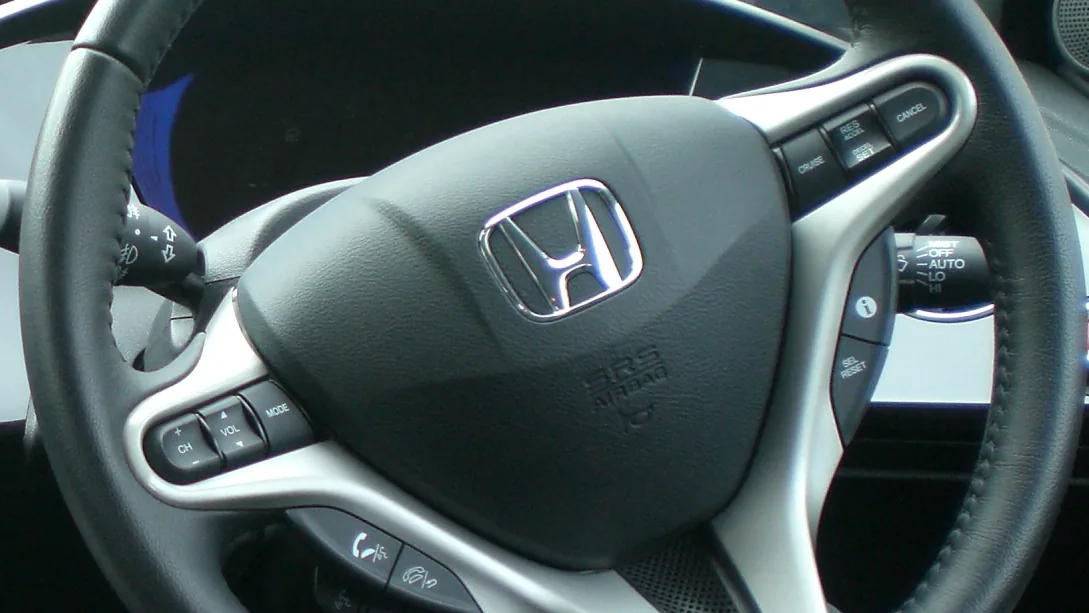
What to do
- Check your VIN for recalls at NHTSA or with our VIN decoder, which links to your model year’s recalls. Air bag recall repairs are free at a franchised dealer.
- If the light is on and there is no recall, have a shop read the fault code before spending money; the cause may be a seat sensor, a clockspring or a connector.
- Don’t carry a child in a seat where the passenger air bag status is in doubt. The Kia EV9 recall shows why; if the “passenger air bag off” indicator doesn’t match who is sitting there, get it checked.
- Buying used? An air bag light that stays on is a fault to price in or walk away from. Our used car inspection checklist covers the test drive.
- Report it. If air bags failed to deploy, deployed by mistake, or the light came on after a recall repair, file a complaint with NHTSA; complaints are how recalls begin. See the most common car problems for how air bags compare with other problem areas.
Complaint and recall figures are PlainVIN’s analysis of NHTSA’s files and update when we refresh the data; complaints are owner reports, not verified defects. This guide is general information, not mechanical or safety advice for a specific vehicle; check your VIN and ask a qualified technician about your car.
Frequently asked questions
Can I drive with the air bag light on?
The car will usually drive normally, but the light means the air bag system has found a fault and the air bags may not deploy in a crash. Have it checked soon and look for a recall first, since air bag recall repairs are free.
Is there a recall for air bags that don’t deploy?
Yes, many. Toyota recalled 2.9 million 2011–2019 Corolla, 2011–2013 Matrix and 2012–2018 Avalon models in 2020 (20V024) for a control unit fault, GM recalled 3.6 million vehicles in 2016 (16V651), and Nissan recalled 3.3 million cars in 2016 for a seat sensor error (16V244). Check your VIN.
What does the passenger air bag off light mean?
It shows the front passenger air bag is switched off, which is normal when the seat is empty or holds a child or child seat. If it shows with an adult in the seat, the occupant sensor may be misreading. Nissan, Toyota and Subaru have all recalled such sensors.
Which Honda models are in the 2026 air bag recall?
Honda’s May 2026 recall (26V332, about 98,900 vehicles) covers certain 2016–2026 Accord, Civic, CR-V, Pilot, Odyssey, Ridgeline, Passport and Acura TLX, RDX and MDX models. The front passenger seat weight sensor may crack and short circuit, which can cause the air bags to deploy unintentionally in a crash.
Is an air bag recall the same as the Takata recall?
No. Takata recalls are about inflators that can rupture. The recalls in this guide involve air bags that may not deploy, may deploy by mistake, or are disabled by a faulty sensor or wiring. Both are free to fix.
Will the air bag light go off by itself?
Sometimes it clears if the cause was temporary, but a stored fault usually returns and the air bags may still be disabled. Disconnecting the battery doesn’t always clear it, so have the fault code read.
How do I check if my car has an air bag recall?
Enter the 17-character VIN at nhtsa.gov/recalls or on the automaker’s owner site. Our VIN decoder also links to your model year’s recall page.
About the PlainVIN Recalls & Safety Desk
This desk covers recall campaigns and completion rates, owner complaints filed with NHTSA, and NHTSA 5-Star Safety Ratings.
Every figure in this guide links to its primary source. See our editorial policy, how we use AI and corrections log.
How this page was madeSources, processing, limits, review and changes
Data sources
- NHTSA owner complaints file (component: air bags) and recalls file, including campaigns 20V024, 16V651, 16V244, 14V138, 13V069, 23V865, 24V227, 14V168, 16V290, 17V302, 15V043, 15V459, 12V527, 15V046, 24V064, 26V332, 26V227, 26V034, 26V328, 26V389 and 26V545
Retrieved Oct 6, 2026 - 49 CFR 571.208, FMVSS 208 Occupant crash protection, S4.5.2 Readiness indicator
eCFR, read Oct 14, 2026 - NHTSA recall record, General Motors campaign 16V651
nhtsa.gov - Small World Auto Repair, What should I do if my airbag light is on (May 30, 2025)
smallworldauto.com
Processing
- Complaints are counted per component. One complaint can list several, so component totals add up to more than the total.
- Fuel cost = miles per year ÷ EPA combined mpg × EIA weekly price for your region.
Limitations
- Complaint counts are owner reports, not verified findings or failure rates. There is no sales denominator.
- Recall campaigns are listed for the model year. Only NHTSA and the automaker know whether a specific car was repaired.
- Recent model years are still collecting reports.
Review
Researched by Daniel B. and Olivia C., technical check by Ethan B., edited by Sophia M. (see the editorial team page). Drafted with AI assistance and checked against primary sources by the Recalls & Safety desk.
Changelog
- 2026-10-06 Data refreshed from the official files.
Keep reading