Used Car Inspection Checklist: What to Check Before You Buy
A step-by-step used car inspection checklist: the free record checks to run first, what to look at on the body, tires, engine and interior, how to test-drive, and the paperwork that protects you.
Key takeaways
- Inspect a used car in four stages: check its records before you go, walk around it in daylight, test-drive it from a cold start, then pay an independent mechanic for a pre-purchase inspection.
- Start with the VIN. Free official checks show open recalls (NHTSA), insurer-reported theft and salvage (NICB), and what owners report for that model year, before you spend a minute at the car.
- Make sure the VIN on the dashboard, the door-jamb label and the title all match, and that the mileage fits the car’s condition and paperwork.
- At a dealer, read the FTC Buyers Guide on the window: it tells you whether the car is sold “as is” or with a warranty.
A good used car inspection checks the car’s records, its body, tires, engine bay, interior and underside, and how it drives, then ends with an independent mechanic’s inspection before you pay. This checklist walks through each stage, starting with the free official records most buyers skip: recalls, theft and salvage reports, and the problems other owners have reported for that model year.
Before you go: the 10-minute record check
Ask the seller for the 17-character VIN before you visit. A seller who won’t share it is a red flag in itself. With the VIN you can run these free checks from your phone:
| Check | Where | What it tells you |
|---|---|---|
| Decode the VIN | PlainVIN VIN decoder (NHTSA data) | Year, model, engine and plant match the ad; recall campaigns and owner complaints for that model year |
| Open recalls | nhtsa.gov/recalls | Unrepaired safety recalls on this exact car |
| Theft, salvage, flood | NICB VINCheck | Insurer-reported theft and total-loss records |
| Title brands and odometer | An NMVTIS report or a paid history report | Salvage, flood or junk brands; mileage at title transfers; accidents (paid reports) |
| Crash-test ratings | NHTSA 5-star ratings | How that model year performed in federal crash tests |
The model-year complaint list is the most useful and least used of these. If owners report many transmission failures around 80,000 miles, you know exactly what to test and ask about. Our guide to the free VIN check vs. a paid history report explains what each source covers, and the most common car problems shows which systems fail most often by vehicle type.
What to bring
- A flashlight for the engine bay, wheel wells and underside.
- A small magnet to find body filler: it won’t stick well where thick filler covers a repair.
- A penny for tread depth, and a tire-pressure gauge.
- An OBD-II code reader, if you have one, to spot stored trouble codes or recently cleared ones.
- Paper towels to check fluid color, and your phone to photograph the VIN plate, door label, odometer and any damage.
- A second person to watch lights and exhaust while you operate the controls.
See the car in daylight and dry weather, and ask the seller not to start it before you arrive. A cold start reveals noises, smoke and starting problems that a warm engine hides.
Exterior and body
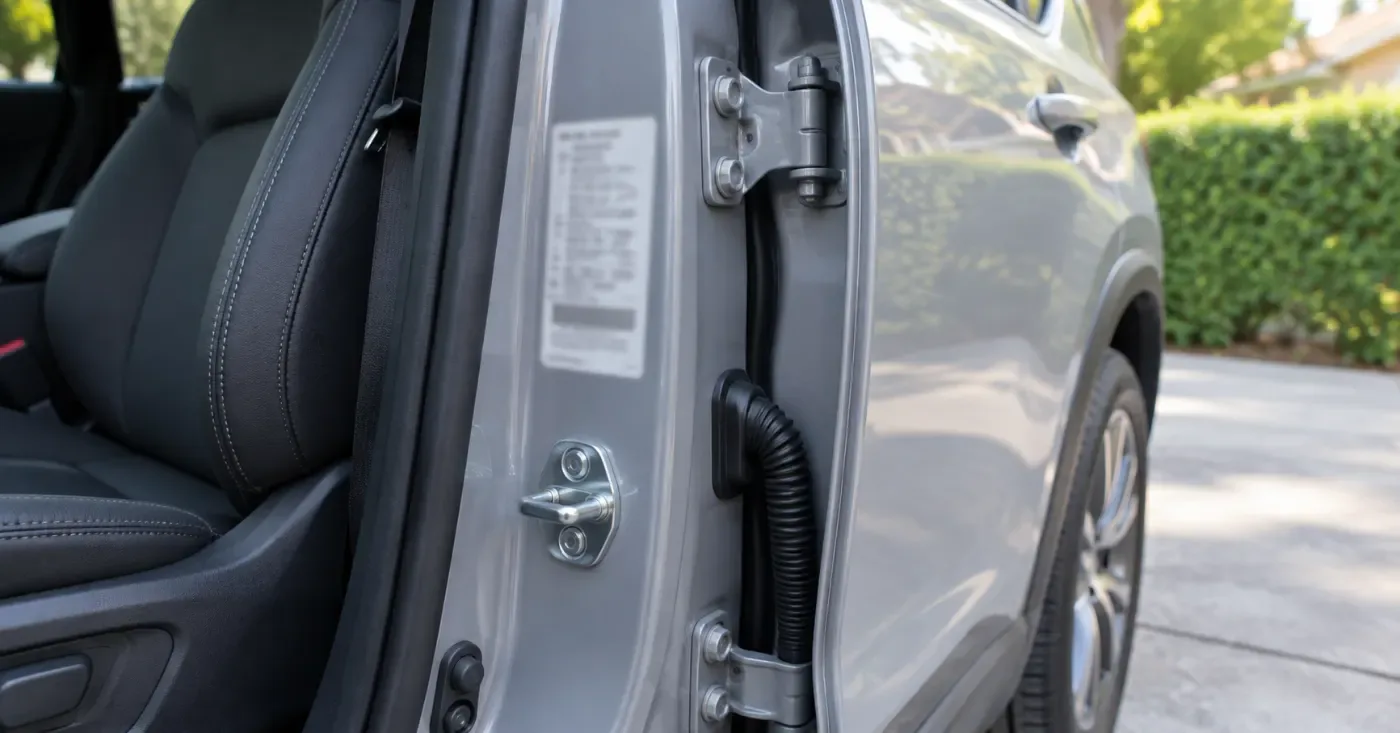
- Match the VINs. Read the plate on the dashboard through the windshield and the label in the driver’s door jamb. Both must match the title and your record check. Our guide shows where the VIN is and the signs of tampering.
- Look along each side from the front corner. Ripples, uneven panel gaps, mismatched paint or overspray on rubber trim point to repairs.
- Check with the magnet on lower doors, rocker panels and wheel arches, the usual spots for rust repairs.
- Inspect the glass and lights. Look for windshield cracks and fogged or mismatched headlights, and have a helper confirm every exterior light works.
- Open and close everything: doors, hood, trunk or liftgate and fuel door. Stiff hinges or misaligned latches can mean a past crash.
Tires, wheels and brakes
Tires tell you about the car’s alignment and the owner’s care. Check every tire, including the spare:
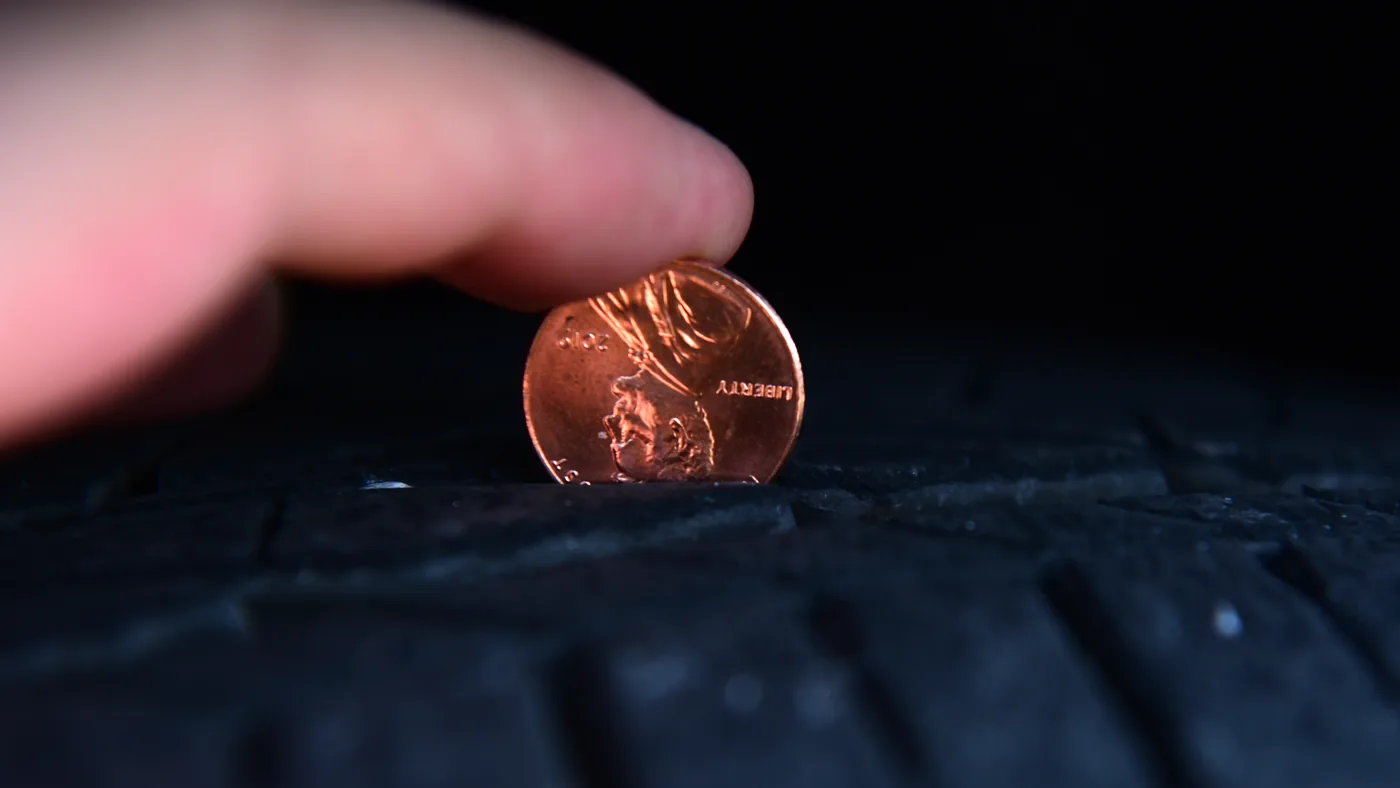
“You can also check your tread by placing a penny in the tread with Lincoln’s head upside down and facing you. If you can see the top of Lincoln’s head, replace your tires.”National Highway Traffic Safety Administration, TireWise
- Uneven wear, such as one edge worn more than the other, points to alignment or suspension problems.
- Mismatched tires or one new tire can mean a recent blowout or a cheap fix before sale.
- Look through the wheel spokes at the brake rotors: deep grooves or a lip at the edge mean brakes are due.
- Check the tire date code on the sidewall; very old tires can look fine and still need replacing.
Under the hood
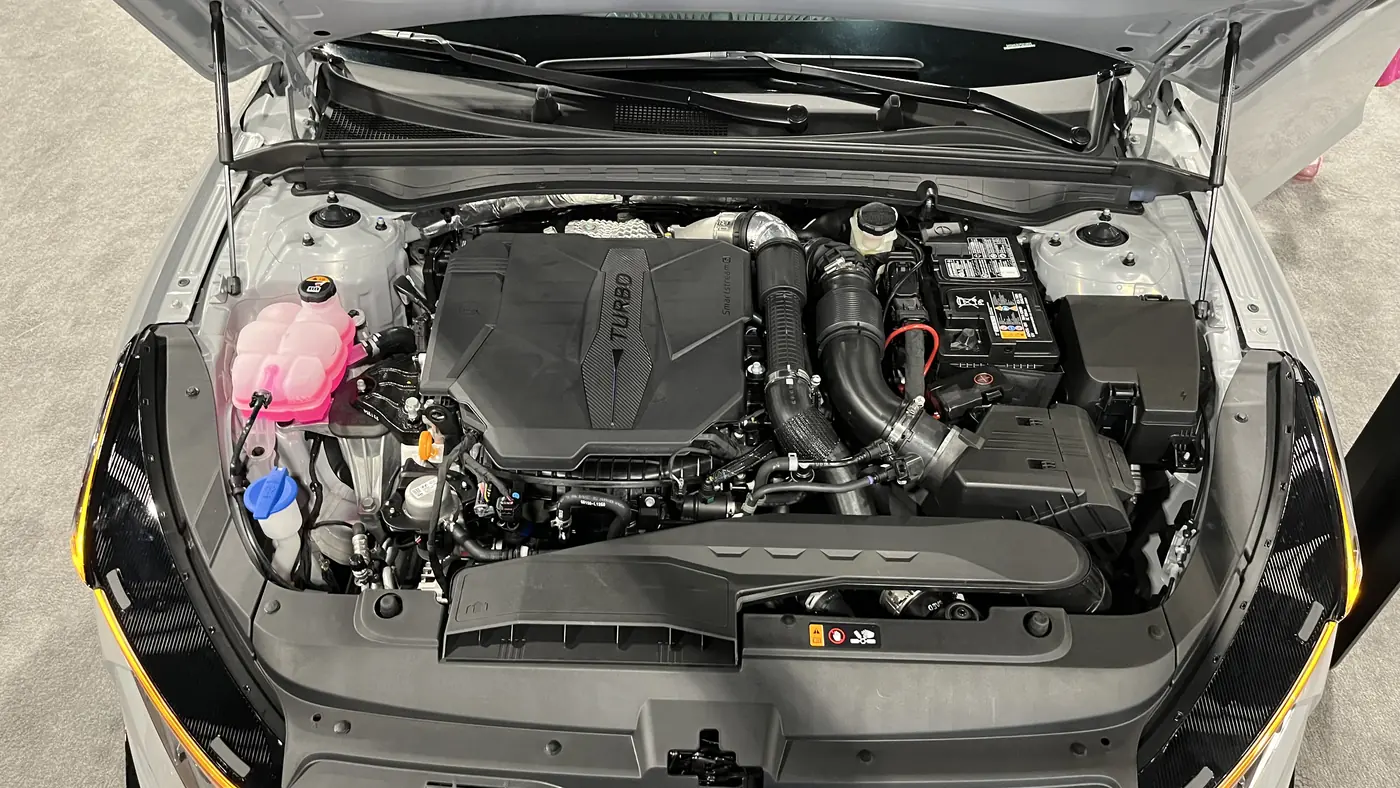
Check with the engine cold and off:
- Engine oil: pull the dipstick. Very dark, gritty or milky oil (a sign of coolant mixing in) is a warning.
- Coolant: look in the reservoir; it should be clean and at the mark, not rusty or oily.
- Transmission fluid, where there is a dipstick: reddish and not burnt-smelling.
- Belts and hoses: no cracks, fraying or soft, swollen hoses.
- Battery: heavy corrosion on the terminals, or a date several years old, means it may soon need replacing.
- Signs of leaks or fresh cleaning: a spotless engine on an old car can hide leaks; look for wet residue around gaskets.
Interior and electronics
- Warning lights: turn the key or press start without starting. All dashboard warning lights should come on briefly, then go out once the engine runs. An air bag or check-engine light that stays on, or never lights at all, needs explaining.
- Test every control: air conditioning and heat, power windows and locks, mirrors, seats, infotainment, cameras, wipers, horn and seat belts.
- Smell and feel: musty odors, damp carpets or silt under the floor mats can mean flood damage; heavy air freshener can be hiding it.
- Compare wear with mileage: a worn steering wheel, pedals and driver’s seat on a low-mileage car suggest the odometer may be wrong.
Underneath the car
With the flashlight, look at the ground where the car was parked and under the engine and transmission for drips. Check for rust on the frame, brake lines and exhaust, especially on cars from snowy or coastal states. Bent or freshly welded parts underneath can mean a serious past crash, even if the history report is clean.
The test drive
Drive for at least 20 minutes on mixed roads, including a highway if you can:
- Starting: the engine should start promptly and idle smoothly, without blue or white smoke.
- Transmission: smooth shifts with no slipping, flaring revs or harsh clunks, in both drive and reverse.
- Steering and alignment: on a straight, flat road the car shouldn’t pull to one side; listen for clunks over bumps.
- Brakes: firm pedal, straight stops, no grinding or vibration through the pedal or wheel.
- Driver-assistance features: if the car has automatic emergency braking or lane keeping, note any warnings or unexpected interventions. These are now a common source of owner complaints.
- After the drive: look under the car again for new drips, and check that no warning lights came on.
Paperwork and the Buyers Guide
At a dealer, federal rules require a Buyers Guide on every used car offered for sale. It states whether the car comes with a warranty or is sold “as is,” what share of repair costs the dealer will pay, and it reminds you to get the car inspected and to get a vehicle history report (FTC). Spoken promises are hard to enforce, so get them in writing on the guide.
From any seller, compare the name on the title with the seller’s ID, check that the title isn’t branded salvage, flood or rebuilt unless you were told, and check the odometer disclosure. Federal rules require the seller to state the mileage when the vehicle is transferred. For 2011 and newer models that requirement now runs until the vehicle is 20 years old (49 CFR 580.17). Ask for service records too; regular oil changes and documented repairs are a good sign.
The independent inspection
Even a careful buyer misses things a lift and diagnostic tools reveal. Before you pay, have the car checked by a mechanic you choose, not one the seller recommends. Most shops offer a pre-purchase inspection at a fixed price. Bring the model-year complaint list from your VIN decode so the mechanic can focus on the known weak spots, and walk away if the seller won’t allow an inspection.
If the car has an open recall, it can still be sold, but the repair is free at a franchised dealer; check whether it carries an urgent Do Not Drive or Park Outside warning before you drive it home.
This checklist is general guidance; it doesn’t replace a professional inspection or legal advice about a specific sale.
Frequently asked questions
What should I check when buying a used car?
Check the records first (VIN decode, open recalls, theft and salvage, title history), then the body, tires and brakes, fluids, interior and electronics, and the underside. Take a 20-minute test drive from a cold start, and have an independent mechanic inspect it before you pay.
What are red flags when buying a used car?
A seller who won’t share the VIN or allow an inspection, VINs that don’t match on the dash, door label and title, a branded title, mileage that doesn’t fit the wear, warning lights that stay on, signs of flood damage, and fresh repairs or a suspiciously clean engine on an old car.
How do I check a used car’s VIN for free?
Decode it on PlainVIN to confirm the year, model and engine and see recalls and owner complaints for that model year, then check open recalls at nhtsa.gov/recalls and theft or total-loss records with NICB’s free VINCheck.
Should I get a pre-purchase inspection?
Yes. A mechanic with a lift and diagnostic tools finds problems a buyer can’t, such as frame damage, leaks and stored trouble codes. Use a shop you choose, and walk away if the seller won’t allow it.
How do I check tire tread?
Put a penny in the tread with Lincoln’s head upside down and facing you. NHTSA says that if you can see the top of Lincoln’s head, the tires need replacing. Also look for uneven wear and check the tire date code.
What is the FTC Buyers Guide?
A window sticker dealers must display on used cars. It says whether the car is sold as is or with a warranty and what the dealer will pay for repairs; it’s part of your sales contract.
Can a used car be sold with an open recall?
Yes. Federal law doesn’t stop the sale of a used car with an open recall, but the recall repair is free at a franchised dealer. Check the VIN on NHTSA and don’t drive a car with a Do Not Drive warning.
About the PlainVIN Vehicle Data Desk
This desk covers the VIN decoder and VIN guides, factory specs from NHTSA vPIC, EPA fuel-economy data, EIA fuel prices and the import of every official dataset.
Every figure in this guide links to its primary source. See our editorial policy, how we use AI and corrections log.
How this page was madeSources, processing, limits, review and changes
Data sources
- Buying a Used Car From a Dealer (Buyers Guide)
Federal Trade Commission, read Oct 7, 2026 - TireWise (penny test)
NHTSA, read Oct 8, 2026 - 49 CFR 580.17 — Odometer disclosure exemptions
eCFR, read Oct 8, 2026 - VINCheck
National Insurance Crime Bureau - Penny test photo (public domain)
U.S. Air Force via Wikimedia Commons
.jpg)
Processing
- Complaints are counted per component. One complaint can list several, so component totals add up to more than the total.
- Fuel cost = miles per year ÷ EPA combined mpg × EIA weekly price for your region.
Limitations
- Complaint counts are owner reports, not verified findings or failure rates. There is no sales denominator.
- Recall campaigns are listed for the model year. Only NHTSA and the automaker know whether a specific car was repaired.
- Recent model years are still collecting reports.
Review
Written and checked against primary sources by the Vehicle Data desk.
Changelog
- 2026-10-06 Data refreshed from the official files.
Keep reading