Do Not Drive Recalls: The Takata List and Every Other Warning
The vehicles NHTSA says not to drive until they’re repaired: the Takata air bag list by make and model, every other Do Not Drive recall since 2012, and how to check yours.
Key takeaways
- A Do Not Drive recall means the automaker and NHTSA say the vehicle should not be driven at all until a free repair is done. Most of the cars on the list have old Takata air bag inflators that can explode in a crash.
- NHTSA’s Takata Do Not Drive list covers certain Acura, BMW, Chrysler, Dodge, Ford, Honda, Infiniti, Jeep, Mazda, Mitsubishi, Nissan, Pontiac and Toyota models, mostly built from 2001 to 2016.
- Takata is not the whole story: we count 201 Do Not Drive or Do Not Ride campaigns since 2012, for brakes, steering, wheels and suspension as well as air bags. Air bags still account for 95% of the vehicles involved.
- Many are still unrepaired: for campaigns at least five years old, the typical one has reached only 74% completion. Check every car by VIN, especially a used one.
A Do Not Drive recall is the most urgent warning a vehicle recall can carry: the manufacturer and the National Highway Traffic Safety Administration (NHTSA) tell owners to stop using the vehicle until it is repaired. This guide lists the vehicles under NHTSA’s Takata Do Not Drive warning, shows every other Do Not Drive campaign in NHTSA’s recall file, and explains how to check your car and get it fixed free.
What a Do Not Drive recall means
Most recalls ask you to book a repair when you can. A Do Not Drive recall is different: the defect is dangerous enough that the vehicle should not be used for any trip, including the drive to the dealer. Automakers usually arrange a tow, send a mobile technician or offer alternate transportation for these campaigns. Motorcycle makers use the same warning as Do Not Ride.
A related warning, Park Outside, means the vehicle can catch fire even when it is switched off, so it should be parked away from buildings until it is fixed. A recall can carry either warning, both or neither, and NHTSA’s lookup flags it on the recall.
The repair is free. Federal law requires the manufacturer to remedy a safety defect without charge, and NHTSA tells owners of the Takata Do Not Drive vehicles to “call your dealer to schedule a free repair” (NHTSA). Our recall guide explains the general rules, including the 15-year limit that applies to other recalls.
The Takata air bag Do Not Drive list
Takata air bag inflators used a propellant, ammonium nitrate, that breaks down with age, heat and humidity. When an aged inflator fires, it can rupture and throw metal fragments into the cabin. NHTSA has confirmed 28 deaths in the United States from these ruptures, and at least 400 people have allegedly been injured (NHTSA Takata Recall Spotlight). About 67 million Takata air bags have been recalled.
Within that recall, NHTSA singles out a group of older vehicles for its Do Not Drive warning:
“Test data on the defective Takata air bag inflators in these vehicles show a far higher risk of ruptures during air bag deployment than for other recalled Takata air bags.”National Highway Traffic Safety Administration, Critical Do Not Drive Warning
| Make | Models and model years |
|---|---|
| Acura | 2002–2003 3.2 TL; 2003 3.2 CL |
| BMW | Certain 2000–2006 3 Series (E46), including M3; certain 2000–2003 5 Series (E39), including M5; certain 2000–2004 X5 (E53) |
| Chrysler | 2007–2009 Aspen; 2005–2015 300 |
| Dodge | 2005–2011 Dakota; 2005–2010 Magnum; 2005–2015 Charger; 2005–2014 Challenger; 2004–2009 Durango; 2003–2010 Ram; 2003 Ram 1500 |
| Ford, Lincoln, Mercury | Certain 2004–2011 Ranger; 2005–2006 GT; 2005–2014 Mustang; 2006–2012 Fusion; 2006–2012 Lincoln MKZ/Zephyr; 2006–2012 Mercury Milan; 2007–2010 Edge; 2007–2010 Lincoln MKX |
| Honda | 2001–2002 Accord; 2001–2002 Civic; 2002 CR-V; 2002 Odyssey; 2003 Pilot |
| Infiniti | Certain 2002–2003 QX4 |
| Jeep | 2007–2016 Wrangler |
| Mazda | Certain 2004–2009 B-Series; 2003–2013 Mazda6; 2006–2007 MazdaSpeed6; 2004–2011 RX-8; 2004–2006 MPV; 2007–2012 CX-7; 2007–2015 CX-9 |
| Mitsubishi | 2006–2009 Raider |
| Nissan | Certain 2002–2006 Sentra; certain 2002–2004 Pathfinder |
| Pontiac | Certain 2003–2004 Vibe |
| Toyota | Certain 2004–2005 RAV4; certain 2003–2004 Corolla, including Matrix |
“Certain” means only some vehicles of that model and year are affected; only a VIN check can tell. Source: NHTSA Takata Do Not Drive warning. NHTSA’s list can change; it is the authority if anything here differs.
The newest names on the list came in February 2026, when Stellantis told owners of more than 225,000 still-unrepaired Chrysler, Dodge, Jeep and Mitsubishi vehicles from the 2003–2016 model years not to drive them, and offered free towing or a mobile repair at home (Consumer Reports). You can see the recall history for these models on our Dodge, Chrysler, Ford, Honda and Mazda recall pages, or on model pages such as the Dodge Charger and Jeep Wrangler.
Beyond Takata: every Do Not Drive recall since 2012
Most coverage stops at the Takata list. NHTSA’s recall file flags every campaign that carries a Do Not Drive or Do Not Ride warning, so we counted them all. Since 2012, manufacturers have filed 201 such campaigns, covering a combined 20.9 million vehicles.
The pattern has two parts. From 2015 to 2019, a handful of huge Takata campaigns covered millions of vehicles each. Since then, Do Not Drive campaigns have stayed just as frequent but much smaller: brakes that can lose function, control arms or ball joints that can separate, wheels that can come off, and steering parts that can come loose, often on a few hundred or a few thousand vehicles, including motorcycles, heavy trucks, buses and RVs.
| Component | Campaigns | Vehicles potentially affected | Share of vehicles |
|---|---|---|---|
| Air bag | 50 | 19,820,917 | 95% |
| Steering | 36 | 114,050 | <1% |
| Suspension | 21 | 404,831 | 2% |
| Brake | 21 | 437,721 | 2% |
| Wheel | 17 | 7,795 | <1% |
| Electrical | 12 | 6,719 | <1% |
| Engine | 12 | 54,583 | <1% |
| Power train | 12 | 27,885 | <1% |
| Structure | 7 | 2,368 | <1% |
| Fuel system | 6 | 24,274 | <1% |
Source: NHTSA recalls file, retrieved Oct 6, 2026; every campaign flagged Do Not Drive or Do Not Ride since 2012. Computed by PlainVIN.
Recent Do Not Drive recalls for cars and trucks
These are the Do Not Drive campaigns filed in the last few years that cover cars, SUVs, pickups and vans in our catalog. Each campaign number links to its official NHTSA record. If your vehicle appears here, check its VIN now; recent campaigns often have low completion because owners are still being notified.
| Filed | Vehicles (NHTSA wording) | Problem | Units | Repaired |
|---|---|---|---|---|
| May 2026 26V340000 | Certain 2021-2026 Bronco Sport and 2022-2026 Maverick vehicles | Loss of Control from Control Arm Separation | 4,653 | – |
| May 2026 26V289000 | Certain 2026 Cadillac Escalade and Escalade ESV, Chevrolet Silverado 1500, Suburban, and Tahoe, and GMC Sierra 1500, Yukon, and Yukon XL vehicles with four-wheel (4WD) or all-wheel drive (AWD), and certain 2015-2020 Suburban, Escalade, Escalade ESV, Yukon, Yukon XL, and Tahoe vehicles | Front and/or Rear Wheels May Lock Up | 66 | 50% |
| Feb 2026 26V090000 | Certain 2025 Transit vehicles | Loss of Brake Function/FMVSS 105 | 15,965 | 73% |
| Dec 2025 25V835000 | Certain 2026 Atlas, Atlas Cross Sport, and ID.4 vehicles | Wheel May Detach from Vehicle | 27 | 100% |
| Oct 2025 25V748000 | Certain 2000-2001 X5 vehicles that may be equipped with a sport steering wheel containing a Takata PSDI-4 air bag inflator | Driver's Side Front Air Bag Inflator May Explode | 5,361 | 1% |
| Jun 2025 25V401000 | Certain 2025 F-550 SD, F-450 SD, F-350 SD, and F-250 SD vehicles | Sudden Loss of Brake Function | 2,345 | 86% |
| May 2025 25V308000 | Certain 2024-2025 Bronco vehicles | Front Lower Control Arm May Detach | 3 | 100% |
| Apr 2025 25V260000 | Certain 2025 Bronco vehicles | Loss of Steering from Front Control Arm Separation | 2 | 100% |
| Dec 2024 24V941000 | Certain 2025 E 350, E 350 4MATIC, E 450 4MATIC, and E450 4MATIC station wagon vehicles | Rear Axle Carrier May Fail | 17 | 100% |
| Oct 2024 24V809000 | Certain 2025 Panamera, 2024 718 Cayman GT4 RS, 718 Spyder RS, and 2021-2024 911 vehicles | Center Lock May Break Causing Wheel Detachment | 2,251 | 91% |
| Jul 2024 24V533000 | Certain 2024 Cayenne vehicles | Front Axle Control Arm May Break | 2,475 | 53% |
| Apr 2024 24V298000 | Certain 2006-2012 ML, GL, and R-Class vehicles | Brake Booster Corrosion May Impair Braking | 15,604 | 3% |
| Apr 2024 24V244000 | Certain 2023 Forte vehicles | Front Lower Control Arm May Fail | 215 | 74% |
Vehicle descriptions are NHTSA’s own summary wording. “Repaired” is the share the manufacturer reports as fixed; new campaigns start near zero. Source: NHTSA recalls file and US DOT completion data, retrieved Oct 6, 2026.
How many are still unrepaired
Manufacturers report repair progress to NHTSA every quarter, and the completion rate is the share of affected vehicles they report as fixed. For Do Not Drive campaigns filed at least five years ago, long enough for owners to have been reached, the median completion rate is 74%. 60 of those 104 campaigns are still below 80%.
That gap is where the danger sits. The Takata vehicles on the Do Not Drive list are now 10 to 25 years old, and many have changed hands several times, so recall letters go to previous owners. Stellantis’s February 2026 warning is a measure of it: a decade after the first recalls, about 225,000 of its vehicles still had the original inflators. Older cars also sit at the end of the free-repair rules for most recalls, but NHTSA states that the Takata repair is free.
How to check your car
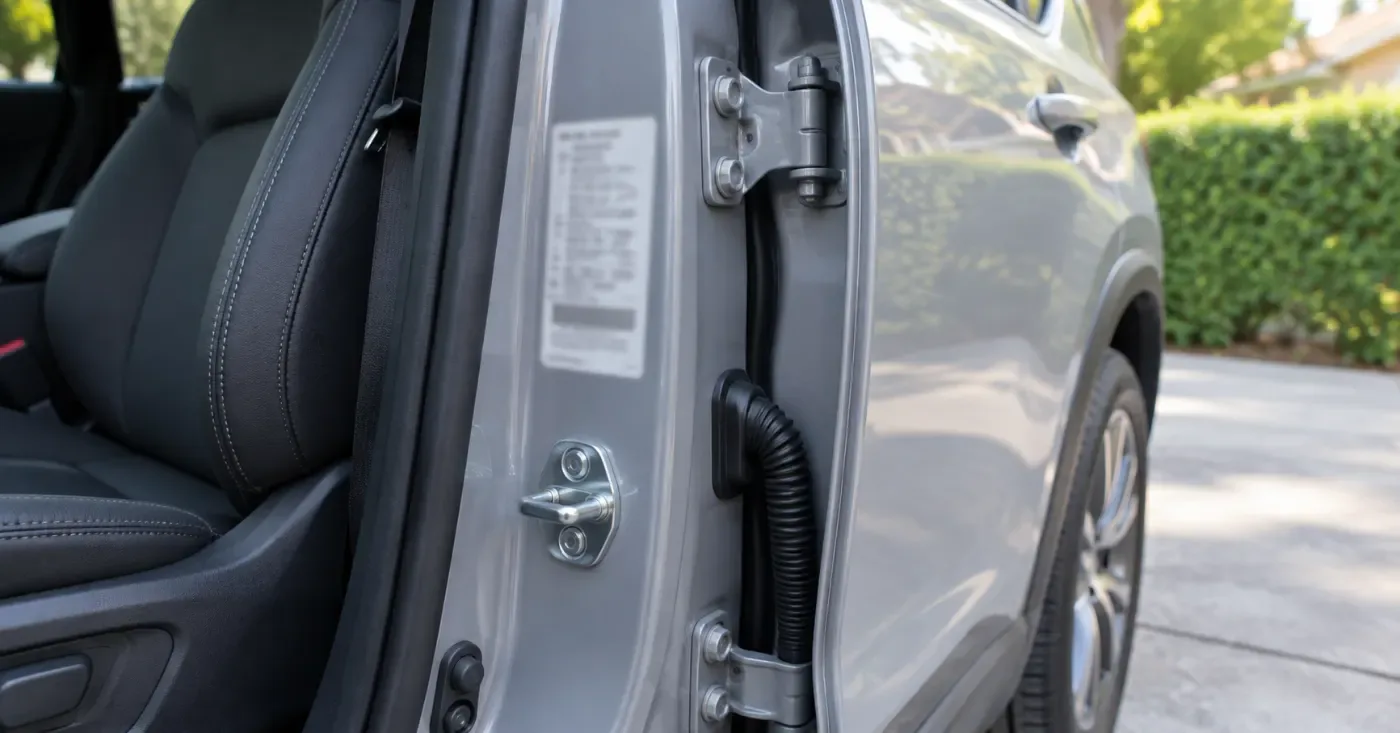
- Find the VIN. It is on the lower driver’s-side corner of the windshield, the driver’s door-jamb label, your registration and your insurance card. Our guide shows where the VIN is on every type of vehicle.
- Search it on NHTSA. Enter the 17 characters at nhtsa.gov/recalls. An open recall that carries a Do Not Drive warning is flagged as such in the results.
- Cross-check with the automaker. The maker’s owner site lists the same recall and the contact line for towing or mobile repair.
- Check the model-year history. Our VIN decoder shows every recall campaign listed for that model year, with its repair progress, which is useful if you are deciding whether to buy.
What to do if your car is on the list
- Stop driving it. Don’t take it to the dealer yourself. Ask for a tow or a mobile repair; several automakers offer both for Do Not Drive recalls.
- Call a franchised dealer or the automaker. Give the VIN and campaign number. NHTSA says replacement parts are available for the Takata Do Not Drive vehicles.
- Ask about alternate transportation. It isn’t required by law, but NHTSA notes it’s worth asking, and some automakers provide loaners for these recalls.
- Don’t disable the air bag. It can seem safer, but NHTSA is clear:
“An air bag that is purposely disabled has a 100-percent chance of failing to provide any protection in a crash.”National Highway Traffic Safety Administration, Takata Recall Spotlight FAQ
If you are offered an “interim” replacement, a new inflator of the same design while a final part is made, NHTSA advises taking it: a newer inflator is less likely to rupture than an aged one, and you still get the final repair free. Keep the repair order, which proves the campaign was completed.
Buying or selling a car with a Do Not Drive recall
Federal law stops dealers from selling new vehicles with open recalls and stops rental companies from renting them out, but no federal rule stops a used car with an open recall, even a Do Not Drive one, from being sold (49 U.S.C. 30120(i)). Many of the Takata vehicles are now older, inexpensive cars that change hands often, which is how recall letters get missed.
- Buying: run the seller’s VIN through NHTSA before you pay or drive it away. If a Do Not Drive recall is open, have it towed to a dealer for the repair, or walk away.
- Selling: get it fixed first, and keep the repair order to show buyers.
- For everything else a VIN check can’t show, such as title brands, accidents and mileage, see our guide to a free VIN check vs. a paid history report.
This guide is general safety information, not legal advice. For your specific vehicle, NHTSA’s VIN lookup and your manufacturer are the authority.
Frequently asked questions
Can I drive my car with an air bag recall?
If the recall carries a Do Not Drive warning, no: NHTSA and the automaker say not to drive it until it’s repaired, and the automaker should arrange a tow or mobile repair. For other air bag recalls, book the free repair promptly. Don’t disable the air bag; NHTSA says a disabled air bag offers no protection at all.
Which vehicles are affected by the Takata air bag recall?
About 67 million Takata air bags across 34 brands were recalled. The highest-risk group, under NHTSA’s Do Not Drive warning, includes certain older Acura, BMW, Chrysler, Dodge, Ford, Honda, Infiniti, Jeep, Mazda, Mitsubishi, Nissan, Pontiac and Toyota models, listed in the table above. A VIN check on nhtsa.gov is the only way to confirm a specific car.
How serious is the Takata air bag recall?
Very. NHTSA has confirmed 28 deaths in the United States from Takata inflator ruptures, and at least 400 people have allegedly been injured. The risk rises with the inflator’s age and with heat and humidity, which is why the oldest vehicles carry the Do Not Drive warning.
How long does the Takata air bag repair take?
The repair is a dealer replacement of the air bag inflator or module. NHTSA says replacement parts are available for the Do Not Drive vehicles; ask the dealer for a time estimate when you book, and ask about a tow or mobile repair so you don’t have to drive the car.
Is the Do Not Drive recall repair free?
Yes. NHTSA tells owners of the Takata Do Not Drive vehicles to schedule a free repair, and automakers such as Stellantis have offered free towing or mobile repair. Recall repairs on other campaigns are also free, with a 15-year limit set by federal law.
How do I check if my car is on a recall list?
Enter your 17-character VIN at nhtsa.gov/recalls or on your automaker’s owner site. A make-and-model list like this one tells you which models are affected; only the VIN check tells you whether your specific car still needs the repair.
Which vehicles are being recalled with a Do Not Drive warning in 2026?
The table of recent Do Not Drive recalls above lists every campaign for cars, SUVs, pickups and vans in our NHTSA data, including 2026 filings for certain Ford Bronco Sport and Maverick, Ford Transit and GM full-size trucks and SUVs. Each links to its NHTSA record.
What does Do Not Ride mean?
It’s the motorcycle version of Do Not Drive: the manufacturer and NHTSA say the motorcycle shouldn’t be ridden until the recall repair is done.
About the PlainVIN Recalls & Safety Desk
This desk covers recall campaigns and completion rates, owner complaints filed with NHTSA, and NHTSA 5-Star Safety Ratings.
Every figure in this guide links to its primary source. See our editorial policy, how we use AI and corrections log.
How this page was madeSources, processing, limits, review and changes
Data sources
- Critical Do Not Drive Warning for Certain Vehicles with Takata Air Bags
NHTSA, read Oct 7, 2026 - Takata Recall Spotlight and FAQ
NHTSA, read Oct 7, 2026 - NHTSA recalls flat file (Do Not Drive flag, completion rates)
Retrieved Oct 6, 2026 - Stellantis Do Not Drive warning, Feb 2026
Consumer Reports, read Oct 7, 2026 - 49 U.S.C. 30120 — Remedies for defects
LII, read Oct 7, 2026 - Steering wheel air bag photo (public domain)
Wikimedia Commons, Janipewter

Processing
- Complaints are counted per component. One complaint can list several, so component totals add up to more than the total.
- Fuel cost = miles per year ÷ EPA combined mpg × EIA weekly price for your region.
Limitations
- Complaint counts are owner reports, not verified findings or failure rates. There is no sales denominator.
- Recall campaigns are listed for the model year. Only NHTSA and the automaker know whether a specific car was repaired.
- Recent model years are still collecting reports.
Review
Written and checked against primary sources by the Recalls & Safety desk.
Changelog
- 2026-10-06 Data refreshed from the official files.
Keep reading