Free VIN Check vs Paid Vehicle History Report: What Each Tells You
A free VIN check tells you what the car is; a paid history report tells you what happened to it. Here's what each covers, what neither does, and the order to use them in.
Key takeaways
- A free VIN check tells you what the car is: factory specs, the recall campaigns listed for its model year, owner complaints, crash-test stars and fuel economy.
- A paid history report tells you what happened to this particular car: title brands such as salvage or flood, odometer readings at title transfers and, depending on the provider, reported accidents and service records.
- Two free checks cover part of a history report: NICB’s VINCheck for insurer-reported theft and salvage, and NHTSA’s lookup for open recalls.
- Decode first, and buy a report only for a car you’re serious about. Then get an independent inspection, because no report catches everything.
When you look at a used car, two kinds of VIN lookup compete for your attention: free decoders like PlainVIN, and paid vehicle history reports. They answer different questions, and a careful buyer uses both, in the right order.
What a free VIN check can tell you
The VIN encodes factory facts. A decoder that queries NHTSA’s official vPIC service turns the 17 characters into the year, make, model, trim, body, engine, transmission, drive type and assembly plant, plus safety equipment the maker filed with NHTSA. Because those facts identify the model year, a good free check can also pull in everything the government publishes about that model year:
- Recall campaigns NHTSA lists for the year, make and model, with the official description of the defect and the remedy. See the recall hub for how recalls work.
- Owner complaints filed with NHTSA, grouped by component, so you know what to look at during a test drive.
- Crash-test ratings from NHTSA’s 5-Star Safety Ratings program.
- Fuel economy estimates and what a year of driving would cost, from the fuel cost calculator.
What a decoder can’t do is tell you anything about the life of one specific car. The VIN doesn’t record accidents, owners or mileage. Our guide to reading a VIN shows exactly what the 17 characters do contain.
What a paid history report adds
A vehicle history report is compiled from records about the individual vehicle. The federal government’s own system is NMVTIS, the National Motor Vehicle Title Information System run for the Department of Justice. NMVTIS lets consumers see information on a vehicle’s title, its most recent odometer reading, its brand history and, in some cases, theft data, drawing on state titling agencies, auto recyclers, junk and salvage yards and insurers (NMVTIS for consumers).
A “brand” is the label a state puts on a title to record a vehicle’s condition, such as junk, salvage or flood. Brands matter because a damaged car can be retitled in another state in an attempt to wash the brand away. NMVTIS cites flood cars moved out of Louisiana after Hurricane Katrina and resold in states that don’t brand flood vehicles. That’s the gap a national system is meant to close:
“NMVTIS is designed to prevent vehicle histories such as these from being ‘washed’ or concealed because it is designed to serve as a national repository of vehicle brand information.”U.S. Department of Justice, NMVTIS for consumers
Consumers buy NMVTIS reports through approved data providers listed on the program’s vehicle history page. Commercial reports such as CARFAX and AutoCheck add records from other sources, such as reported accidents, service visits and the number of owners. What’s included varies by provider, so check the sample report before you pay.
Side by side
| Question | Free VIN check (PlainVIN) | Free NICB VINCheck | Paid history report |
|---|---|---|---|
| Year, make, model, engine, plant | Yes, from NHTSA vPIC | No | Usually |
| Recall campaigns for the model year | Yes, with NHTSA’s text and repair rates | No | Varies |
| Owner complaints filed with NHTSA | Yes, by component | No | Not usually |
| Crash-test stars and fuel economy | Yes | No | Varies |
| Reported stolen, not recovered | No | Yes, from participating insurers | Usually |
| Title brands (salvage, flood, junk) | No | Insurer salvage and flood records only | Yes |
| Odometer readings at title events | No | No | Yes |
| Reported accidents and service history | No | No | Depends on the provider |
| Whether recall repairs were done | No: use NHTSA’s lookup | No | Not reliably: use NHTSA’s lookup |
| Price | Free | Free, 5 searches a day | Paid per report |
Free history checks that do exist
“Free CARFAX” searches usually end at a sales page, but several genuinely free checks cover part of what a paid report does:
- NICB VINCheck. The National Insurance Crime Bureau checks a VIN against theft, salvage and flood records reported by its participating member insurers, which it says represent about 92% of US earned insurance premium. It allows five searches per 24 hours. NICB itself says it is “not a comprehensive vehicle history report” (NICB), because insurers that don’t participate, and incidents never reported to an insurer, won’t appear.
- NHTSA’s recall lookup. Free and authoritative for open safety recalls on that exact VIN.
- The dealer’s report. Many dealers and listing sites attach a CARFAX or AutoCheck report to the listing for free. Ask for it before you buy one yourself.
- Your state motor-vehicle agency. Some states let owners or buyers request title history; procedures and fees vary.
What history reports miss
A history report can only list events someone reported to a source the provider buys from. That leaves predictable gaps:
- Accidents paid for in cash. If no police report or insurance claim was filed, a crash and its repair may never appear.
- Records the provider doesn’t buy. CARFAX and AutoCheck draw on overlapping but different sources, so one report can show an event the other doesn’t.
- Recent events. Title transfers and claims can take weeks to reach national databases.
- Mechanical condition. No report tells you how the transmission shifts or whether the brakes are worn.
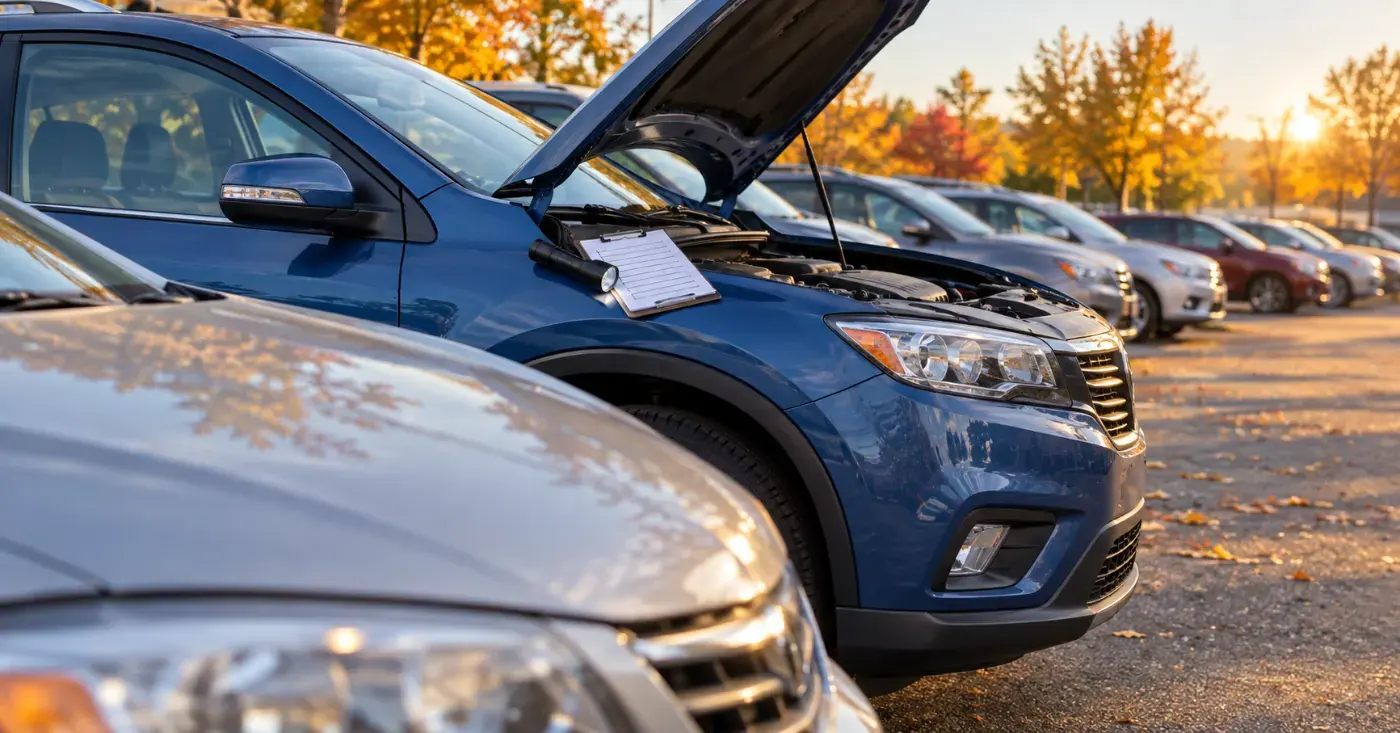
Treat a clean report as “nothing reported”, not “nothing happened”. The Federal Trade Commission’s Buyers Guide, which dealers must post on used cars, tells shoppers to get a vehicle history report and to have the car inspected by an independent mechanic before buying (FTC).
Open recalls: the question neither answers well
A model-year recall list tells you which campaigns could apply. Only the manufacturer’s records show whether a particular car was repaired, and NHTSA’s free VIN recall lookup searches them. Run it for any car you’re about to buy, and ask the seller for proof of each repair. Recall repairs are free in most cases; the free-remedy rule doesn’t apply to vehicles first sold more than 15 years before the recall notice. Federal law also doesn’t stop a used car from being sold with an open recall, so the check is on you.
Cloned VINs and how to spot them
A cloned car is a stolen vehicle wearing a VIN copied from a legitimate one of the same make, model and year. Its paperwork and its history report can look clean, because the report describes the car the VIN really belongs to. NMVTIS describes a South Florida ring that cloned about 250 stolen vehicles before investigators caught it.
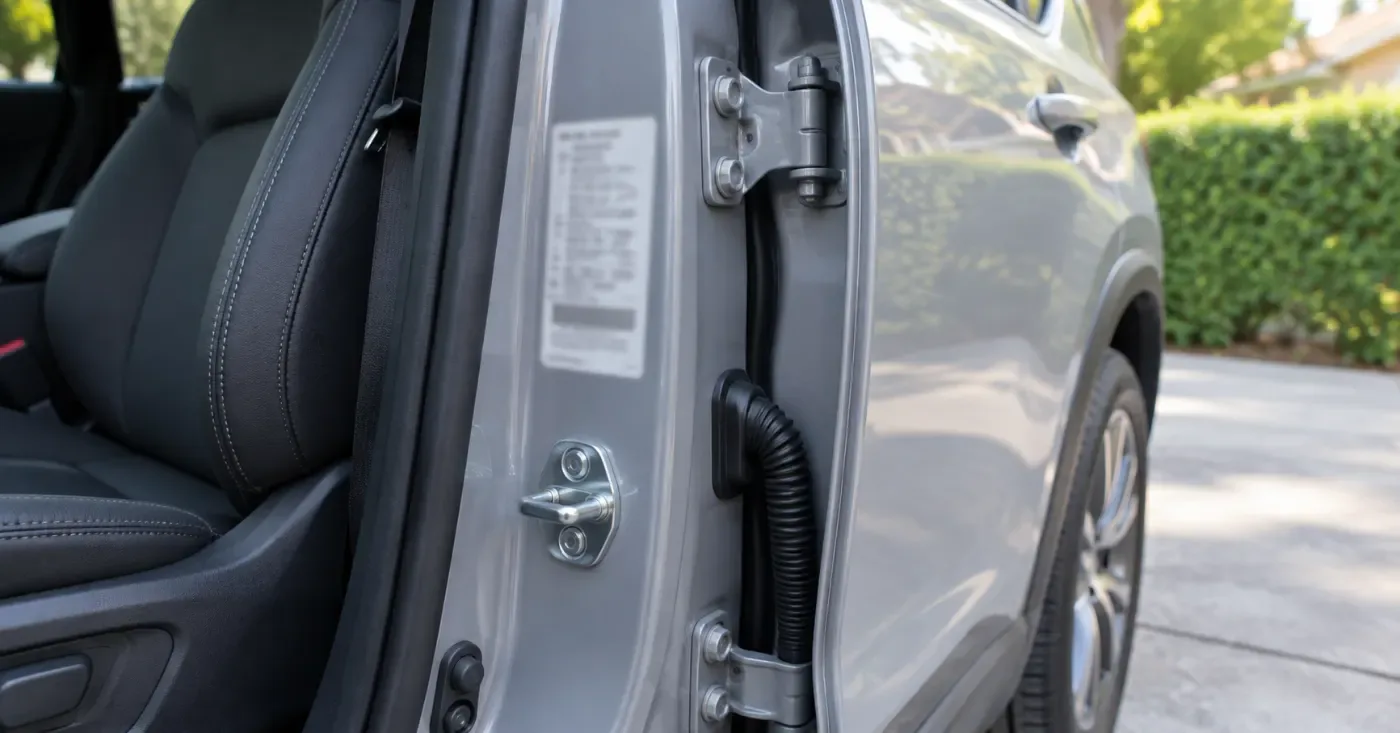
Your defense is physical: read the VIN on the dashboard plate and the door-jamb label, compare both with the title, and look for loose plates, scratched rivets or a replaced label. Our guide shows how to check that the VINs match. A price far below market for a late-model car is another warning sign.
A sensible order for used-car buyers
- Decode the VIN for free. Confirm the car is what the ad says: year, trim, engine. Read the recall list and the most-reported complaints so you know what to inspect. Start at the VIN decoder.
- Run the free checks: NHTSA’s recall lookup and NICB’s VINCheck.
- Buy a history report once you’re serious about this specific car, or ask the dealer for theirs, and look for title brands, odometer gaps and ownership history.
- Get an independent inspection by a mechanic you choose, not the seller.
- Compare the VINs on the dashboard, the door-jamb label and the title. They should all match.
Print PlainVIN’s buyer’s checklist from any model-year report to take these steps with you on a dealer lot.
Frequently asked questions
Is there a free VIN check like CARFAX?
Not a complete one. Free checks cover parts of a history report: NICB's VINCheck shows insurer-reported theft, salvage and flood records, NHTSA's lookup shows open recalls, and a decoder like PlainVIN shows specs, model-year recalls and complaints. Title brands, odometer readings and accident records come from a paid report or the dealer's copy.
Is a free VIN check reliable?
For what it covers, yes, if it uses official sources: NHTSA's vPIC decoder for specs and NHTSA's recall lookup for open recalls. Be wary of "free" sites that show a few details and then ask for payment; they are selling a history report.
Is NICB VINCheck as good as CARFAX?
They do different jobs. VINCheck only searches theft, salvage and flood records from participating insurers, and NICB says it is not a comprehensive history report. A paid report adds title brands from state data, odometer readings, owner counts and, depending on the provider, accidents and service records.
Is a free VIN check enough when buying a used car?
It tells you what the car is and what's known about its model year, but not what happened to that specific car. For a car you're serious about, add a vehicle history report, NHTSA's recall lookup and an independent inspection.
What is NMVTIS?
The National Motor Vehicle Title Information System, a federal database run for the Department of Justice. NMVTIS reports show a vehicle's title information, latest odometer reading, brand history and, in some cases, theft data. Consumers buy them from approved data providers.
Does a history report show whether recalls were fixed?
Not reliably. Use NHTSA's free VIN recall lookup, which searches the manufacturers' records, and ask the seller for proof of each repair.
What is a title brand?
A label a state adds to a vehicle's title to record its condition, such as salvage, junk or flood. A history report that checks national title data helps catch brands that were dropped when a car was retitled in another state.
About the PlainVIN Vehicle Data Desk
This desk covers the VIN decoder and VIN guides, factory specs from NHTSA vPIC, EPA fuel-economy data, EIA fuel prices and the import of every official dataset.
Every figure in this guide links to its primary source. See our editorial policy, how we use AI and corrections log.
How this page was madeSources, processing, limits, review and changes
Data sources
- NMVTIS for consumers
U.S. Department of Justice, read Oct 7, 2026 - VINCheck
National Insurance Crime Bureau, read Oct 7, 2026 - Buying a Used Car From a Dealer
Federal Trade Commission, read Oct 7, 2026 - Recalls lookup
NHTSA
Processing
- Complaints are counted per component. One complaint can list several, so component totals add up to more than the total.
- Fuel cost = miles per year ÷ EPA combined mpg × EIA weekly price for your region.
Limitations
- Complaint counts are owner reports, not verified findings or failure rates. There is no sales denominator.
- Recall campaigns are listed for the model year. Only NHTSA and the automaker know whether a specific car was repaired.
- Recent model years are still collecting reports.
Review
Written and checked against primary sources by the Vehicle Data desk.
Changelog
- 2026-10-06 Data refreshed from the official files.
Keep reading