Park Outside Recalls: Every Vehicle With a Fire Warning
Park Outside recalls mean a car can catch fire while parked and switched off. Every recent warning for cars and trucks, which ones are least repaired, and what to do.
Key takeaways
- A Park Outside recall means the vehicle can catch fire even when it’s switched off. Park it outdoors, away from buildings and other vehicles, until it’s repaired.
- These warnings were rare until a few years ago. We count 101 Park Outside campaigns since 2015, with the most in recent years, from seat motors and wiring to ABS modules and EV batteries.
- Repairs lag badly on some of the biggest: Hyundai and Kia’s 2023 anti-lock brake module fire recalls covered about 3.4 million vehicles and are only about a third repaired.
- About 4.0 million Park Outside recall notices are not yet reported as repaired. Check your VIN at nhtsa.gov/recalls; the fix is free.
A Park Outside recall is a warning that a vehicle can catch fire while parked and switched off, so it shouldn’t be left in a garage, carport or next to a house until the free repair is done. This guide explains the warning, lists every recent Park Outside recall for cars and trucks from NHTSA’s file, and shows which ones are still largely unrepaired.
What a Park Outside recall means
Most fire risks in recalls happen while driving. A Park Outside recall is different: the defect can start a fire with the ignition off and nobody in the car, often because a part that stays powered, such as a seat motor, a brake control module or a battery, can short-circuit or overheat. NHTSA and the automaker tell owners to park outdoors and away from structures and other vehicles until the repair is complete.
For example, NHTSA’s alert on the June 2026 Jeep recall told owners to keep their vehicles out of garages:
“Owners should park their vehicles outside and away from other vehicles and buildings until their vehicle has been repaired.”National Highway Traffic Safety Administration, Urgent Park Outside Warning Issued for 1 Million Jeeps, June 9, 2026
Park Outside is a separate flag from Do Not Drive. Some recalls carry both; a Park Outside vehicle can usually still be driven to the dealer. For plug-in hybrids and electric vehicles, the notice may also tell you not to charge until the repair is done.
Why there are more of them
NHTSA’s recall data first carries the Park Outside flag in 2015, and for years it was rare. That changed around 2020, and the count has stayed high since:
The causes are spread across the car, not concentrated in electric vehicles. Modern vehicles keep more circuits powered after you lock them, from seat and steering motors to control modules and tow-hitch wiring. A former NHTSA investigator made this point to the Washington Post, as reported by Motor1, which also cited a CARFAX analysis putting unresolved Park Outside recalls at roughly 3.2 million vehicles (Motor1 via Yahoo Autos, Aug 2026). Our own estimate below, built from NHTSA’s completion data, lands in the same range.
Park Outside recalls by the numbers
| Component | Campaigns | Vehicles | Share of vehicles |
|---|---|---|---|
| Electrical | 49 | 1,797,749 | 15% |
| Brake | 26 | 7,095,783 | 58% |
| Trailer hitches | 6 | 992,210 | 8% |
| Fuel system | 5 | 71,884 | <1% |
| Engine | 4 | 213,810 | 2% |
| Power train | 3 | 92,494 | <1% |
| Hybrid propulsion system | 3 | 36,257 | <1% |
| Seat | 2 | 925,738 | 8% |
| Equipment | 2 | 148 | <1% |
| Steering | 1 | 1,076,999 | 9% |
Grouped by the first component NHTSA lists. Source: NHTSA recalls file, retrieved Oct 6, 2026; computed by PlainVIN.
Electrical faults lead, but brakes rank high too, because several of the largest campaigns involve anti-lock brake (ABS) control units that can short-circuit even when the car is parked. The automakers with the most vehicles under Park Outside recalls:
| Automaker | Campaigns | Vehicles potentially affected | Repaired (vehicle-weighted) | Est. not yet repaired |
|---|---|---|---|---|
| Kia | 14 | 4,293,884 | 53% | 1,814,209 |
| Hyundai | 21 | 4,139,781 | 64% | 1,503,878 |
| Stellantis (FCA US) | 12 | 2,052,230 | 69% | 246,307 |
| Nissan | 3 | 606,654 | 69% | 186,118 |
| Subaru | 2 | 341,564 | 93% | 24,308 |
| General Motors | 9 | 277,230 | 81% | 43,820 |
| BMW | 3 | 229,160 | 60% | 79,231 |
| Ford | 4 | 214,044 | 80% | 41,864 |
| International Motors | 4 | 48,949 | 57% | 14,475 |
| Navistar | 3 | 31,354 | 81% | 5,879 |
“Repaired” weights each campaign’s reported completion rate by its vehicle count; “not yet repaired” is the matching estimate. A vehicle in several campaigns is counted in each. Source: NHTSA recalls file and US DOT completion data, retrieved Oct 6, 2026; computed by PlainVIN.
Recent Park Outside recalls for cars and trucks
These are the Park Outside campaigns filed since the start of 2025 that cover cars, SUVs, pickups and vans in our catalog, newest first. Each campaign number links to its NHTSA record.
| Filed | Vehicles (NHTSA wording) | Problem | Units | Repaired |
|---|---|---|---|---|
| Aug 2026 26V540000 | Certain 2022-2026 Air vehicles | Exterior Lighting Circuit May Cause Fire | 27,185 | – |
| Jul 2026 26V430000 | Certain 2020-2024 Telluride vehicles | Fire from Overheated Power Seat Motors | 462,869 | – |
| Jul 2026 26V431000 | Certain 2022-2024 EV6 and 2024 EV9 vehicles | High Voltage Battery May Catch Fire | 8 | – |
| Jul 2026 26V432000 | Certain 2023-2024 Ioniq 5 vehicles | High Voltage Battery May Catch Fire | 6 | – |
| Jun 2026 26V362000 | Certain 2020-2022 Pacifica Plug-In Hybrid Electric (PHEV) vehicles | Battery May Catch Fire | 17,277 | 4% |
| Jun 2026 26V363000 | Certain 2021-2025 Jeep Wrangler, Wrangler 4XE, and Jeep Gladiator vehicles | Power Steering Wiring May Catch Fire | 1,076,999 | – |
| Mar 2026 26V188000 | Certain 2026 LEAF vehicles | High Voltage Battery Modules May Short Circuit | 51 | – |
| Feb 2026 26V073000 | Certain 2023-2024 EQB 250+, 2022-2024 EQB 300 4MATIC, and EQB 350 4MATIC vehicles | High Voltage Battery May Catch Fire | 11,895 | – |
| Jan 2026 26V028000 | Certain 2023-2024 ID.4 vehicles | High Voltage Battery May Catch Fire | 670 | 51% |
| Dec 2025 25V894000 | Certain 2023 EQB 250, 2022-2023 EQB 300 4MATIC, and EQB 350 4MATIC vehicles | High Voltage Battery May Catch Fire | 169 | 53% |
| Dec 2025 25V893000 | Certain 2022-2024 Tucson vehicles equipped with an optional Mobis tow hitch wiring harness | Tow Hitch Wiring Harness May Short Circuit | 51,587 | 30% |
| Dec 2025 25V836000 | Certain 2023-2024 ID.4 vehicles | High Voltage Battery May Catch Fire | 629 | 58% |
| Oct 2025 25V741000 | Certain 2020-2025 Jeep Wrangler 4Xe and 2022-2026 Grand Cherokee 4Xe vehicles | High Voltage Battery May Fail and Cause Fire | 320,068 | 69% |
| Sep 2025 25V636000 | Certain 2019-2021 BMW 330i, 2019-2022 BMW Z4, 2020-2022 BMW 530i, X3, X4, Toyota Supra, 2021-2022 BMW 430i, 430i Convertible, and 2022 BMW 230i vehicles | Engine Starter May Corrode and Overheat | 199,674 | 60% |
| Sep 2025 25V628000 | Certain 2020 Expedition and Lincoln Navigator vehicles | Engine Compartment Fire | 4,632 | 48% |
| Jul 2025 25V487000 | Certain 2022-2023 EQB 350 4MATIC, and EQB 300 4MATIC vehicles | Loss of Drive Power | 660 | 20% |
| Jul 2025 25V482000 | Certain 2025 IONIQ 5 vehicles | High Voltage Battery May Catch Fire | 10 | 90% |
| May 2025 25V291000 | Certain 2025 Hyundai Palisade vehicles | Electric Oil Pump May Overheat and Cause Fire | 620 | 96% |
| Feb 2025 25V050000 | Certain 2022-2025 EQB 250, EQB 300 4MATIC, and EQB 350 4MATIC electric vehicles | High Voltage Battery May Catch Fire | 12,236 | – |
Vehicle descriptions are NHTSA’s own summary wording; “repaired” is the share the manufacturer reports as fixed, and new campaigns start near zero. Source: NHTSA recalls file and US DOT completion data, retrieved Oct 6, 2026.
The largest recent one is the June 2026 Jeep recall: 1,076,999 2021–2025 Gladiator and Wrangler vehicles with a power-steering pump wiring connection that can overheat. NHTSA said it was aware of 51 fires and one injury likely linked to the problem, and that the recall followed an investigation it opened after multiple fire reports. You can see the full recall history on our Jeep recalls page and the Jeep Wrangler report.
The Hyundai and Kia fire recalls
Hyundai and Kia account for many of the Park Outside campaigns in NHTSA’s file. The biggest came in September 2023, when the two brands recalled about 3.4 million vehicles together because the anti-lock brake control unit can short-circuit and start an engine-compartment fire, whether the car is parked or being driven. In NHTSA’s wording, Hyundai’s campaign (23V651000) covers certain 2011–2015 Elantra, Genesis Coupe and Sonata Hybrid; 2012–2015 Accent, Azera and Veloster; 2013–2015 Elantra Coupe and Santa Fe; 2014–2015 Equus; 2010–2012 Veracruz; 2010–2013 Tucson; 2015 Tucson Fuel Cell; and 2013 Santa Fe Sport. Hyundai says the ABS module can leak brake fluid internally and short. Kia’s campaign (23V652000) covers certain 2010–2019 Borrego; 2014–2016 Cadenza; 2010–2013 Forte, Forte Koup and Sportage; 2015–2018 K900; 2011–2015 Optima; 2011–2013 Optima Hybrid and Soul; 2012–2017 Rio; 2011–2014 Sorento; and 2010–2011 Rondo.
By the manufacturers’ latest completion reports in our data, each of these two campaigns is only about a third repaired, the lowest of any Park Outside recall covering more than 100,000 vehicles. Most of these vehicles are now 7 to 16 years old, an age when cars have often changed hands and recall letters can miss the current owner. Other Hyundai and Kia Park Outside recalls include the 2020–2024 Kia Telluride power-seat motor fire (462,869 vehicles), several tow-hitch wiring harness recalls, and battery fire recalls on some electric models. Check any Hyundai or Kia by VIN, and see the campaign lists on our Hyundai and Kia recall pages.
What to do if your car has one
- Move it outside now. Park in the open, away from your house, garage, carport and other vehicles. Don’t leave it in a parking structure.
- Follow any charging instruction. If the notice says not to charge a plug-in hybrid or EV, don’t.
- Book the free repair with a franchised dealer. If the remedy isn’t ready yet, the automaker sends a second letter when parts arrive; ask the dealer whether there’s an interim fix.
- Watch for warning signs such as a burning smell, smoke or a warning light, and don’t keep using the car if they appear. Call the dealer and, in an emergency, 911.
- Check every car you own or are about to buy. Enter the VIN at nhtsa.gov/recalls; our guide shows where the VIN is.
For the bigger picture on how recalls work, including the 15-year limit on free repairs that applies to most recalls, see our recall guide.
This guide is general safety information. NHTSA’s VIN lookup and your manufacturer are the authority for your specific vehicle.
Frequently asked questions
What cars currently have Park Outside recalls?
Recent ones include certain 2021–2025 Jeep Gladiator and Wrangler (June 2026), 2020–2024 Kia Telluride, and several Hyundai, Kia, BMW, Ford and Stellantis models; the table above lists every 2025–2026 campaign for cars and trucks with links to NHTSA. Check a specific car by VIN at nhtsa.gov/recalls.
What is a Park Outside recall?
A recall where NHTSA and the automaker warn that the vehicle can catch fire even when it is parked and switched off, so owners should park outdoors, away from buildings and other vehicles, until the free repair is done.
What is the Park Outside recall for Hyundai vehicles?
The largest is Hyundai’s September 2023 recall (23V651000) of about 1.6 million vehicles, including certain 2011–2015 Elantra and Sonata Hybrid, 2012–2015 Accent, Azera and Veloster, 2013–2015 Santa Fe and 2010–2013 Tucson, because the ABS module can short-circuit and cause an engine-compartment fire. Kia recalled about 1.7 million vehicles for a similar fault at the same time.
Can I still drive a car with a Park Outside recall?
Usually yes, unless the notice also says Do Not Drive. The warning is about where you park: outdoors and away from structures. Watch for smoke, a burning smell or warning lights, and follow any instruction not to charge a plug-in vehicle.
Is the Park Outside repair free?
Yes. Safety recall repairs are free at a franchised dealer for vehicles within federal coverage, and automakers fix Park Outside recalls at no charge. If parts aren’t ready, you’ll be notified when they are.
Why are there so many Park Outside recalls now?
Modern vehicles keep more electronics powered when parked, from seat motors and control modules to wiring and batteries. NHTSA’s data shows Park Outside campaigns were rare before 2020 and have been far more common since.
What should I do if my car has a Park Outside recall?
Move it outside now, away from your home and other vehicles, book the free repair, and don’t charge it if the notice says not to. Check every car you own or plan to buy by VIN.
About the PlainVIN Recalls & Safety Desk
This desk covers recall campaigns and completion rates, owner complaints filed with NHTSA, and NHTSA 5-Star Safety Ratings.
Every figure in this guide links to its primary source. See our editorial policy, how we use AI and corrections log.
How this page was madeSources, processing, limits, review and changes
Data sources
- Urgent Park Outside Warning Issued for 1 Million Jeeps
NHTSA, June 9, 2026 - Kia Park Outside recall for 2020–2024 Telluride
NHTSA, June 7, 2024 - 3.2 Million US Car Owners Told To Park Outside
Motor1 via Yahoo Autos, Aug 24, 2026 - NHTSA recalls flat file (Park Outside flag) and completion data
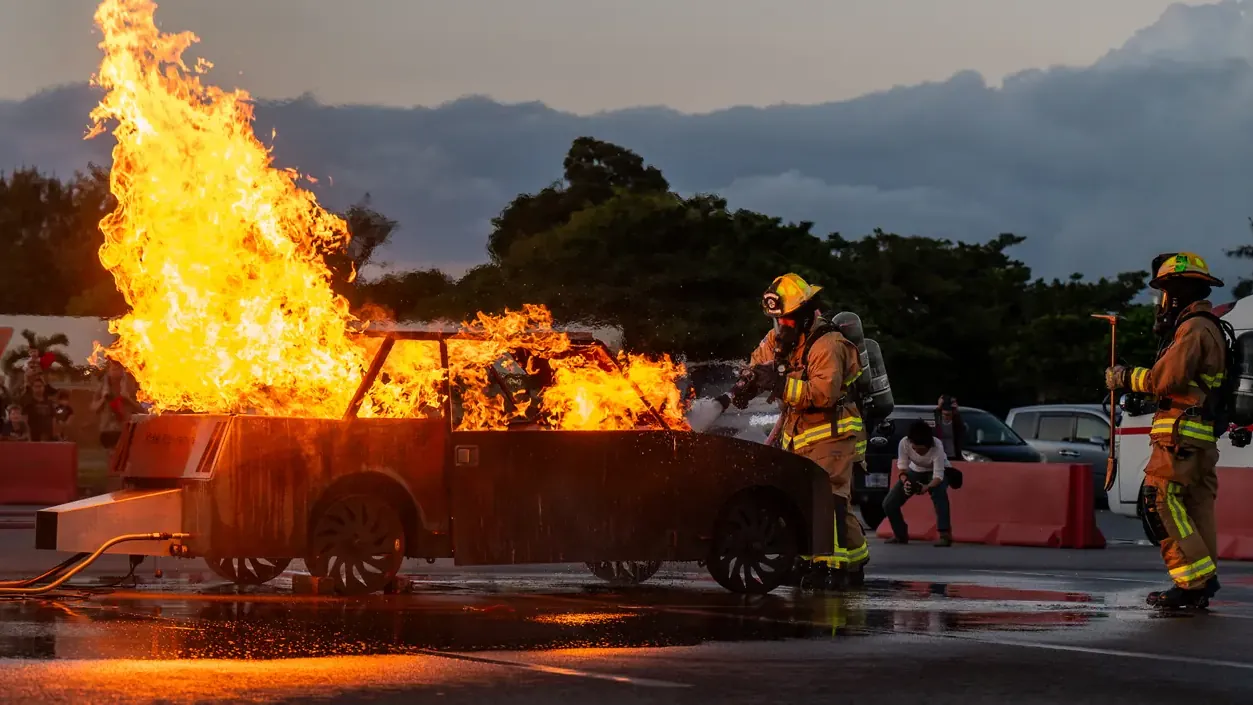
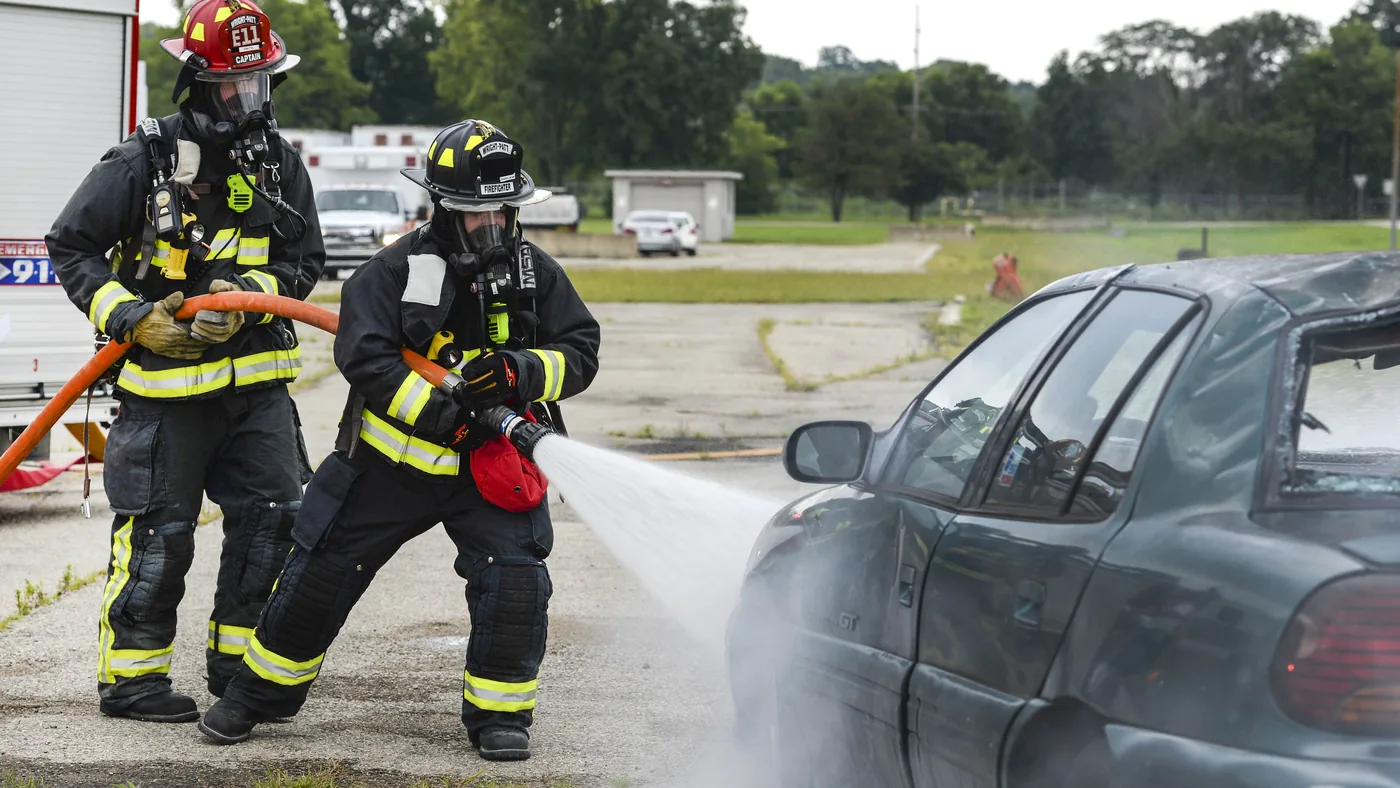
Retrieved Oct 6, 2026 - Firefighter photos (public domain, U.S. Air Force)
Wikimedia Commons
.jpg)
Processing
- Complaints are counted per component. One complaint can list several, so component totals add up to more than the total.
- Fuel cost = miles per year ÷ EPA combined mpg × EIA weekly price for your region.
Limitations
- Complaint counts are owner reports, not verified findings or failure rates. There is no sales denominator.
- Recall campaigns are listed for the model year. Only NHTSA and the automaker know whether a specific car was repaired.
- Recent model years are still collecting reports.
Review
Written and checked against primary sources by the Recalls & Safety desk.
Changelog
- 2026-10-06 Data refreshed from the official files.
Keep reading