Key takeaways
- Fuel cost = miles ÷ mpg × price per gallon. Cost per mile = price ÷ mpg.
- At this week's U.S. average of $4.354 for regular, 15,000 miles at 30 mpg costs about $2,177 a year.
- Where you live matters: this week's regional averages run from $3.829 to $6.227 a gallon.
- Driving style moves the number too: the EPA says aggressive driving can cut highway mpg by 15% to 30%.
How to calculate fuel cost
Fuel cost needs three numbers: the distance, your car's fuel economy and the price of a gallon. Divide the miles by the mpg to get gallons, then multiply by the price.
Worked example. A 2017 Honda Accord LX with the 2.4 L engine and CVT is rated 30 mpg combined by the EPA. Driven 15,000 miles a year, it uses 15,000 ÷ 30 = 500 gallons. At this week's U.S. average of $4.354 a gallon (EIA, week of Oct 5, 2026), that's $2,177 a year, or about $181 a month. To convert to the metric figure used outside the US, divide 235.215 by the mpg: 30 mpg is 7.8 liters per 100 km.
Fuel cost per mile
Cost per mile is the price of a gallon divided by your mpg. It's the easiest number for comparing cars, pricing a commute or checking a mileage reimbursement. At $4.354 a gallon, a 30-mpg car costs 14.5¢ a mile in fuel and a 20-mpg pickup 21.8¢. Fuel is only part of what a car costs to run; insurance, maintenance and depreciation come on top.
Trips, round trips and splitting the cost

For a road trip, take the distance from your map app, choose One trip above and tick Round trip if you're coming back. Add the number of people sharing the ride and we'll show each person's share. A 300-mile round trip at 30 mpg uses 20 gallons: $87.08 at this week's U.S. average, or $29.03 each for three people.
This week's gas prices by region, and what a year of driving costs
Gas prices vary more by place than most people expect. This table uses the EIA's weekly average retail price for regular gasoline, including taxes, and shows what 15,000 miles a year would cost at 25 and 35 mpg.
| Region or state | $ per gallon | Year at 25 mpg | Year at 35 mpg |
|---|---|---|---|
| US average | $4.354 | $2,612 | $1,866 |
| California | $6.227 | $3,736 | $2,669 |
| Central Atlantic | $4.363 | $2,618 | $1,870 |
| Colorado | $4.020 | $2,412 | $1,723 |
| East Coast | $4.147 | $2,488 | $1,777 |
| Florida | $3.970 | $2,382 | $1,701 |
| Gulf Coast | $3.911 | $2,347 | $1,676 |
| Lower Atlantic | $3.959 | $2,375 | $1,697 |
| Massachusetts | $4.302 | $2,581 | $1,844 |
| Midwest | $4.109 | $2,465 | $1,761 |
| Minnesota | $4.200 | $2,520 | $1,800 |
| New England | $4.343 | $2,606 | $1,861 |
| New York | $4.380 | $2,628 | $1,877 |
| Ohio | $3.829 | $2,297 | $1,641 |
| Rocky Mountain | $4.417 | $2,650 | $1,893 |
| West Coast | $5.727 | $3,436 | $2,454 |
| West Coast less California | $5.116 | $3,070 | $2,193 |
Source: U.S. Energy Information Administration, Gasoline and Diesel Fuel Update. Yearly cost = 15,000 ÷ mpg × price.
How much better fuel economy saves you
Each extra mpg saves less than the one before, because you're dividing by a bigger number. Going from 20 to 25 mpg saves more than going from 40 to 50. Yearly cost for 15,000 miles at $4.354 a gallon:
| Fuel economy | Gallons a year | Cost a year | Saves vs 20 mpg |
|---|---|---|---|
| 20 mpg | 750 | $3,266 | — |
| 25 mpg | 600 | $2,612 | $653 |
| 30 mpg | 500 | $2,177 | $1,089 |
| 35 mpg | 429 | $1,866 | $1,400 |
| 40 mpg | 375 | $1,633 | $1,633 |
| 50 mpg | 300 | $1,306 | $1,959 |
To see a specific car's rating by engine and transmission, open its report: for example the 2017 Honda Accord or the Toyota Camry by year.
Why your real-world fuel cost differs
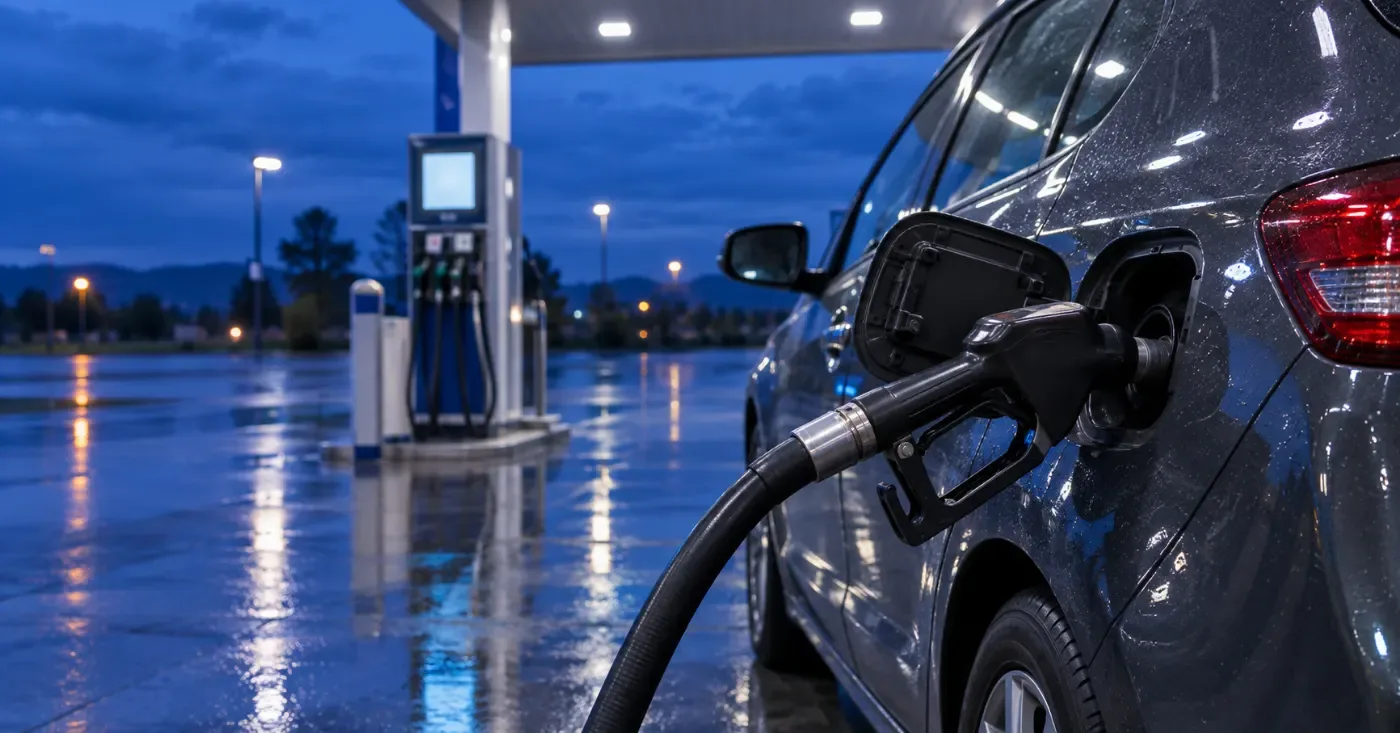
EPA ratings come from standardized lab tests, so they're the fair way to compare cars but not a promise for yours.
“EPA fuel economy estimates are based on standardized tests designed to reflect ‘typical’ driving conditions and driver behavior, but several factors can affect MPG significantly.”U.S. Department of Energy and EPA, fueleconomy.gov, Your Mileage Will Vary
Those factors are how and where you drive, the car's condition and maintenance, fuel variations, differences between individual vehicles and engine break-in. To budget, measure your own mpg over a few tanks with our MPG calculator and use that number here.
Ways to spend less on fuel
The Department of Energy's fueleconomy.gov puts numbers on the habits that matter most:
- Drive smoothly. Speeding, rapid acceleration and hard braking can lower mpg by roughly 15% to 30% at highway speeds and 10% to 40% in stop-and-go traffic.
- Ease off above 50 mph. Mileage usually drops quickly at higher speeds; fueleconomy.gov estimates each 5 mph over 50 is like paying about $0.31 more per gallon, at the $4.47 price it assumes.
- Don't idle. Idling can burn a quarter to half a gallon an hour, depending on engine size and air-conditioner use.
- Travel light. An extra 100 pounds can cut mpg by about 1%.
Source: fueleconomy.gov, Driving More Efficiently. For electric cars, the same idea applies with kilowatt-hours: the DOE's Vehicle Cost Calculator compares fuels.