Where Is the VIN on a Car, Truck or SUV?
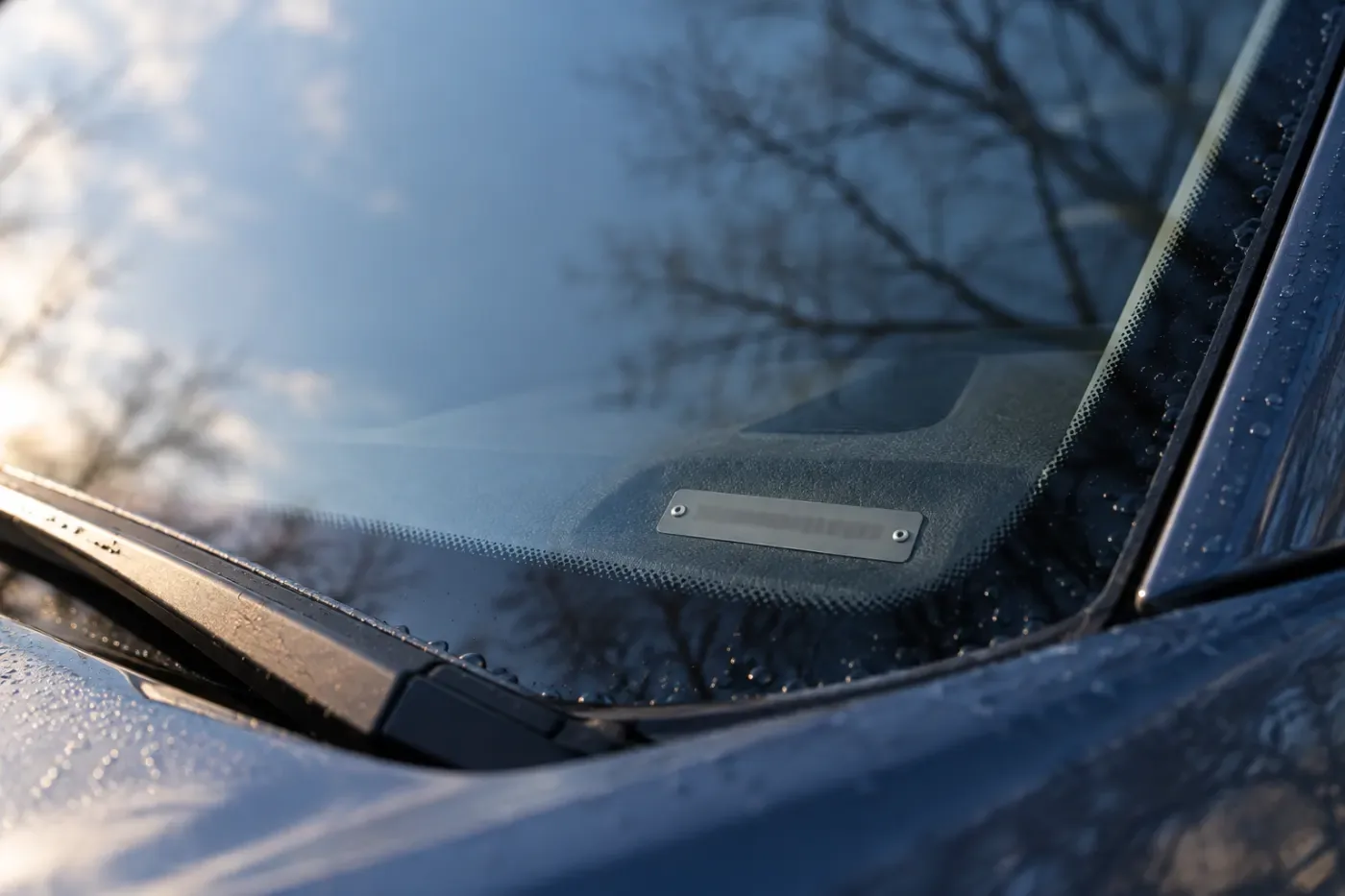
On most vehicles you'll find the 17-character VIN in two places on the car itself: the driver's-side corner of the dashboard, seen through the windshield, and the label in the driver's door jamb. It's also on your paperwork.
By the PlainVIN Vehicle Data Desk · Updated Oct 6, 2026
Key takeaways
- On cars, SUVs, pickups and vans, look through the windshield at the driver's-side lower corner of the dashboard. Federal rules require the VIN to be readable there from outside.
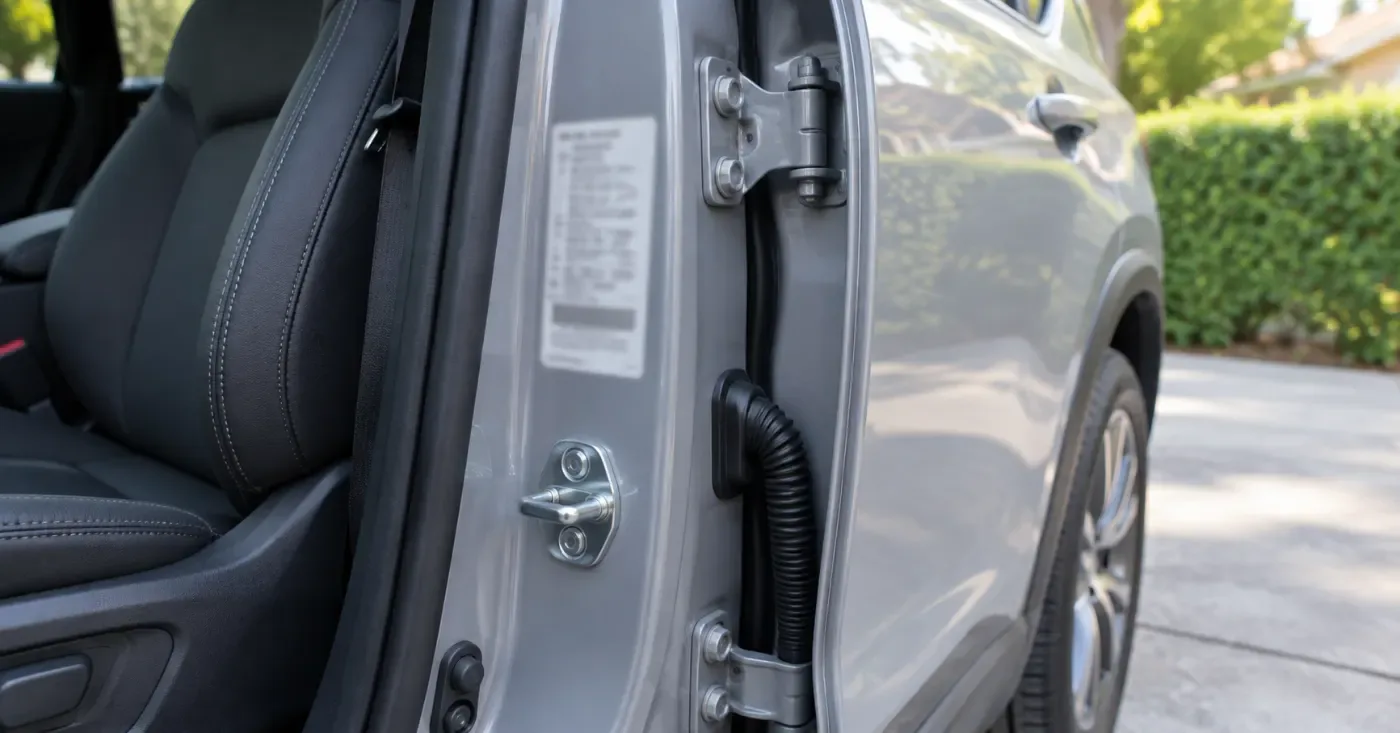
- The same VIN is on the certification label in the driver's door opening, and on your title, registration and insurance card.
- Motorcycles carry it near the steering head; trailers on the front half of the left side.
- Many cars also carry the VIN on up to 18 major parts. All copies should match the title; if they don't, stop and ask why.
VIN locations by vehicle type
Car or SUV
- 1Dashboard, driver's side
Look through the windshield at the lower corner on the driver's side. Federal rules require the VIN to be readable from outside the car here on passenger cars, SUVs and light trucks. - 2Driver's door jamb
Open the driver's door: the certification label on the door edge or the pillar usually prints the full VIN. - 3Under the hood
Many makers also stamp the VIN on the firewall or a frame part. Locations vary by make.
Pickup
- 1Dashboard, driver's side
Same place as on cars: through the windshield at the driver's-side lower corner, for trucks up to 10,000 lb GVWR. - 2Driver's door jamb
The certification label on the door or B-pillar. - 3Frame rail
On many body-on-frame trucks the VIN is also stamped on the frame. Check the owner's manual for the exact spot.
Minivan
- 1Dashboard, driver's side
Through the windshield at the driver's-side lower corner. - 2Driver's door jamb
On the certification label at the front door opening. - 3Under the hood
Often stamped on the firewall or a radiator support.
Motorcycle
- 1Steering head
Most motorcycles have the VIN stamped on the frame's steering neck, visible when you turn the handlebars to one side. - 2Frame or engine area
Some makers place it on the frame near the engine or on a label on the frame. The owner's manual shows the spot.
Documents
- 1Title and registration
Both list the full 17-character VIN. Compare it with the car before you buy. - 2Insurance card and policy
Your insurer prints the VIN on the card and policy documents.
Trailers are different: their certification label, with the VIN, goes on the forward half of the left side, readable from outside (49 CFR 567.4(c)).
Why the VIN is on the dashboard
The dashboard spot isn't a convention; it's a federal requirement. It lets police, inspectors and buyers read the VIN without opening the car. For passenger cars, SUVs and other multipurpose vehicles, low-speed vehicles and trucks up to 10,000 lb gross vehicle weight rating, the rule reads:
“It shall be readable, without moving any part of the vehicle, through the vehicle glazing under daylight lighting conditions by an observer … whose eye-point is located outside the vehicle adjacent to the left windshield pillar.”49 CFR 565.13(f)
The same rule sets each character at least 4 mm tall and requires the VIN to sit on a part that isn't removed except for repair, or on a plate permanently fixed to one. That is why you see a small metal plate or a sticker riveted to the top of the dash, not printed on the glass. If a sunshade, a parking permit or a phone mount covers it, move it aside rather than reading from inside: the plate is angled for viewing from outside, so stand by the driver's-side windshield pillar.
The door-jamb copy comes from a second rule. Every vehicle's certification label, which states that it meets federal safety standards and lists its weight ratings, must also show the VIN. On cars, trucks and SUVs it goes on the hinge pillar, the door-latch post or the door edge next to the driver's seat (49 CFR 567.4).
How many places is the VIN on a car?
At least two on the vehicle itself, and often many more. The table lists every location and the rule behind it, so you know which ones you can count on.
| Location | Which vehicles | Required by |
|---|---|---|
| Dashboard, read through the windshield | Cars, SUVs, vans, low-speed vehicles, trucks up to 10,000 lb GVWR | 49 CFR 565.13(f) |
| Certification label, driver's door opening | All except trailers and motorcycles | 49 CFR 567.4 |
| Label near the steering head | Motorcycles | 49 CFR 567.4(e) |
| Forward half of the left side | Trailers | 49 CFR 567.4(c) |
| Up to 18 major parts (engine, transmission, doors, hood, fenders, bumpers, quarter panels, tailgate) | Passenger cars; SUVs and pickups up to 6,000 lb GVWR in covered lines | 49 CFR 541.5 |
| Title, registration, insurance card | Every registered vehicle | State law and insurer practice |
What a VIN looks like
A modern VIN is 17 characters of capital letters and numbers with no spaces. The letters I, O and Q are never used, so if you think you see an O it's a zero. Here's an example, split the way a decoder reads it:
The first three characters identify the manufacturer, the 10th is the model year and the 9th is a check digit that catches typos. Our guide to reading a VIN character by character explains every position, and the model-year code chart turns the 10th character into a year. Vehicles built before the 1981 model year have shorter VINs in each maker's own format, so a 17-character decoder can't read them.
Hidden VINs on body parts
The "hidden VIN" people ask about is usually the parts marking. Federal theft-prevention rules require the VIN on up to 18 major parts of passenger cars, and of SUVs and pickups up to 6,000 lb GVWR in covered lines: the engine, transmission, both front fenders, hood, every door, both bumpers, the rear quarter panels or side assemblies, the pickup box and the tailgate, decklid or hatch. Engines and transmissions may carry just the last eight characters. Small-volume makers and lines with a NHTSA-approved anti-theft device can be exempt.
The markings are labels or stampings, often on an inner surface you only see with the part removed, and the automaker chooses the exact spot. Labels are designed to tear apart and leave residue if anyone peels them off, so investigators can tell a part's label has been removed. Some older and classic vehicles also have a second VIN stamping on the frame or firewall; enthusiast clubs and restorers know those spots by model.
Removing or altering any of these numbers is a federal crime. Knowingly removing, obliterating, tampering with or altering a vehicle or part identification number carries up to 5 years in prison under 18 U.S.C. 511, with exceptions for lawful repairers, scrap processors and state-approved VIN restorations.
How to find your VIN without the car
If the car is in the shop, was towed or was stolen, the VIN is still in plenty of places:
- Title and registration card. Both print the full VIN, usually labelled "VIN" or "Vehicle ID" near the year and make.
- Insurance card and policy. Also in your insurer's app or online account.
- Automaker app or owner account. Connected-car apps list the VIN on the vehicle screen.
- Loan, lease or purchase papers. The bill of sale and finance contract name the vehicle by VIN.
- Service and repair invoices. Dealers and most shops print it on every repair order.
- Your state motor-vehicle agency. It can provide the VIN to the registered owner with proof of identity.
Before you buy: make sure the VINs match
Checking the VIN in three places takes two minutes and is one of the best defenses against buying a stolen or cloned car.
- Read the dashboard plate through the windshield and photograph it.
- Read the door-jamb label and compare every character. Look for a label that is missing, newer than the rest of the car or partly peeled.
- Compare both with the title and the seller's ID. A title in a different name, or a VIN that differs by even one character, is a reason to walk away until it's explained.
- Look for tampering: scratched or replaced rivets on the dash plate, a plate that sits loose, or glue residue where a label used to be.
- Run the VIN. A free VIN decode confirms the year, make, model and engine match the car in front of you, and NHTSA's lookup shows open recalls. For title brands, accidents and mileage, see our guide to the free VIN check vs. a history report.
Found it? Decode it
VIN location FAQ
Where can I find the VIN number in my car?
Stand outside on the driver's side and look through the windshield at the lower corner of the dashboard: the VIN plate sits there. Then open the driver's door; the certification label on the door edge or pillar repeats it. It is also on your title, registration and insurance card.
What does a VIN number look like?
A VIN is 17 characters of capital letters and digits with no spaces, such as 1HGCR2F3XHA000000. The letters I, O and Q are never used, so they can't be mistaken for 1 and 0. Vehicles built before the 1981 model year have shorter numbers in each maker's own format.
How many places on a car is the VIN number?
At least two on the vehicle: the dashboard plate and the door-jamb certification label. Most passenger cars and lighter SUVs and pickups also carry it on up to 18 major parts, such as the engine, transmission, doors, hood, fenders and bumpers, under federal theft-prevention rules.
Where is the hidden VIN number on a car?
There isn't one secret spot. The "hidden" VINs are the parts markings: labels or stampings with the VIN (or, on engines and transmissions, at least its last eight characters) on major body and drivetrain parts. Their exact positions are set by each automaker and are mainly used by investigators to identify stolen parts.
Is my VIN number a secret?
No. It is printed where anyone can read it through the windshield, and sellers routinely publish it in listings. A VIN alone doesn't reveal your name or address; federal privacy law limits access to motor-vehicle records. Our VIN decoder guide explains what someone can and can't do with it.
Is it illegal to remove or alter a VIN?
Yes. Knowingly removing, obliterating, tampering with or altering a vehicle or part identification number is a federal crime punishable by up to 5 years in prison (18 U.S.C. 511). Repairers, scrap processors and people restoring a VIN under state law are exempt when they act lawfully.
Why should the VINs on the car and the title match?
A mismatch can mean a paperwork error, or a part, plate or label that was replaced or tampered with. Don't buy a car until the seller explains it, and ask your state motor-vehicle agency if you are unsure.
Can I find my VIN online?
Usually. Your insurer's app or website, your automaker's owner app or website and your loan or lease paperwork show it, and your state motor-vehicle agency can provide it with proof of ownership. A dealer can also look it up from your service records.
How this page was madeSources, processing, limits, review and changes
Data sources
- 49 CFR 565.13 — VIN general requirements
eCFR, read Oct 7, 2026 - 49 CFR 567.4 — Certification label location
eCFR, read Oct 7, 2026 - 49 CFR 541.3 and 541.5 — Theft-prevention parts marking
eCFR, read Oct 7, 2026 - 18 U.S.C. 511 — Altering or removing VINs
LII, read Oct 7, 2026
Processing
- Diagrams are simplified schematics, not drawings of any specific model.
Limitations
- Secondary VIN locations (engine bay, frame) vary by maker; check the owner's manual.
Review
Written by the Vehicle Data Desk from the federal rule text.
Changelog
- 2026-10-06 Data refreshed from the official files.