Ignition Switch and Key Recalls: Which Cars Are Affected
149 NHTSA recalls name an ignition switch, key or lock. See GM’s 2014 series, Mazda’s 0.6% repair rate, Nissan’s Rogue key and what to do.
Key takeaways
- NHTSA’s file holds 149 recalls that name an ignition switch, key, lock, cylinder or interlock, covering 39.4 million vehicles (a vehicle can be in more than one); 48% are reported repaired. 38 describe a switch or key that may turn the engine off or out of the run position.
- GM’s 2014 ignition switch series is the largest group, and its repair rates are low: the biggest recall (14V400, 5,877,718 vehicles) is only 37% repaired, and GM’s ignition recalls since 2010 leave an estimated 6.0 million vehicle-recalls unrepaired (overlaps counted). The 2014 notices told owners to remove everything from the key ring except the key until the repair was done.
- Mazda’s 2015 recall for 1989–1998 models whose ignition switch may overheat (15V674, 1,368,500 vehicles) is reported 0.62% repaired, the lowest rate among the large recalls in this guide.
- Keys fail too: Nissan’s jackknife key on the Rogue and Rogue Sport may collapse and shut off the vehicle (23V093, 712,458 vehicles, 33% repaired). Check your VIN at nhtsa.gov/recalls: repairs are free.
An ignition switch that moves out of “run” can shut an engine off at speed and, in the recalls below, leave the air bags unable to deploy, and NHTSA’s recall file holds more than a hundred recalls for ignition switches, keys, locks and interlocks. Most coverage of the subject is a history of the 2014 GM recalls. This guide uses NHTSA’s recall file to show every large ignition recall, what failed, and how many are still unrepaired.
Ignition recalls: the big picture
We count a recall when its subject or summary names an ignition switch, key, lock, cylinder or interlock, so a few that mention one in passing are included. Within them, 38 name a switch or key that may turn off or move out of the run position, 63 a key-removal, interlock or park fault, and 17 heat or a short (a recall can fall in more than one group). Here is who they belong to, for 2010 onward:
| Automaker | Campaigns | Vehicles potentially affected | Repaired (vehicle-weighted) | Est. not yet repaired |
|---|---|---|---|---|
| General Motors | 14 | 12,689,907 | 53% | 5,957,748 |
| Stellantis (FCA US) | 7 | 1,974,863 | 52% | 860,094 |
| Mazda | 1 | 1,368,500 | 1% | 1,360,015 |
| Honda | 2 | 1,358,659 | – | – |
| Nissan | 2 | 865,505 | 38% | 534,752 |
| Ford | 2 | 763,364 | 63% | 278,758 |
| Volkswagen Group | 5 | 164,310 | 63% | 30,903 |
| Porsche | 1 | 99,665 | 38% | 61,453 |
“Repaired” weights each campaign’s reported completion rate by its vehicle count; “not yet repaired” is the matching estimate. A vehicle in several campaigns is counted in each. Source: NHTSA recalls file and US DOT completion data, retrieved Oct 6, 2026; computed by PlainVIN.
General Motors dominates, and the numbers for GM and Stellantis double-count vehicles that are in more than one campaign. Mazda’s single recall has a 1% repair rate, and Nissan’s two are 38% repaired.
GM’s 2014 ignition switch recalls
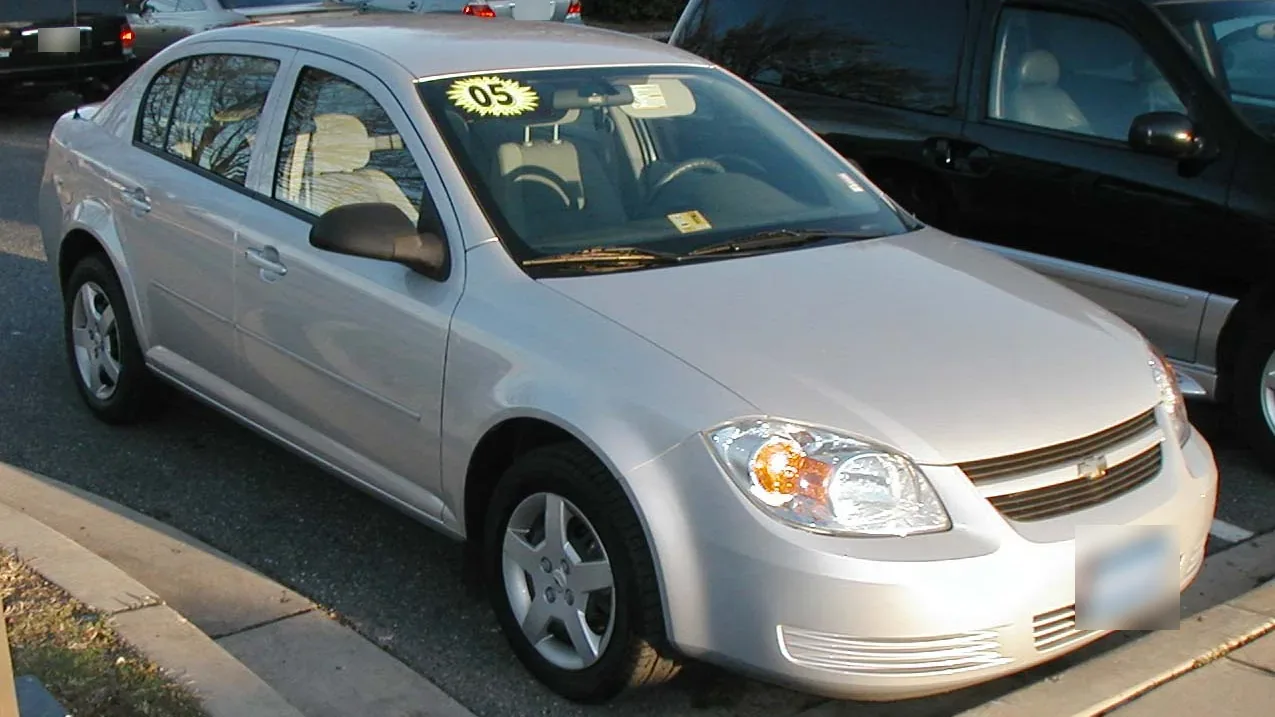
In February 2014 GM recalled 2005–2007 Chevrolet Cobalt and 2007 Pontiac G5 cars because the ignition switch may turn off (14V047). NHTSA’s record says the defect can affect the safe operation of the air bag system, and that if the key is not in the run position the air bags may not deploy in a crash. The notice told customers to remove all items from their key rings, leaving only the ignition key, and the remedy was a replacement switch. Over the next months GM filed more recalls, many of them for key design rather than the switch itself:
| Recall | Problem | Repair | Units | Repaired |
|---|---|---|---|---|
| 14V047 (Feb 2014) | Ignition switch may turn off (2005–2007 Cobalt, 2007 G5, later expanded) | Replace the switch | 2,190,934 | 72% |
| 14V346 (Jun 2014) | Knee contact may turn the key off (2010–2014 Camaro) | New key blades, two key rings | 464,712 | 48% |
| 14V355 (Jun 2014) | Ignition switch may turn off (2005–2009 LaCrosse, 2006–2011 Lucerne and others) | Key ring and key-slot insert or cover | 3,141,731 | 68% |
| 14V394 (Jul 2014) | Ignition switch may turn off (2003–2014 Cadillac CTS) | Key ring and key-slot insert or cover | 554,328 | 65% |
| 14V400 (Jul 2014) | Ignition switch may turn off (2000–2005 Impala, Monte Carlo and others) | Key ring and key-slot insert or cover | 5,877,718 | 37% |
| 14V490 (Aug 2014) | Key may be removable when not in Off (2002–2004 Saturn Vue) | Inspect; replace cylinder and keys if needed | 202,155 | 37% |
| 14V540 (Sep 2014) | Knee contact may turn the key off (2011–2013 Caprice, 2008–2009 G8) | Revised key blade and housing | 47,043 | 45% |
Source: NHTSA recalls file and US DOT completion data, retrieved Oct 6, 2026; table compiled by PlainVIN from each campaign’s record.
The largest, 14V400, covers 5,877,718 vehicles and is only 37% repaired, which is about 3.7 million vehicles still not fixed. GM also recalled the 2010–2014 Camaro because a driver’s knee may knock the key out of the run position, with 48% repaired.
Other switches and keys that shut the engine off
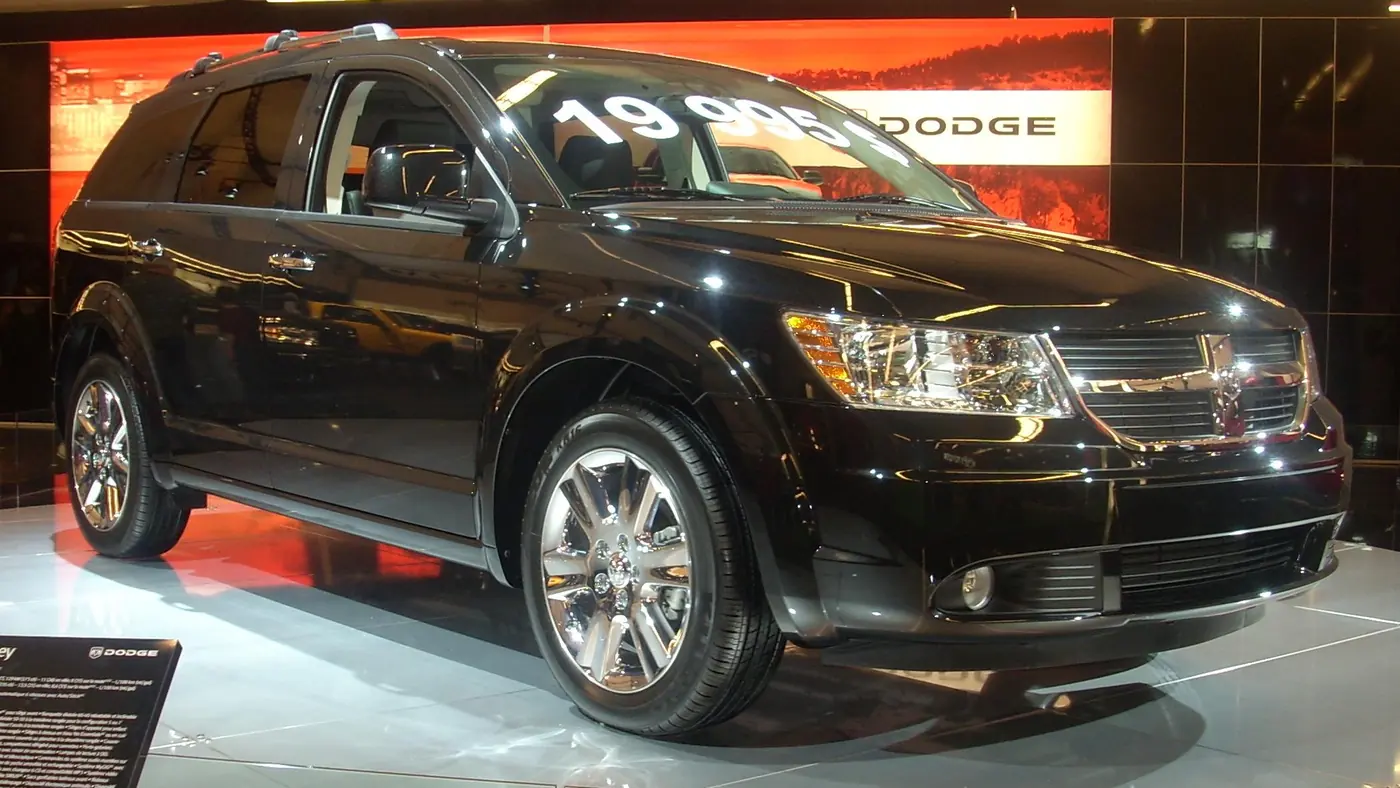
- Chrysler (14V373, June 2014). NHTSA’s record for 722,705 2009–2010 Dodge Journey and 2008–2010 Dodge Grand Caravan and Chrysler Town and Country vehicles says that if the key inadvertently moves into OFF or ACCESSORY the engine will turn off and depower key safety systems. Dealers replace the ignition switch and key fobs; 58% are repaired.
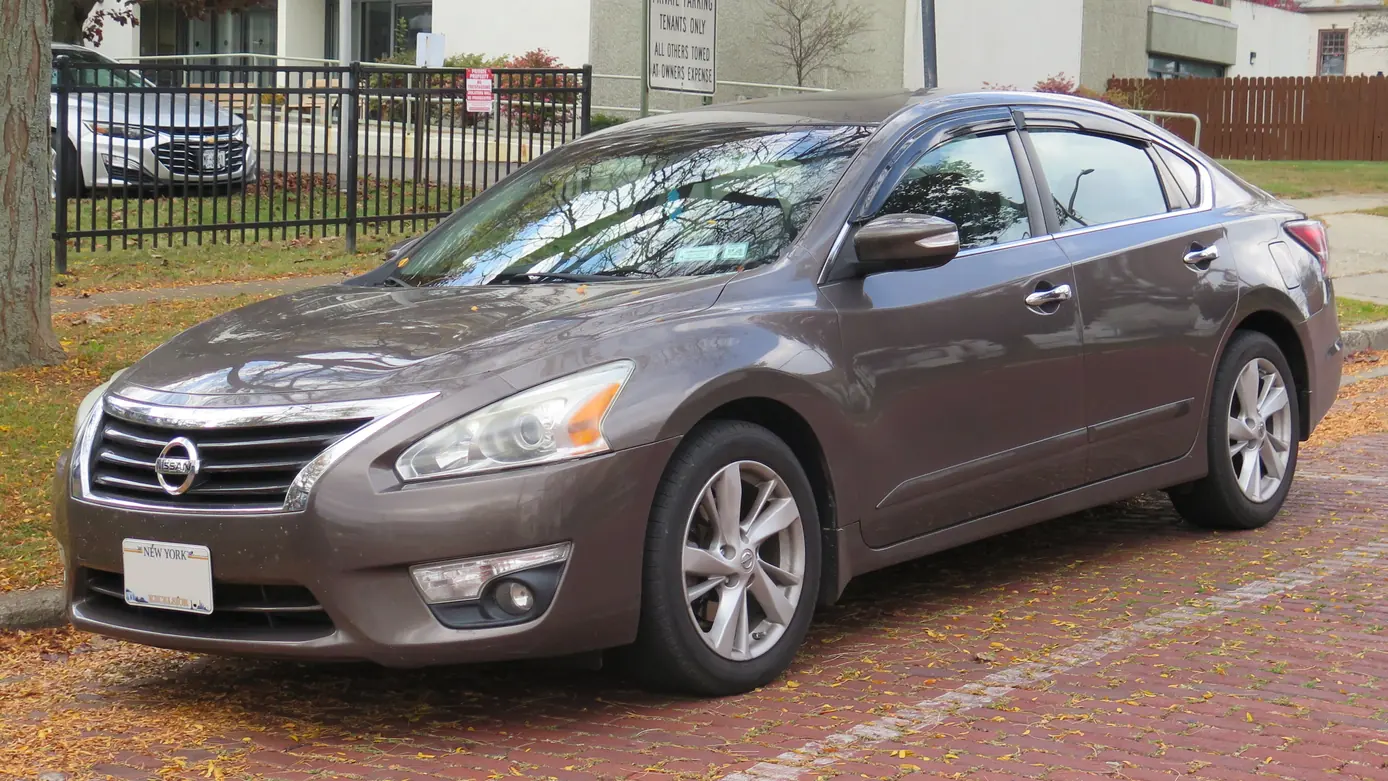
- Nissan (23V093, 2023). The jackknife-style key on 2014–2020 Rogue and 2017–2022 Rogue Sport vehicles may collapse into a folded position while driving, and contact with it could shut the vehicle off. Dealers insert a spacer into the key slot. Only 33% of the 712,458 vehicles are reported repaired.
- Volkswagen (23V604, 2023). The conventional ignition switch on 62,538 2019 Golf, Golf Alltrack, Golf SportWagen, GTI and Jetta vehicles may fail, especially in high temperature environments; dealers replace the switch and 64% are repaired.
| Filed | Vehicles (NHTSA wording) | Problem | Units | Repaired |
|---|---|---|---|---|
| Jul 2014 14V400000 | General Motors | Ignition Switch may Turn Off | 5,877,718 | 37% |
| Jun 2014 14V355000 | Certain model year 2005-2009 Buick LaCrosse, 2006-2011 Buick Lucerne, 2000-2005 Cadillac DeVille, 2006-2011 Cadillac DTS, 2006-2014 Chevrolet Impala and others | Ignition Switch may Turn Off | 3,141,731 | 68% |
| Feb 2014 14V047000 | General Motors | Ignition Switch may Turn Off | 2,190,934 | 72% |
| Jun 2014 14V373000 | Certain model year 2009-2010 Dodge Journey vehicles manufactured June 29, 2007, to June 17, 2010 and others | Ignition Switch may Turn Off | 722,705 | 58% |
| Feb 2023 23V093000 | Certain 2014-2020 Rogue and 2017-2022 Rogue Sport vehicles equipped with a jackknife style ignition key | Ignition Key May Collapse and Shut Off Vehicle | 712,458 | 33% |
| Jul 2014 14V438000 | Certain model year 2005-2007 Jeep Grand Cherokee vehicles manufactured February 11, 2004, to July 5, 2007, and 2006-2007 Jeep Commander vehicles manufactured January 31, 2005 and others | Knee Contact may Turn Ignition Switch Off | 649,353 | 50% |
| Jul 2014 14V394000 | General Motors | Ignition Switch may Turn Off | 554,328 | 65% |
| Jun 2014 14V346000 | All 2010-2014 Chevrolet Camaro vehicles manufactured December 3, 2008 to May 23, 2014 | Knee Contact may Turn Ignition Switch Off | 464,712 | 48% |
| Sep 2014 14V567000 | Certain model year 2008 Chrysler 300 vehicles manufactured May 31, 2007, to May 12, 2008, Dodge Magnum vehicles manufactured May 23, 2007, to May 12, 2008 and others | Ignition Switch may Turn off | 292,798 | 45% |
| Aug 2018 18V551000 | Certain 2017 Nissan NV200, Sentra, NV3500 Van, NV3500 Bus, NV200 Taxi, NV1500, NV2500 Van, Chevrolet City Express, 2017-2018 Frontier, Versa Note and others | Ignition Switch may Turn Off | 153,047 | 62% |
Vehicle descriptions are NHTSA’s own summary wording; “repaired” is the share the manufacturer reports as fixed, and new campaigns start near zero. Source: NHTSA recalls file and US DOT completion data, retrieved Oct 6, 2026.
Switches that overheat, melt or short
Several of the largest older recalls are about heat. GM’s 2002 and 2004 recalls (02V070, 1,589,948 vehicles; 04V036, 1,415,231) say that if the engine fails to start and the driver holds the key in the start position, high current may melt internal switch parts, and dealers installed a relay kit to prevent it. Honda’s 2002 recall for 1,000,000 vehicles (02V120) says electrical contacts in the ignition switch can degrade, and dealers replace the switch. Ford’s 1996 recall (96V071) covers 7,900,000 vehicles whose ignition switch could suffer an internal short circuit. The newest is Mazda’s 2015 recall (15V674, 1,368,500 vehicles) for 1989–1998 MPV, 323, Protege, MX-3, 929, MX-6 and 626 models, where grease on the switch contacts may become conductive and overheat, raising the risk of a fire. Mazda reports 0.62% repaired, and the cars it covers are now 28 to 37 years old, an age at which many have changed hands or left the road.
“If the ignition switch overheats there would be an increased risk of a fire.”NHTSA recall record 15V674, Mazda, nhtsa.gov
Key and interlock faults that allow movement
The ignition lock also keeps the shifter in Park when the key is out. Honda’s 2012 recall (12V573, 807,161 vehicles) covers 2003–2004 Pilot and Odyssey and 2003–2006 Acura MDX models whose interlock lever may deform, so the key can be removed when the selector is not in Park, which can let the vehicle roll away. Dealers install an updated shift interlock lever. Hyundai’s July 2024 recall (24V562, 12,612 2010–2013 Genesis Coupe vehicles) says a return spring in the ignition lock switch may fracture, which can result in movement when the vehicle is started in gear without the parking brake applied; only 14% are repaired. See also our transmission problems guide and parking brake guide.
Recent ignition recalls
Recent recalls are mostly software faults that end in the same symptom. Volkswagen’s September 2026 recall (26V587, 49,958 2025 Tiguan vehicles) says a body control module error may reset and switch the ignition off, causing an engine stall; it is new, so no repair rate is reported yet. Our electrical problems guide covers the wider pattern.
What to do if your ignition or key has a recall
- Check your VIN at nhtsa.gov/recalls or with our VIN decoder. GM’s recalls were spread over many campaigns, so check every one, not just the first.
- Until the repair is done, follow the notice: for the GM and Chrysler recalls NHTSA’s record says to remove everything from the key ring except the key, and the key fob if there is one.
- If the engine shuts off while driving, remember NHTSA’s Chrysler record says it depowers key safety systems: stay calm, steer, brake and pull over when it is safe.
- Ask about parts. Some repairs, like Nissan’s key spacer, are quick; others wait for parts.
- Report it even if it was fixed: see our guide to filing a complaint.
For the air bags that depend on the key position see our air bag guide, and for the wider picture our most common car problems guide.
If the key turns but the engine will not crank, see our starter and alternator recalls guide.
Recall figures are PlainVIN’s analysis of NHTSA’s files and update when we refresh the data. “Reported repaired” is the automaker’s figure. This guide is general information, not mechanical advice for a specific vehicle.
Frequently asked questions
Which cars have had ignition switch recalls?
NHTSA’s file holds 149 recalls that name an ignition switch, key, lock, cylinder or interlock. The largest are GM’s 2014 series (14V047, 14V355, 14V394, 14V400), Chrysler’s 2009–2010 Journey and 2008–2010 Grand Caravan and Town and Country (14V373), Mazda’s 1989–1998 models (15V674) and Nissan’s 2014–2022 Rogue and Rogue Sport (23V093).
Why did GM’s ignition switch recalls say to remove things from the key ring?
NHTSA’s record says the ignition switch may turn off, and until the recall is performed customers should remove all items from their key rings, leaving only the ignition key. If the key is not in the run position the air bags may not deploy in a crash.
How many GM ignition switch recalls are still unrepaired?
GM’s largest 2014 recall (14V400) covers 5,877,718 vehicles and is reported 37% repaired, about 3.7 million still open. Across all 14 GM ignition recalls since 2010 NHTSA’s data implies roughly 6.0 million vehicle-recalls unrepaired, with overlaps counted.
Can an ignition switch overheat and start a fire?
Mazda’s 2015 recall (15V674) for 1989–1998 models says grease on the switch contacts may become conductive and overheat, increasing the risk of a fire. Older GM recalls (02V070, 04V036) describe switch parts melting when the key is held in start; dealers installed a relay kit.
What is the Nissan Rogue key recall?
Recall 23V093 covers 2014–2020 Rogue and 2017–2022 Rogue Sport vehicles with a jackknife-style key that may collapse into a folded position while driving and could shut the vehicle off. Dealers insert a spacer into the key slot; 33% of 712,458 vehicles are reported repaired.
Can a key be removed when the car is not in Park?
Honda’s 2012 recall (12V573, 807,161 vehicles) says the interlock lever may deform so the key can be removed with the selector not in Park, allowing rollaway. GM’s 14V490 covered 2002–2004 Saturn Vue keys that may be removable when the ignition is not Off.
Are ignition recall repairs free?
Yes. The automaker pays for the repair, whether it is a new switch, a key spacer, a key insert or new lock cylinders. Check your VIN at nhtsa.gov/recalls.
About the PlainVIN Recalls & Safety Desk
This desk covers recall campaigns and completion rates, owner complaints filed with NHTSA, and NHTSA 5-Star Safety Ratings.
Every figure in this guide links to its primary source. See our editorial policy, how we use AI and corrections log.
How this page was madeSources, processing, limits, review and changes
Data sources
- NHTSA recalls file, including campaigns 02V070, 02V120, 04V036, 12V573, 14V047, 14V346, 14V355, 14V373, 14V394, 14V400, 14V490, 14V540, 15V674, 23V093, 23V604, 24V562, 26V587 and 96V071
Retrieved Oct 6, 2026 - NHTSA recall record, General Motors campaign 14V400
nhtsa.gov - NHTSA recall record, Mazda campaign 15V674
nhtsa.gov - NHTSA recall record, Nissan campaign 23V093
nhtsa.gov - NHTSA, Report a Safety Problem
nhtsa.gov
Processing
- Complaints are counted per component. One complaint can list several, so component totals add up to more than the total.
- Fuel cost = miles per year ÷ EPA combined mpg × EIA weekly price for your region.
Limitations
- Complaint counts are owner reports, not verified findings or failure rates. There is no sales denominator.
- Recall campaigns are listed for the model year. Only NHTSA and the automaker know whether a specific car was repaired.
- Recent model years are still collecting reports.
Review
Researched by Daniel B. and Olivia C., technical check by Ethan B., edited by Sophia M. (see the editorial team page). Drafted with AI assistance and checked against primary sources by the Recalls & Safety desk.
Changelog
- 2026-10-06 Data refreshed from the official files.
Keep reading