Cars With Transmission Problems: What 200,000 Owner Complaints Show
Which cars and model years draw the most transmission complaints to NHTSA, from the Ford Focus PowerShift to the Jeep Cherokee 9-speed, how transmission recalls differ from wear problems, and what to check before buying.
Key takeaways
- Transmission and driveline problems, which NHTSA files under “power train”, are named in 205,653 owner complaints, 13.5% of all complaints in its file.
- The model years with the most power-train complaints include the 2012–2016 Ford Focus, the 2014–2019 Jeep Cherokee, the 2002 Ford Explorer, the 2004–2005 Nissan Maxima, the 2004–2005 Ford Freestar and several F-150 years. For some, more than half of all complaints name the power train.
- Most transmission complaints never become recalls. Recalls cover safety failures, above all rollaway: 125 power-train recalls for rollaway or not holding Park have covered 38.5 million vehicles.
- Before buying a used car, check its model year’s power-train complaints and recalls, test-drive it from cold, and pay for an independent inspection.
The cars with the most transmission problems reported to NHTSA include the 2012–2016 Ford Focus, the 2014–2019 Jeep Cherokee and several early-2000s Ford, Nissan and Honda models. For some of these model years, more than half of all owner complaints name the transmission or driveline. This guide uses NHTSA’s complaint file to show which models and years draw the most of these reports, how transmission recalls differ from everyday transmission failures, and what to check before you buy.
How common are transmission complaints?
NHTSA’s complaint form uses a “power train” category for the transmission, clutch, driveshaft and axles. It is the second-largest category in the file after electrical problems:
| Model year | Complaints naming it | All complaints | Share |
|---|---|---|---|
| 2008 | 6,154 | 63,555 | 9.7% |
| 2009 | 3,748 | 42,631 | 8.8% |
| 2010 | 5,511 | 49,326 | 11.2% |
| 2011 | 6,410 | 52,599 | 12.2% |
| 2012 | 7,949 | 52,754 | 15.1% |
| 2013 | 9,648 | 60,543 | 15.9% |
| 2014 | 9,941 | 54,325 | 18.3% |
| 2015 | 9,037 | 51,372 | 17.6% |
| 2016 | 8,928 | 50,596 | 17.6% |
| 2017 | 8,177 | 49,575 | 16.5% |
| 2018 | 6,925 | 47,071 | 14.7% |
| 2019 | 7,154 | 39,712 | 18.0% |
| 2020 | 4,951 | 28,897 | 17.1% |
| 2021 | 4,206 | 26,553 | 15.8% |
| 2022 | 3,717 | 24,253 | 15.3% |
| 2023 | 2,609 | 20,856 | 12.5% |
| 2024 | 2,072 | 15,624 | 13.3% |
| 2025 | 1,050 | 9,808 | 10.7% |
| 2026 | 345 | 3,137 | 11.0% |
One complaint can name several components. Recent model years are still collecting reports. Source: NHTSA owner complaints file, retrieved Oct 6, 2026; computed by PlainVIN.
The share was highest, around 17–18%, for many 2014–2020 models, the period that produced several of the problem transmissions described below. It has eased for the newest models, though those are still collecting reports. For how transmissions compare with other problem areas, see the most common car problems.
Cars with the most transmission complaints
| Model | Model years | Complaints naming it | Share of the model’s complaints |
|---|---|---|---|
| Ford F-150 | 1985–2025 | 9,096 | 23.5% |
| Ford Focus | 2000–2018 | 6,801 | 30.8% |
| Jeep Cherokee | 1985–2026 | 5,633 | 38.0% |
| Ford Explorer | 1990–2026 | 5,389 | 15.6% |
| Ford Escape | 2000–2025 | 4,648 | 17.0% |
| Jeep Grand Cherokee | 1986–2026 | 4,626 | 15.6% |
| Honda Accord | 1981–2025 | 3,811 | 15.5% |
| Ford Fusion | 2006–2020 | 3,134 | 14.0% |
| Honda Odyssey | 1995–2025 | 3,062 | 24.1% |
| Ford Taurus | 1981–2018 | 2,896 | 15.9% |
| Ford Windstar | 1985–2004 | 2,608 | 18.4% |
| Chevrolet Silverado 1500 | 1997–2026 | 2,501 | 13.8% |
| Nissan Pathfinder | 1987–2026 | 2,493 | 33.9% |
| Nissan Maxima | 1985–2020 | 2,441 | 35.3% |
| Jeep Wrangler | 1987–2026 | 2,423 | 13.1% |
Counts of owner reports, not verified defects or rates; models that sold in larger numbers draw more complaints. The share compares with all complaints for that model over the same model years. Source: NHTSA owner complaints file, retrieved Oct 6, 2026; computed by PlainVIN.
Two columns matter. The count shows which models drew the most reports, which favors best-sellers like the F-150. The share shows how dominant the transmission is among each model’s problems: for the Jeep Cherokee, Nissan Maxima and Nissan Pathfinder, about a third or more of all complaints name the power train, against about one in seven across the whole file.
The worst model years
Transmission problems tend to cluster in particular model years, usually around a new transmission design:
| Vehicle | Complaints naming it | Share of that year’s complaints |
|---|---|---|
| 2014 Ford Focus | 1,576 | 61% |
| 2002 Ford Explorer | 1,502 | 46% |
| 2014 Jeep Cherokee | 1,469 | 55% |
| 2012 Ford Focus | 1,446 | 38% |
| 2013 Ford F-150 | 1,338 | 45% |
| 2013 Ford Focus | 1,102 | 52% |
| 2018 Ford F-150 | 1,011 | 44% |
| 2015 Jeep Cherokee | 1,004 | 56% |
| 2004 Nissan Maxima | 934 | 65% |
| 2003 Honda Accord | 924 | 47% |
Source: NHTSA owner complaints file, retrieved Oct 6, 2026; computed by PlainVIN.
- Ford Focus, 2012–2016: these years used Ford’s DPS6 “PowerShift” dual-clutch automatic, which owners said could slip, buck and jerk; it led to a class-action settlement (Jalopnik). The 2014 Focus has the most power-train complaints of any model year in the file. See the Ford Focus by year.
- Jeep Cherokee, 2014–2019: more than half of 2014 and 2015 complaints name the power train. In 2016 Chrysler recalled about 330,000 vehicles with its 9-speed automatic, including the 2014–2015 Cherokee and 2015 Chrysler 200, because a wiring fault could make the transmission shift unexpectedly to neutral (campaign 16V529). See the Jeep Cherokee.
- Ford F-150: several years stand out, and Ford has recalled 2011–2013, 2014 and 2015–2017 F-150s for unexpected downshifts that can cause a loss of control (campaigns 19V075, 24V444 and 26V237).
- 2003 Honda Accord and 2002 Honda Odyssey: both were covered by Honda’s 2004 automatic transmission recall of about 1.1 million vehicles (04V176).
- 2004–2005 Nissan Maxima, 2002 Ford Explorer and 2004–2005 Ford Freestar: very high power-train shares. The Freestar was recalled in 2012 for torque converter malfunctions (12V006); we found no transmission safety recall for the Maxima or Explorer years.
Nissan’s CVTs of the early 2010s (Altima, Sentra, Rogue, Pathfinder) are often named in “cars to avoid” lists. Nissan issued service bulletins to address the “judder” many owners described (Jalopnik), and the Pathfinder appears in the models table above. Each model’s best and worst years page ranks every year by complaints, for example the Ford Focus best and worst years.
Transmission recalls: mostly about safety, not wear
A transmission that slips, shudders or fails early is a costly reliability problem, but it isn’t automatically a safety defect. Federal recall law is built around safety, which the statute defines this way:
“‘motor vehicle safety’ means the performance of a motor vehicle or motor vehicle equipment in a way that protects the public against unreasonable risk of accidents occurring because of the design, construction, or performance of a motor vehicle, and against unreasonable risk of death or injury in an accident…”49 U.S.C. 30102(a)(9)
So a transmission that wears out early may be covered by a warranty or a settlement, but it is recalled only when the failure creates a crash or injury risk. That is why the transmission recalls in NHTSA’s file look very different from the complaints:
Rollaway dominates: a broken shift cable, a parking pawl that doesn’t engage, or a shifter that shows Park when the transmission isn’t in Park can let a parked vehicle roll. The largest power-train recalls since 2016:
| Filed | Vehicles (NHTSA wording) | Problem | Units | Repaired |
|---|---|---|---|---|
| Jun 2022 22V413000 | Certain 2013-2019 Escape, 2013-2018 C-Max, 2013-2016 Fusion, 2013-2021 Transit Connect, and 2015-2018 Edge vehicles | Unintentional Rollaway Due to Detached Shift Cable | 2,925,968 | 70% |
| Dec 2017 17V821000 | Certain 2016-2017 Ram 3500 Cab Chassis with a Gross Vehicle Weight Rating (GVWR) of less than 10,000 lbs, 2011-2017 Ram 3500, 4500 and 5500 Cab Chassis vehicles and others | Vehicle May Rollaway | 1,482,874 | 59% |
| Apr 2026 26V237000 | Certain 2015-2017 F-150 vehicles | Unexpected Downshift Can Cause Loss of Control | 1,392,935 | – |
| Feb 2019 19V075000 | Certain 2011-2013 F-150 vehicles equipped with a 6-speed automatic transmission | Unexpected Transmission Downshift | 1,263,051 | 60% |
| Apr 2016 16V240000 | Certain model year 2012-2014 Dodge Charger and Chrysler 300 vehicles manufactured February 15, 2011, to November 27, 2014 and others | Driver may Exit Vehicle when it is not in PARK | 811,290 | 79% |
| Jun 2026 26V402000 | Certain 2018-2021 Navigator, Expedition, 2020-2021 Explorer, Lincoln Aviator, and 2021 F-150 vehicles | Vehicle Rollaway Risk | 741,195 | – |
| Jun 2024 24V444000 | Certain 2014 F-150 vehicles | Unexpected Downshift Can Cause Loss of Control | 552,188 | 53% |
| Jul 2018 18V471000 | Certain 2013-2014 Ford Escape, and 2013-2016 Ford Fusion vehicles, equipped with six-speed automatic transmissions | Unintentional Rollaway Due to Detached Shift Cable | 504,182 | 67% |
Vehicle descriptions are NHTSA’s own summary wording; “repaired” is the share the manufacturer reports as fixed, and new campaigns start near zero. Source: NHTSA recalls file and US DOT completion data, retrieved Oct 6, 2026.
If your car has an open transmission recall, the repair is free. For problems that aren’t recalls, ask the dealer whether a technical service bulletin or an extended warranty covers your transmission; our guide to TSBs vs recalls explains the difference. All of a model’s recalls are on its recall page, for example Ford F-150 recalls.
Signs of transmission trouble
Have the car checked promptly if you notice:
- slipping: the engine revs rise but the car doesn’t speed up to match;
- delayed engagement, a clunk or a hard shift when you select Drive or Reverse;
- shuddering or “judder” at low speeds, common in complaints about CVTs and dual-clutch transmissions;
- a transmission warning light or a check-engine light with a transmission code;
- a burning smell or red fluid leaking under the car;
- a car that moves when the shifter shows Park, or a warning that the car isn’t in Park. Stop using it and check for a rollaway recall at once.
If the problem affects safety, such as a sudden downshift at speed, loss of drive or rolling while in Park, also report it to NHTSA. Complaint patterns are how NHTSA decides what to investigate.
Buying a used car? Check the transmission
- Look up the model year. Open its report and check how many complaints name the power train, and whether there are open recalls. Our VIN decoder identifies the exact model year and engine.
- Ask for service records showing transmission fluid changes and any transmission repairs or software updates.
- Test-drive from cold, including stop-and-go traffic, a hill and highway speeds. Feel for slipping, shudder and harsh shifts.
- Pay for an independent inspection that includes a scan for stored transmission codes. Our used car inspection checklist covers the rest.
Complaint and recall figures are PlainVIN’s analysis of NHTSA’s files and update when we refresh the data; complaints are owner reports, not verified defects, and best-selling models draw more of every kind. This guide is general information, not mechanical advice.
Frequently asked questions
Which car has the worst transmission problems?
By owner complaints to NHTSA, the 2014 Ford Focus has the most transmission and driveline complaints of any model year, and for several 2012–2016 Focus years more than half of all complaints name the power train. The 2014–2015 Jeep Cherokee and 2004–2005 Nissan Maxima also stand out.
Which cars have the fewest transmission problems?
No dataset ranks transmission reliability per vehicle, but in NHTSA’s file some best-selling models, such as the Toyota Camry, have a power-train share well below the file average of about one complaint in seven. Check any model’s report for its power-train share by year.
Are transmission problems covered by recalls?
Only when they create a safety risk, such as rollaway, a sudden downshift or loss of drive. Wear problems like slipping or shudder are usually handled through warranties, service bulletins or, sometimes, legal settlements.
Can you drive a car with transmission problems?
It depends on the problem. Slipping, a warning light or harsh shifts should be checked promptly before they get worse. If the car moves in Park, downshifts suddenly or loses drive, stop driving it and check for a recall.
What are the first signs of a transmission going out?
Slipping, delayed engagement when selecting Drive or Reverse, harsh or clunky shifts, shudder at low speed, a warning light, a burning smell or fluid leaks.
Did Ford recall the Focus PowerShift transmission?
We found no safety recall in NHTSA’s file for the Focus transmission’s slipping and shudder; it led to a class-action settlement instead, as Jalopnik reported. Check a specific Focus by VIN for any open recalls.
How do I check a used car’s transmission history?
Look up the model year’s complaints and recalls, ask for service records, test-drive from cold in traffic and on the highway, and have an independent mechanic scan for transmission codes.
About the PlainVIN Recalls & Safety Desk
This desk covers recall campaigns and completion rates, owner complaints filed with NHTSA, and NHTSA 5-Star Safety Ratings.
Every figure in this guide links to its primary source. See our editorial policy, how we use AI and corrections log.
How this page was madeSources, processing, limits, review and changes
Data sources
- NHTSA owner complaints file (component: power train) and recalls file
Retrieved Oct 6, 2026 - 49 U.S.C. 30102 — Definitions (motor vehicle safety)
LII, read Oct 8, 2026 - Beware Of These 8 Used Cars Known For Their Transmission Problems
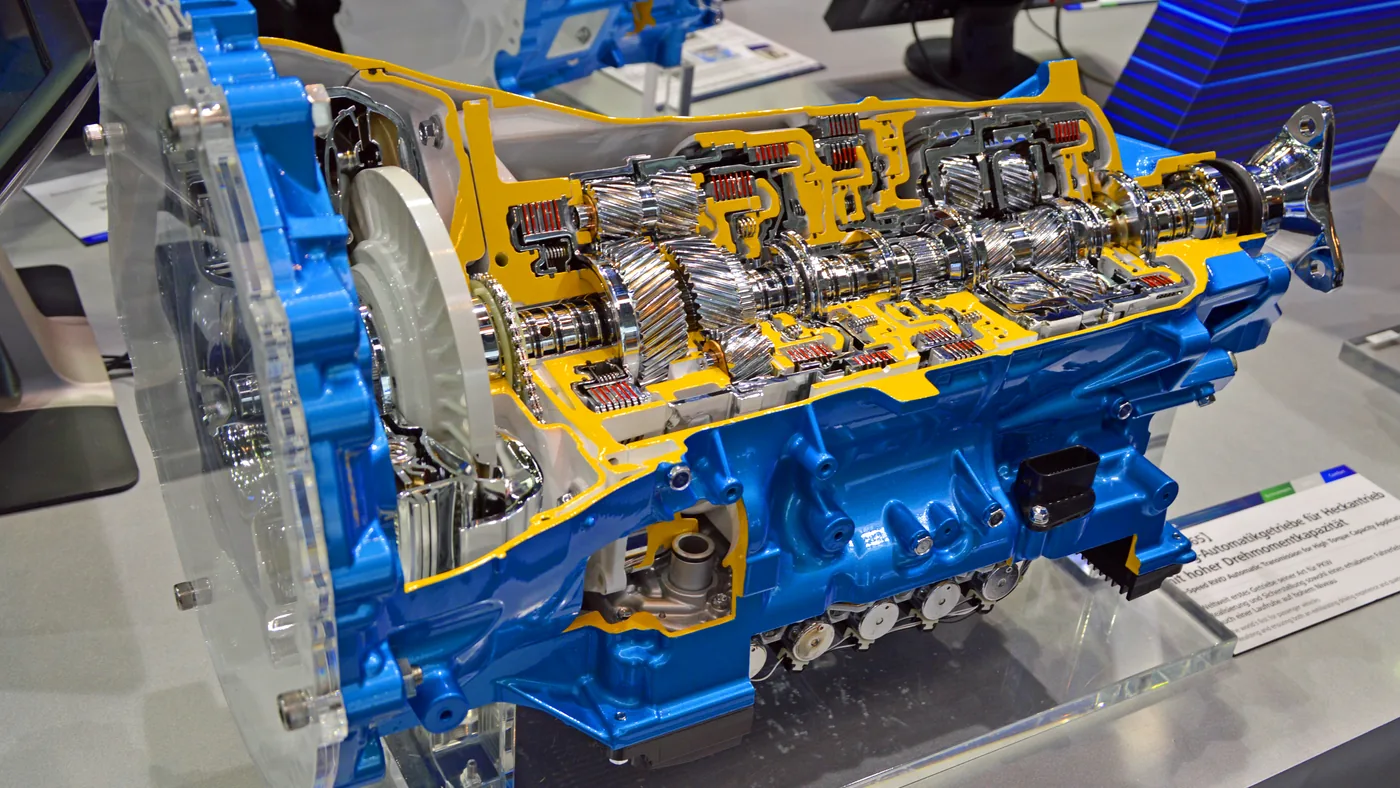
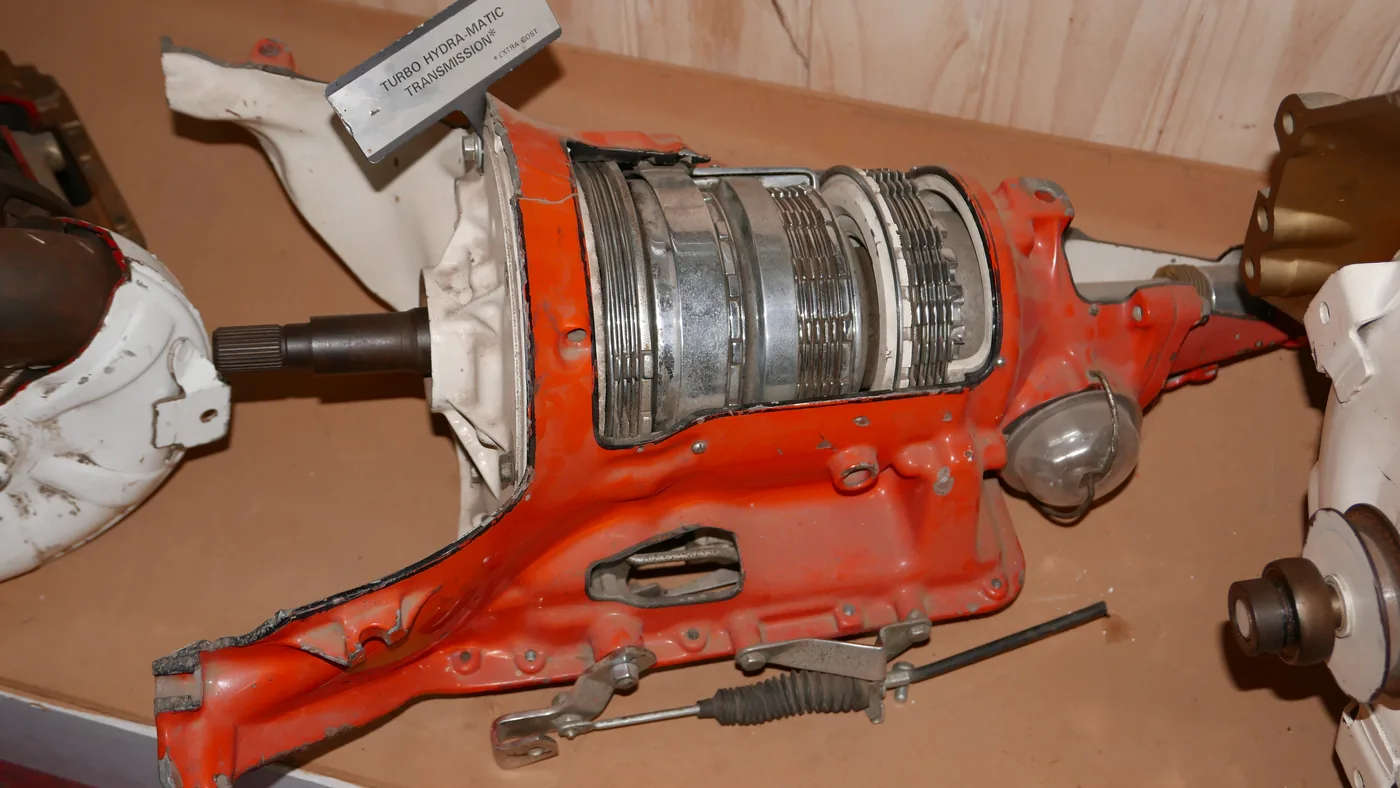
Jalopnik, Apr 10, 2026 - Transmission cutaway photos (CC0 and public domain)
Wikimedia Commons: Spielvogel; OSX

Processing
- Complaints are counted per component. One complaint can list several, so component totals add up to more than the total.
- Fuel cost = miles per year ÷ EPA combined mpg × EIA weekly price for your region.
Limitations
- Complaint counts are owner reports, not verified findings or failure rates. There is no sales denominator.
- Recall campaigns are listed for the model year. Only NHTSA and the automaker know whether a specific car was repaired.
- Recent model years are still collecting reports.
Review
Written and checked against primary sources by the Recalls & Safety desk.
Changelog
- 2026-10-06 Data refreshed from the official files.
Keep reading