Parking Brake Problems and Recalls: Which Cars Are Affected
338 NHTSA recalls cover parking brakes that may not hold or apply by themselves. See the largest, electric brake faults, corroded actuators and what to do.
Key takeaways
- NHTSA’s file holds 338 recalls filed first under the parking brake, covering 5.5 million vehicles; 80% are reported repaired. Most are about a brake that may not hold, or an electric brake that applies when it should not.
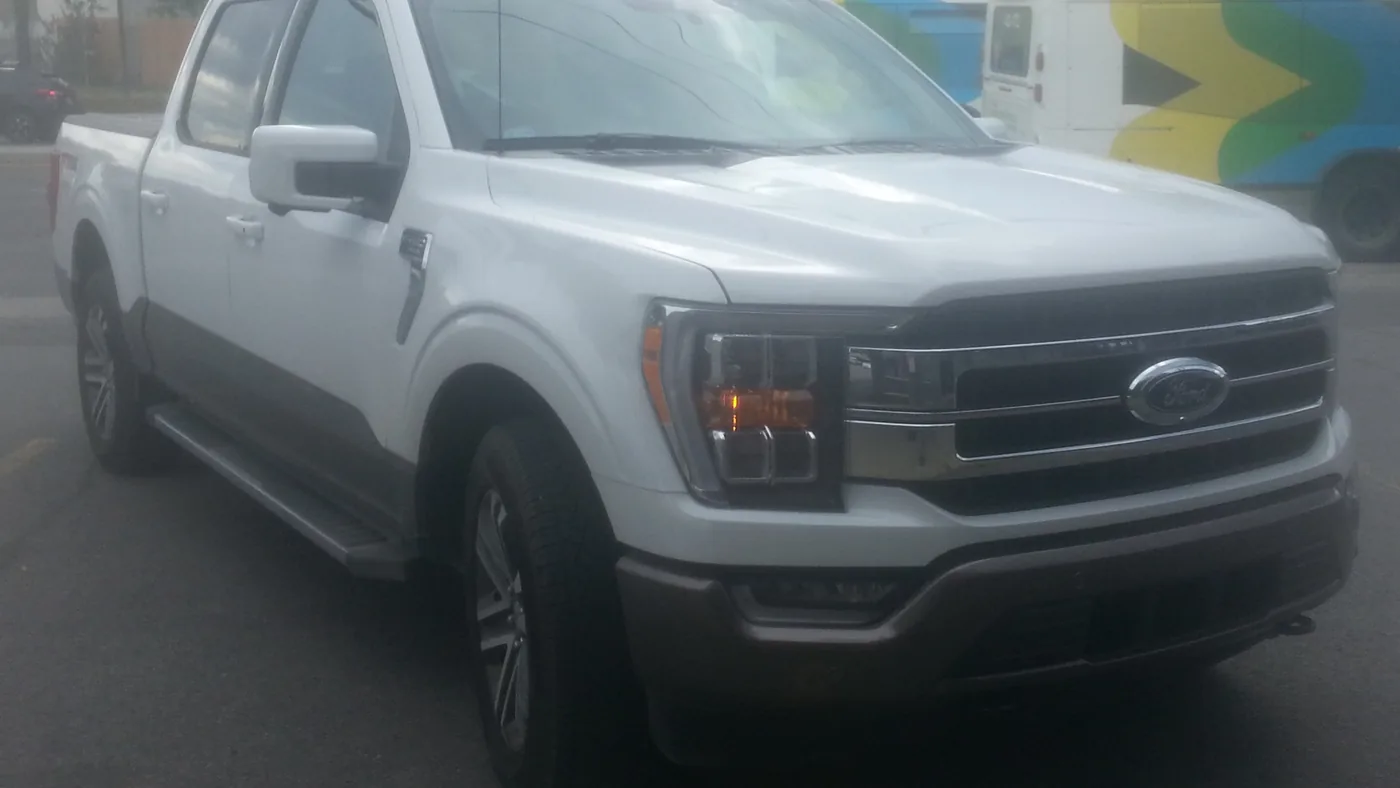
- Electric parking brakes drive the biggest modern recalls: Ford’s 2021–2023 F-150 (23V509, 870,701 vehicles, may apply unexpectedly while driving), the 2016 Honda Civic (16V725, 350,083, may not apply just after key off) and the 2018 Toyota C-HR (17V717).
- Corroded parking brake actuators have the lowest repair rates among the larger recalls since 2014: Mazda reports 73% repaired for the 2014–2016 Mazda3 and 2014–2015 Mazda6 (17V393), Mitsubishi only 58% for the 2013–2016 Outlander and Outlander Sport (18V070).
- If your parking brake does not hold or does not release, do not rely on it: use Park or leave the car in gear, and check your VIN at nhtsa.gov/recalls. Recall repairs are free.
A parking brake that fails to hold lets a parked car roll away, and one that applies by itself can lock a wheel on the move, and NHTSA’s recall file holds hundreds of recalls for both. Most pages on the subject are repair how-tos for electric parking brake faults. This guide uses NHTSA’s recall and complaint files to show which vehicles have been recalled, what failed, and how many are still unrepaired.
Parking brake recalls: the big picture
Within these, 69 describe a brake that may not apply, hold or engage, 55 describe one that may apply, drag or activate unexpectedly, and 8 name corrosion (a recall can fall in more than one group). Here is who they belong to, for 2014 onward:
| Automaker | Campaigns | Vehicles potentially affected | Repaired (vehicle-weighted) | Est. not yet repaired |
|---|---|---|---|---|
| Ford | 7 | 902,091 | 84% | 145,079 |
| Honda | 1 | 350,083 | 90% | 35,078 |
| General Motors | 8 | 251,903 | 95% | 13,811 |
| Mazda | 1 | 227,814 | 73% | 61,669 |
| Mitsubishi | 3 | 192,356 | 58% | 80,632 |
| Hyundai | 3 | 180,770 | 75% | 42,292 |
| Toyota | 2 | 120,349 | 92% | 9,557 |
| Utility Trailer Manufacturing Company | 2 | 101,111 | 32% | 68,468 |
“Repaired” weights each campaign’s reported completion rate by its vehicle count; “not yet repaired” is the matching estimate. A vehicle in several campaigns is counted in each. Source: NHTSA recalls file and US DOT completion data, retrieved Oct 6, 2026; computed by PlainVIN.
Ford has the most vehicles, GM the most campaigns. The lowest repair rates are Utility Trailer’s (32%) and Mitsubishi’s (58%), and the numbers behind Mazda’s 73% still leave an estimated 61,669 vehicles unrepaired.
The largest parking brake recalls
| What can fail | Recall | Vehicles covered | Units | Repaired |
|---|---|---|---|---|
| Electric brake may apply unexpectedly (harness damage) | Ford 23V509 (2023) | 2021–2023 F-150 with a single exhaust | 870,701 | 84% |
| Self-adjust pawl slips, brake may not hold | Ford 94V169 (1994) | Certain Ford vehicles | 835,791 | not reported |
| Self-adjust pawl skips teeth on some grades | Ford 00V349 (2000) | Passenger vehicles with manual transmissions | 434,000 | not reported |
| Electric brake may not apply just after key off | Honda 16V725 (2016) | 2016 Civic 1.5L turbo and 2.0L | 350,083 | 90% |
| Corroded actuator shaft may bind | Mazda 17V393 (2017) | 2014–2016 Mazda3, 2014–2015 Mazda6 | 227,814 | 73% |
| Electric brake may drag and overheat | GM 14V541 (2014) | 2013–2015 Cadillac XTS, 2014–2015 Chevrolet Impala | 205,309 | 97% |
| Corroded actuator shaft may bind | Mitsubishi 18V070 (2018) | 2014–2016 Outlander, 2013–2016 Outlander Sport | 170,354 | 58% |
| Indicator light may not illuminate | Hyundai 17V359 (2017) | 2015–2016 Sonata and Genesis | 161,074 | 74% |
| Brake gear may fracture, may not release or hold | Tesla 17V260 (2017) | 2016 Model S and Model X | 31,709 | 92% |
| Electric brake may not operate (FMVSS 135) | Toyota 17V717 (2017) | 2018 C-HR | 28,764 | 92% |
Source: NHTSA recalls file and US DOT completion data, retrieved Oct 6, 2026; table compiled by PlainVIN from each campaign’s record.
Electric parking brakes: software, wiring and gears
An electric parking brake replaces the lever with a switch, a control module and motors at the rear calipers, so the recalls look like electrical recalls:
- Software. Honda’s 2016 Civic recall says the brake may not engage if applied immediately after the ignition is turned off, which could let the car roll away; dealers updated the software so it engages right after key off. Toyota’s 2018 C-HR recall says the brake may not operate properly, so it may not release after being applied or may not apply, and the cars fail Federal Motor Vehicle Safety Standard 135. The repair was reprogramming the skid control computer.
- Wiring. Ford’s F-150 recall (23V509) says contact with the rear axle housing may damage the wiring harness so that the electric parking brake activates unexpectedly, and NHTSA’s listed consequence is that activation while driving increases the risk of a crash. Dealers add a protective tie strap and tape wrap and replace the harness as necessary. In January 2026 GM recalled 20 Chevrolet Blazer EVs that may have been repaired incorrectly under an earlier recall (25V433, 26V031), because the rear harness may become damaged or corroded.
- Dragging. GM’s 2014 recall for the Cadillac XTS and Chevrolet Impala says the actuation arm may not fully retract so the pads stay partly engaged, which may cause enough brake heat to start a fire. The fix was a software update, reported 97% complete. See also our park-outside recall list.
- Gears. Tesla’s 2017 recall says an internal gear in the caliper may be improperly manufactured and fracture, so the brake may not release, or may not hold the vehicle if it breaks while applying.
| Filed | Vehicles (NHTSA wording) | Problem | Units | Repaired |
|---|---|---|---|---|
| Jul 2023 23V509000 | Certain 2021-2023 F-150 vehicles equipped with a single exhaust system | Unexpected Activation of Electric Parking Brake | 870,701 | 84% |
| Oct 2016 16V725000 | Certain model year 2016 Honda Civic two door and four door 1.5L turbo and 2.0L vehicles | Parking Brake may not Apply Just After Key Off | 350,083 | 90% |
| Jun 2017 17V393000 | Certain 2014-2015 Mazda6 and 2014-2016 Mazda3 vehicles | Parking Brake Actuators may Corrode | 227,814 | 73% |
| Sep 2014 14V541000 | Certain model year 2013-2015 Cadillac XTS vehicles manufactured February 14, 2012, to August 22, 2014, and 2014-2015 Chevrolet Impala vehicles manufactured November 5, 2012 and others | Electronic Parking Brake may Drag | 205,309 | 97% |
| Jan 2018 18V070000 | Certain 2014-2016 Outlander and 2013-2016 Outlander Sport vehicles | Parking Brake Actuators may Corrode | 170,354 | 58% |
| Apr 2017 17V260000 | Certain 2016 Model S and Model X vehicles | Parking Brake may not Release or Fully Apply | 31,709 | 92% |
| Nov 2017 17V717000 | Certain 2018 Toyota CH-R vehicles | Inoperative Electronic Parking Brake/ FMVSS 135 | 28,764 | 92% |
| Sep 2018 18V626000 | Certain 2010-2014 Subaru Legacy and Outback vehicles equipped with a manual transmission | Electronic Parking Brake may Fail | 27,175 | 71% |
| Feb 2015 15V085000 | Certain model year 2014 Chevrolet Impala vehicles manufactured November 15, 2012, to May 30, 2014 | Electronic Parking Brake may Drag | 3,660 | 93% |
| Mar 2023 23V199000 | Certain 2020-2022 Explorer vehicles equipped with a 2.3L RWD, 3.3L GAS, 3.3L FHEV, or 3.0L ST powertrain | Incomplete PCM Update May Result in Rollaway | 674 | 88% |
Vehicle descriptions are NHTSA’s own summary wording; “repaired” is the share the manufacturer reports as fixed, and new campaigns start near zero. Source: NHTSA recalls file and US DOT completion data, retrieved Oct 6, 2026.
Corroded actuators in the rear calipers
Two near-identical recalls describe water getting into the rear brake caliper and corroding the parking brake actuator shaft so it binds. Mazda’s covers the 2014–2015 Mazda6 and 2014–2016 Mazda3 (17V393) and Mitsubishi’s covers the 2014–2016 Outlander and 2013–2016 Outlander Sport (18V070). Both say the brake may not engage or disengage fully, and that a car parked on a slope may move unexpectedly. Mazda’s dealers check the actuator shafts and replace corroded ones; Mitsubishi’s inspect the rear calipers and replace the boot and lever or the caliper body as necessary. Repair rates are 73% and 58%, so owners of these model years are the most likely to still have an open recall.
Mechanical brakes and warning lights
Older recalls are about the lever and cable. Ford’s 1994 recall says the self-adjust pawl may not line up with the ratchet and may slip over teeth, so the brake will not hold the vehicle and the vehicle may roll freely if the transmission is not left in gear; Mazda filed the same recall for 48,609 vehicles. Ford’s 2000 recall describes the same pawl skipping teeth in manual-transmission cars, and the remedy was a plate that locks the adjuster in position. A related fault is the warning light: Hyundai’s 2017 recall says corrosion in the switch may stop the parking brake light from illuminating, so a driver may drive with the brake partly engaged, and dealers replace the switch.
“If the parking brake actuator shaft binds, the parking brake may not engage or disengage fully.”NHTSA recall record 17V393, Mazda3 and Mazda6, nhtsa.gov
Trucks and buses, 2025 to 2026
Most of the parking brake recalls filed since mid-2025 cover commercial vehicles, which use spring-applied air brakes. International’s 2025 recall for 2024–2026 IC Bus school buses (25V646, 11,952 vehicles) says a tire may contact the air dryer discharge line and cause an air leak and the parking brake to apply unintentionally. International’s 25V522 says a tension spring may corrode and break, disengaging the parking brake, and Blue Bird’s 25V635 says brake interlock software may engage the parking brake at any driving speed. Volvo’s February 2026 recall (26V076, 800 trucks) covers 2024–2027 VNL trucks that may have inadequate parking brake force in weight bias mode, with 22% reported repaired. NHTSA’s file shows only three parking brake recalls filed in 2026 so far, covering 825 vehicles in all.
| Filed | Vehicles (NHTSA wording) | Problem | Units | Repaired |
|---|---|---|---|---|
| Jan 2026 26V031000 | Certain 2024-2025 Chevrolet Blazer EV vehicles that may have been repaired incorrectly under recall 25V433 | Damaged Parking Brake Wiring Harness | 20 | 80% |
Vehicle descriptions are NHTSA’s own summary wording; “repaired” is the share the manufacturer reports as fixed, and new campaigns start near zero. Source: NHTSA recalls file and US DOT completion data, retrieved Oct 6, 2026.
Parking brake complaints: which cars and years
| Vehicle | Complaints naming it | Share of that year’s complaints |
|---|---|---|
| 2001 Chevrolet Tahoe | 80 | 16% |
| 2000 Chevrolet Silverado | 58 | 4% |
| 1995 Jeep Wrangler | 54 | 27% |
| 2002 Chevrolet Avalanche | 52 | 8% |
| 2001 Chevrolet Silverado | 51 | 6% |
| 2001 Chevrolet Suburban | 49 | 9% |
| 1994 Ford Ranger | 47 | 11% |
| 1999 Chevrolet Silverado | 43 | 3% |
| 2000 Chevrolet Suburban | 31 | 9% |
| 2002 Chevrolet Silverado | 30 | 4% |
| 2005 Ford Mustang | 30 | 3% |
| 2001 Chevrolet Silverado 1500 | 29 | 6% |
| 2002 Chevrolet Suburban | 28 | 6% |
| 2000 Ford Mustang | 27 | 7% |
Source: NHTSA owner complaints file, retrieved Oct 6, 2026; computed by PlainVIN.
The “parking brake” category does not say which part failed, and counts follow sales. The complaints are concentrated in older trucks and SUVs, mainly 1994–2005 Chevrolet Silverado, Tahoe, Suburban and Avalanche, Jeep Wrangler and Ford Ranger and Mustang model years, which pre-date the electric brakes behind the recalls above, so the complaint list and the recall list describe different eras. Use the share column to compare model years, and check each year against the recalls above: a year with many complaints and no recall is worth testing before you buy by setting the brake on a slope with the car in neutral.
What to do if your parking brake fails
- Don’t rely on it. Use Park or leave a manual car in gear, as the recall records note for rollaway risks.
- If it applies by itself while driving, slow down gradually and pull over when it is safe.
- Check your VIN at nhtsa.gov/recalls or with our VIN decoder. Repairs are free.
- A warning light or message that stays on, or a brake that will not release, is worth an inspection before the next trip.
- Report it, even if it is fixed: see our guide to filing a complaint.
For the main brakes see our brake problems guide, for cars that move in Park our transmission problems guide and for the electrical side our electrical problems guide. The wider picture is in our most common car problems guide.
Complaint and recall figures are PlainVIN’s analysis of NHTSA’s files and update when we refresh the data; complaints are owner reports, not verified defects. “Reported repaired” is the automaker’s figure. This guide is general information, not mechanical advice for a specific vehicle.
Frequently asked questions
Has there been a recall for parking brakes that don’t hold?
Yes. NHTSA’s file holds 338 recalls filed under the parking brake, covering about 5.5 million vehicles, and 69 of them describe a brake that may not apply, hold or engage. Examples include the 2016 Honda Civic (16V725), the 2014–2016 Mazda3 (17V393) and the 2013–2016 Mitsubishi Outlander Sport (18V070).
Can an electric parking brake apply by itself while driving?
Ford’s 2023 recall (23V509) covers about 870,701 2021–2023 F-150 trucks where wiring harness damage may make the electric parking brake activate unexpectedly, and GM’s January 2026 recall (26V031) covers 20 Blazer EVs with a similar risk. Both note an increased risk of a crash.
Why does my parking brake not release?
Recalls name several causes: a corroded actuator shaft that binds (Mazda 17V393, Mitsubishi 18V070), a fractured caliper gear (Tesla 17V260) and software or control faults (Toyota C-HR 17V717). Check your VIN for a recall before paying for a repair.
Which parking brake recalls have the lowest repair rates?
Among larger campaigns since 2014, Mitsubishi’s 2018 actuator recall (18V070) is reported 58% repaired and Mazda’s (17V393) 73%. Ford’s 2023 F-150 recall is 84% and GM’s 2014 Cadillac XTS and Impala recall 97%.
Can a parking brake recall cause a fire?
GM’s 2014 recall for the Cadillac XTS and Chevrolet Impala (14V541) says an electronic parking brake that does not fully retract may keep the pads partly engaged, causing brake heat that may result in a fire. The fix was a software update.
What should I do if my car rolls when the parking brake is set?
Stop relying on the parking brake: use Park, or leave a manual car in gear. Then check your VIN at nhtsa.gov/recalls and have the brake inspected. Recall repairs are free.
Were there parking brake recalls in 2026?
NHTSA’s file shows three so far this year, covering 825 vehicles: 20 Chevrolet Blazer EVs (26V031), 800 Volvo VNL trucks (26V076) and 5 Nova Bus transit buses (26V604).
About the PlainVIN Recalls & Safety Desk
This desk covers recall campaigns and completion rates, owner complaints filed with NHTSA, and NHTSA 5-Star Safety Ratings.
Every figure in this guide links to its primary source. See our editorial policy, how we use AI and corrections log.
How this page was madeSources, processing, limits, review and changes
Data sources
- NHTSA owner complaints file (component: parking brake) and recalls file, including campaigns 94V169, 00V349, 14V541, 16V725, 17V260, 17V359, 17V393, 17V717, 18V070, 23V509, 25V522, 25V635, 25V646, 26V031, 26V076 and 26V604
Retrieved Oct 6, 2026 - NHTSA recall record, Mazda campaign 17V393
nhtsa.gov - NHTSA recall record, Ford campaign 23V509
nhtsa.gov - NHTSA recall record, Honda campaign 16V725
nhtsa.gov - NHTSA, Report a Safety Problem
nhtsa.gov
Processing
- Complaints are counted per component. One complaint can list several, so component totals add up to more than the total.
- Fuel cost = miles per year ÷ EPA combined mpg × EIA weekly price for your region.
Limitations
- Complaint counts are owner reports, not verified findings or failure rates. There is no sales denominator.
- Recall campaigns are listed for the model year. Only NHTSA and the automaker know whether a specific car was repaired.
- Recent model years are still collecting reports.
Review
Researched by Daniel B. and Olivia C., technical check by Ethan B., edited by Sophia M. (see the editorial team page). Drafted with AI assistance and checked against primary sources by the Recalls & Safety desk.
Changelog
- 2026-10-06 Data refreshed from the official files.
Keep reading