Sudden Unintended Acceleration: Causes, Recalls and Which Cars
What causes sudden unintended acceleration, what the Toyota recalls and the NHTSA–NASA study found, which cars draw the most accelerator and cruise-control complaints to NHTSA, the recalls and what to do.
Key takeaways
- Sudden unintended acceleration is when a vehicle speeds up without the driver meaning it to, often with a feeling that the brakes don’t work. The confirmed vehicle causes are mostly mechanical: floor mats trapping the pedal, sticking pedals, stuck throttles and cruise control that won’t cancel.
- Research links many incidents to pedal error, pressing the accelerator instead of the brake. A 2011 NHTSA–NASA study found no electronic cause for high-speed unintended acceleration in Toyotas.
- NHTSA’s complaint file has 81,455 complaints naming vehicle speed control (accelerator, throttle and cruise control). The Toyota Camry has the most, led by the 2002–2009 model years.
- 53 recalls describe unintended acceleration, a stuck pedal or throttle, floor-mat entrapment or cruise control that can’t be cancelled, covering 15.9 million vehicles.
- If it happens: brake firmly and steadily, shift to Neutral, steer to safety and stop. Then check your VIN for open recalls.
Sudden unintended acceleration (SUA) is when a car speeds up without the driver intending it, sometimes to full throttle, and is often reported together with brakes that seem not to work. Some cases are real vehicle defects that have been recalled; many others, investigations have found, start with the driver’s foot on the wrong pedal. This guide explains the known causes, what the big investigations found, which models draw the most accelerator and cruise-control complaints in NHTSA’s file, the recalls, and exactly what to do if it happens.
What sudden unintended acceleration is
Drivers describe it as the engine racing and the car surging forward or backward, at the start of a drive, while parking or at speed. It covers several different situations, which is why the term causes so much confusion:
- A stuck or trapped pedal: the accelerator is held down by a floor mat or sticks partway, so the car keeps accelerating when the driver lifts off.
- A throttle or speed-control fault: a stuck throttle, a cable or connector that jams it open, or cruise control that won’t disengage.
- Software faults: rare, but some recent recalls involve software that could raise speed unexpectedly.
- Pedal error: the driver presses the accelerator believing it is the brake, then presses harder as the car speeds up.
What causes it
The best evidence comes from three places: recalls, where an automaker has confirmed a defect; NHTSA investigations; and crash research.
Mechanical defects. The confirmed defects behind the large recalls are mechanical: floor mats that trap the pedal, pedal assemblies that stick, throttle cables or connectors that jam, and speed-control systems that can’t be cancelled. Toyota’s 2009 floor-mat recall, for example, warned that “the accelerator pedal can get stuck in the wide open position due to its being trapped by an unsecured or incompatible driver’s floor mat” (campaign 09V388).
Pedal error. Research on police crash reports links many unintended-acceleration crashes to the driver’s foot pressing the accelerator instead of the brake. A study of North Carolina crash reports found more than 200 pedal errors and concluded that pedal misapplication is the major contributor to unintended-acceleration accidents (Schmidt, 2010, via NIH PubMed Central). This doesn’t mean every report is driver error, but it is why investigators look closely at pedal position and data recorders.
Electronics. Electronic throttle control has long been suspected, but the major federal reviews below did not find an electronic cause.
The Toyota cases and the NHTSA–NASA study
The best-known episode came in 2009–2010, when Toyota recalled millions of vehicles for floor-mat entrapment and sticking pedals. Testifying to Congress in February 2010, Transportation Secretary Ray LaHood called floor-mat entrapment “the far more serious problem” and gave owners this advice:
“If your accelerator becomes stuck for any reason, steadily apply the brake, put the car in neutral, bring it to a stop in a safe place, and call your dealer.”Ray LaHood, Secretary of Transportation, testimony to the House Energy and Commerce Committee, February 23, 2010
Congress then asked for a deeper look at the electronics. In a ten-month study, NASA engineers analyzed more than 280,000 lines of Toyota software, tested components and exposed vehicles to electromagnetic radiation. The Department of Transportation reported that NASA “found no electronic flaws in Toyota vehicles capable of producing the large throttle openings required to create dangerous high-speed unintended acceleration incidents,” and that sticking pedals and floor-mat entrapment remained the only known causes (US DOT).
The question has come back with electric cars. In January 2021 NHTSA denied a petition asking it to recall Tesla vehicles for sudden unintended acceleration, concluding “that there is insufficient evidence to warrant further action at this time” (Federal Register, 2021-00501).
How common are complaints?
NHTSA files accelerator, throttle and cruise-control complaints under “vehicle speed control”. The category includes reports of unintended acceleration but also of hesitation, surging and cruise-control faults, so it is broader than SUA alone:
| Model year | Complaints naming it | All complaints | Share |
|---|---|---|---|
| 2002 | 2,778 | 54,229 | 5.1% |
| 2003 | 2,955 | 54,354 | 5.4% |
| 2004 | 3,210 | 59,762 | 5.4% |
| 2005 | 4,719 | 68,139 | 6.9% |
| 2006 | 4,183 | 70,366 | 5.9% |
| 2007 | 4,321 | 69,574 | 6.2% |
| 2008 | 3,416 | 63,555 | 5.4% |
| 2009 | 2,797 | 42,631 | 6.6% |
| 2010 | 4,070 | 49,326 | 8.3% |
| 2011 | 2,839 | 52,599 | 5.4% |
| 2012 | 2,473 | 52,754 | 4.7% |
| 2013 | 2,629 | 60,543 | 4.3% |
| 2014 | 2,499 | 54,325 | 4.6% |
| 2015 | 2,309 | 51,372 | 4.5% |
| 2016 | 2,382 | 50,596 | 4.7% |
| 2017 | 2,007 | 49,575 | 4.0% |
| 2018 | 2,236 | 47,071 | 4.8% |
| 2019 | 1,355 | 39,712 | 3.4% |
| 2020 | 962 | 28,897 | 3.3% |
| 2021 | 1,114 | 26,553 | 4.2% |
| 2022 | 1,246 | 24,253 | 5.1% |
| 2023 | 1,166 | 20,856 | 5.6% |
| 2024 | 822 | 15,624 | 5.3% |
| 2025 | 581 | 9,808 | 5.9% |
| 2026 | 164 | 3,137 | 5.2% |
One complaint can name several components. Recent model years are still collecting reports. Source: NHTSA owner complaints file, retrieved Oct 6, 2026; computed by PlainVIN.
The share peaks around the 2005–2010 model years, the period of the Toyota floor-mat and sticking-pedal recalls and of the 2009–2010 wave of public attention to unintended acceleration. Complaints filed in a news-heavy period can rise for reasons that have nothing to do with a vehicle defect, so treat spikes with care.
Which cars have the most complaints
| Model | Model years | Complaints naming it | Share of the model’s complaints |
|---|---|---|---|
| Toyota Camry | 1984–2024 | 3,165 | 17.4% |
| Ford F-150 | 1983–2026 | 2,857 | 7.4% |
| Ford Escape | 2001–2025 | 2,297 | 8.4% |
| Ford Taurus | 1986–2017 | 2,099 | 11.5% |
| Ford Explorer | 1991–2026 | 1,804 | 5.2% |
| Ford Freestyle | 2005–2007 | 1,617 | 44.3% |
| Ford Fusion | 2006–2020 | 1,414 | 6.3% |
| Jeep Grand Cherokee | 1989–2026 | 1,276 | 4.3% |
| Chevrolet Malibu | 1997–2024 | 1,195 | 6.1% |
| Honda Accord | 1982–2025 | 1,186 | 4.8% |
| Toyota Corolla | 1982–2026 | 1,159 | 9.9% |
| Ford Focus | 2000–2018 | 1,075 | 4.9% |
Counts of owner reports, not verified defects or rates; models that sold in larger numbers draw more complaints. The share compares with all complaints for that model over the same model years. Source: NHTSA owner complaints file, retrieved Oct 6, 2026; computed by PlainVIN.
| Vehicle | Complaints naming it | Share of that year’s complaints |
|---|---|---|
| 2010 Ford Fusion | 793 | 15% |
| 2006 Ford Freestyle | 602 | 46% |
| 2005 Ford Freestyle | 587 | 40% |
| 2010 Ford Escape | 558 | 27% |
| 2005 Ford Taurus | 529 | 68% |
| 2007 Toyota Camry | 510 | 18% |
| 2007 Ford Freestyle | 428 | 48% |
| 2018 Ram 2500 | 342 | 13% |
| 2013 Ford F-150 | 302 | 10% |
| 2010 Toyota Prius | 287 | 10% |
Source: NHTSA owner complaints file, retrieved Oct 6, 2026; computed by PlainVIN.
The Toyota Camry leads by count, and its 2002–2009 model years stand out: speed control is named in roughly a fifth to more than a third of all their complaints. The 2007 Camry was covered by both the 2009 floor-mat recall and the 2010 sticking-pedal recall (10V017), which also covered certain Avalon, Corolla, RAV4, Highlander, Sequoia and Tundra models.
Several Ford models also stand out, notably the 2005–2007 Freestyle, the 2005 Taurus and the 2010 Fusion and Escape. We found no speed-control recall in NHTSA’s file covering those model years, and because the category also covers throttle faults that cause hesitation or loss of power, a high share doesn’t by itself mean unintended acceleration. Each model’s report breaks complaints down by year, for example the Toyota Camry or Ford Fusion.
Unintended acceleration recalls
| Filed | Vehicles (NHTSA wording) | Problem | Units | Repaired |
|---|---|---|---|---|
| May 2018 18V332000 | Certain 2014-2018 Dodge Journey, Charger and Durango, RAM 2500, 3500, 3500 Cab Chassis (more than 10,000lb), 4500 Cab Chassis and 5500 Cab Chassis and others | Cruise Control cannot be Cancelled | 4,815,661 | 77% |
| Oct 2009 09V388000 | CERTAIN MODEL YEAR 2004-2010 PASSENGER VEHICLES | PEDAL ENTRAPMENT | 4,445,056 | – |
| Jan 2010 10V017000 | CERTAIN MODEL YEAR 2005-2010 AVALON, MODEL YEAR 2007-2010 CAMRY, MODEL YEAR 2009-2010 COROLLA, COROLLA MATRIX, RAV4, MODEL YEAR 2010 HIGHLANDER, MODEL YEAR 2008-2010 SEQUOIA and others | STICKING ACCELERATOR PEDAL | 2,230,661 | – |
| Feb 2011 11V113000 | CERTAIN MODEL YEAR 2008 THROUGH 2011 LEXUS LX570, 2003 THROUGH 2009 TOYOTA 4RUNNER, AND 2006 THROUGH 2010 RAV4 VEHICLES | PEDAL ENTRAPMENT | 1,363,244 | – |
| Jan 2010 10V023000 | CERTAIN MODEL YEAR 2008-2010 HIGHLANDER, MODEL YEAR 2009-2010 COROLLA, VENZA AND MATRIX PASSENGER VEHICLES | PEDAL ENTRAPMENT | 1,126,915 | – |
| Jul 2012 12V353000 | Certain model year 2001 through 2004 Escape vehicles equipped with 3.0L V6 engines and speed control manufactured from October 22, 1999, through January 23, 2004 | Speed Control Cable Connector Interference | 529,719 | – |
| Jul 2012 12V357000 | Certain model year 2001 through 2006, and 2008, Tribute vehicles equipped with 3.0L V6 engines and speed control | Speed Control Cable Connector Interference | 217,500 | – |
| Jun 2012 12V305000 | Certain model year 2010 Lexus RX350 and RX450h vehicles, manufactured from November 28, 2008, through September 1, 2010 and others | FLOOR MAT INTERFERENCE W/ACCELERATOR PEDAL | 164,601 | – |
| Aug 2020 20V513000 | Certain 2019-2020 Ram 1500 vehicles equipped with adjustable pedals | All Weather Floor Mats may Interfere with Pedals | 160,229 | 87% |
| Jul 2005 05V329000 | Kia | THROTTLE STICKING | 118,447 | – |
Vehicle descriptions are NHTSA’s own summary wording; “repaired” is the share the manufacturer reports as fixed, and new campaigns start near zero. Source: NHTSA recalls file and US DOT completion data, retrieved Oct 6, 2026.
The largest is Chrysler’s 2018 recall of about 4.8 million vehicles whose cruise control could not be cancelled (18V332). Floor-mat recalls continue too: in 2020, Ram recalled 2019–2020 Ram 1500 pickups with adjustable pedals because all-weather floor mats could interfere with the pedals (20V513). Some of the largest speed-control recalls in the file are actually fire recalls: Ford’s speed-control deactivation switch could overheat, and our car fire statistics cover those. Recent examples also include software, such as Nissan’s 2023 recall of 2018–2023 Leaf vehicles that could accelerate unintentionally after the driving mode was changed with cruise control off (23V494).
Technology that can help
Because pedal errors play such a large part, automakers have added features that limit the damage when the accelerator is pressed by mistake:
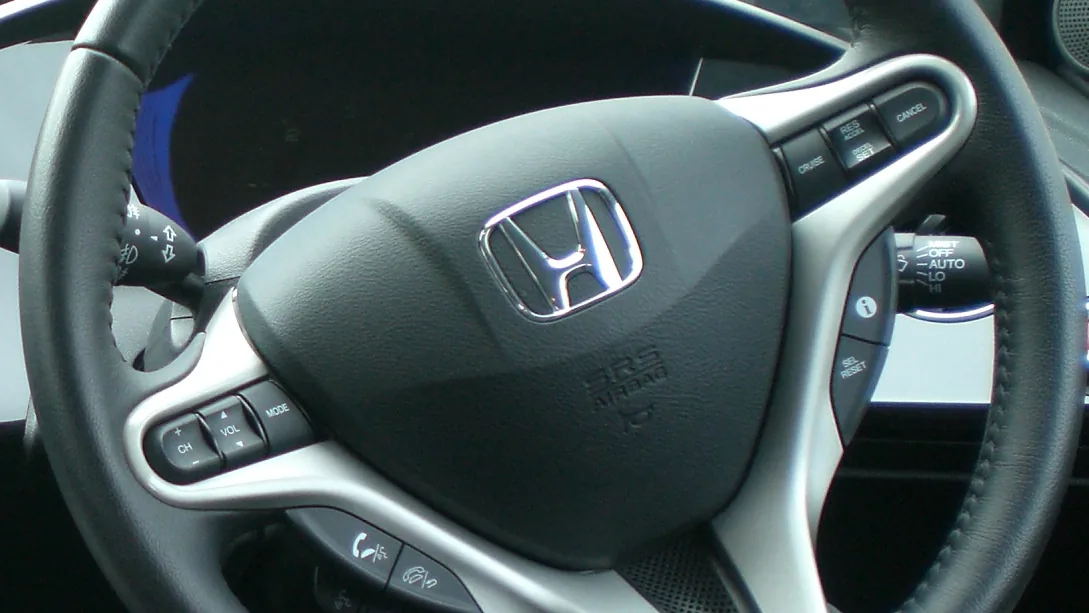
- Throttle control near obstacles. Honda describes front and rear “Collision Mitigation Throttle Control”, which activates when obstacles are detected close to the vehicle in the direction of travel, to reduce crashes caused by pedal misapplication.
- Detecting the mistake itself. Honda’s newer “Unintended Acceleration Mitigation” is activated when the accelerator is pressed firmly while the car is stopped or moving at about 30 km/h (19 mph) or slower, even with no obstacle ahead. Honda says it works only in some scenarios and, where offered, must be enabled through a dealer (Honda).
- Automatic emergency braking. AEB can brake for an obstacle ahead whatever the pedals are doing, and it becomes mandatory on new US light vehicles built from September 2029. Our phantom braking guide explains the new FMVSS 127 rule.
Features vary by model, year and market, so check your owner’s manual for what your car has and when it works.
What to do if your car accelerates on its own
- Brake firmly and steadily. Keep steady pressure on the brake rather than pumping it, as the DOT advice above says.
- Shift to Neutral. This disconnects the engine from the wheels; the engine may race, but the car will slow.
- Steer to a safe place and stop, then shift to Park and turn the engine off. With push-button start, the owner’s manual explains how to shut the engine off while moving; in many cars it means pressing and holding the button.
- Check for recalls and report it. Enter your VIN at nhtsa.gov/recalls, have the car inspected, and file a complaint with NHTSA. Note the conditions, and if there was a crash, keep the car unchanged so its event data recorder can be read if needed.
General safety information based on the US DOT advice quoted above and owner’s-manual guidance; your vehicle’s manual is the authority for its controls.
How to lower the risk
- Use the right floor mat, secured. Use only mats made for your model, hook them onto the retaining clips, and never stack one mat on another.
- Check the pedal. If the accelerator is hard to press or slow to return, have it inspected; that was the warning sign of the Toyota sticking-pedal defect.
- Know your car’s controls, especially in an unfamiliar or rental car: where Neutral is, and how to shut the engine off while moving.
- Keep up with recalls and software updates, and check any used car’s VIN before you buy; our used car inspection checklist includes the recall check.
Complaint and recall figures are PlainVIN’s analysis of NHTSA’s files and update when we refresh the data; complaints are owner reports, not verified defects.
Frequently asked questions
What causes sudden unintended acceleration?
Confirmed vehicle causes are mostly mechanical: floor mats trapping the accelerator, sticking pedals, stuck throttles and cruise control that won’t cancel. Research also links many incidents to pedal error, pressing the accelerator instead of the brake.
Why is my car accelerating by itself?
Check that the floor mat isn’t touching the pedal and that the pedal returns freely, then have the car inspected and check for recalls by VIN. Report the problem to NHTSA if it continues.
How common is sudden unintended acceleration?
NHTSA’s file has about 81,000 complaints naming vehicle speed control, about 5% of all complaints, but that category also includes hesitation and cruise-control faults. Confirmed defects are much rarer.
Did the NHTSA–NASA study find electronic causes in Toyotas?
No. The 2011 study found no electronic flaws capable of causing dangerous high-speed unintended acceleration; sticking pedals and floor-mat entrapment remained the only known causes.
What should I do if my car accelerates on its own?
Brake firmly and steadily without pumping, shift to Neutral, steer to a safe place and stop, then turn off the engine. That follows the US DOT’s advice for a stuck accelerator.
Which cars have had unintended acceleration recalls?
Toyota and Lexus (floor mats and sticking pedals, 2009–2012), Ford and Mazda (speed control cable, 2012), Ram (floor mats, 2020), Chrysler, Dodge and Ram (cruise control, 2018) and Nissan Leaf (software, 2023), among others.
Do Teslas have sudden unintended acceleration?
NHTSA reviewed a petition about Tesla sudden unintended acceleration and denied it in January 2021, finding insufficient evidence to warrant further action.
About the PlainVIN Recalls & Safety Desk
This desk covers recall campaigns and completion rates, owner complaints filed with NHTSA, and NHTSA 5-Star Safety Ratings.
Every figure in this guide links to its primary source. See our editorial policy, how we use AI and corrections log.
How this page was madeSources, processing, limits, review and changes
Data sources
- Ray LaHood, testimony on Toyota and sudden unintended acceleration (Feb 23, 2010)
US DOT, read Oct 12, 2026 - US DOT releases results from NHTSA–NASA study of unintended acceleration in Toyota vehicles
US DOT, read Oct 12, 2026 - Denial of motor vehicle defect petition DP20-001 (Tesla)
Federal Register 2021-00501 - Schmidt, Cars Gone Wild: The Major Contributor to Unintended Acceleration in Automobiles is Pedal Error (2010)
PubMed Central - Honda Technology: Unintended Acceleration Mitigation
global.honda, read Oct 12, 2026 - NHTSA owner complaints file (component: vehicle speed control) and recalls file
Retrieved Oct 6, 2026
Processing
- Complaints are counted per component. One complaint can list several, so component totals add up to more than the total.
- Fuel cost = miles per year ÷ EPA combined mpg × EIA weekly price for your region.
Limitations
- Complaint counts are owner reports, not verified findings or failure rates. There is no sales denominator.
- Recall campaigns are listed for the model year. Only NHTSA and the automaker know whether a specific car was repaired.
- Recent model years are still collecting reports.
Review
Researched by Daniel B. and Olivia C., technical check by Ethan B., edited by Sophia M. (see the editorial team page). Drafted with AI assistance and checked against primary sources by the Recalls & Safety desk.
Changelog
- 2026-10-06 Data refreshed from the official files.
Keep reading