Phantom Braking: Why Cars Brake for No Reason, and Which Models Draw Complaints
Why automatic emergency braking sometimes brakes for nothing, which models draw the most owner complaints to NHTSA, the Tesla and Honda investigations, recalls, the new federal rule and what to do.
Key takeaways
- Phantom braking is when a car’s automatic emergency braking (AEB) or adaptive cruise control brakes hard for a hazard that isn’t there. It can startle drivers and raise the risk of being hit from behind.
- Complaints about these systems have grown with the technology. In NHTSA’s file, complaints naming forward collision avoidance went from 0.1% of complaints for models up to 2014 to 8.7% for 2018 and newer.
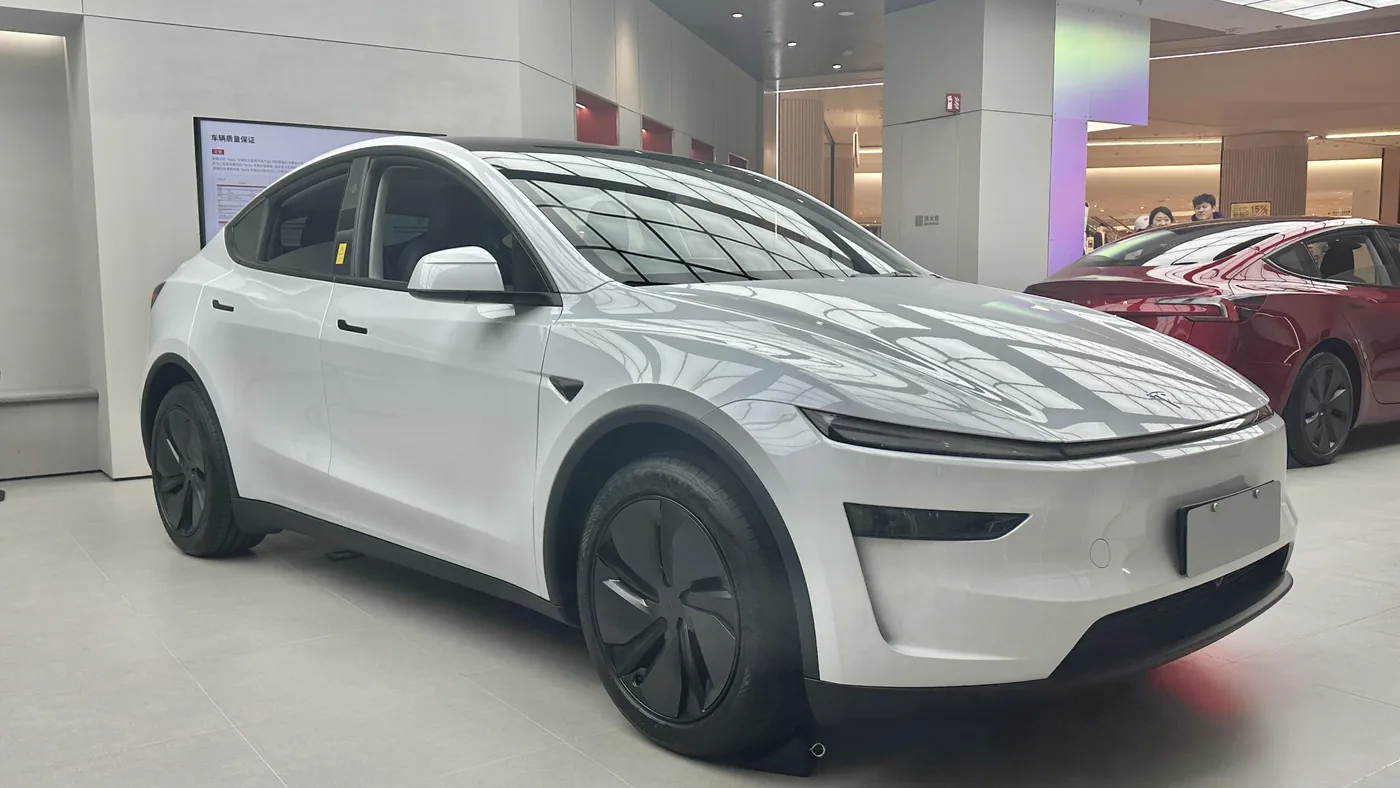
- Tesla’s Model 3 and Model Y and Honda’s CR-V and Accord draw the most of these complaints. NHTSA investigated both automakers; it closed the Tesla probe in July 2026 after reports fell sharply.
- A new federal standard, FMVSS 127, requires AEB on new light vehicles from September 2029 and, for the first time, sets a test limit on false activations.
- If your car brakes for no reason, check for recalls and software updates, ask a dealer to inspect and calibrate the sensors, and report it to NHTSA.
Phantom braking is a sudden, unexpected slowdown caused by a car’s own driver-assistance system, usually automatic emergency braking or adaptive cruise control, when it mistakes something harmless for an obstacle. This guide explains why it happens, shows from NHTSA’s complaint file how often owners report problems with these systems and which models draw the most reports, and covers the investigations, recalls and new federal rule, plus what to do if it happens to you.
What phantom braking is
Most new cars watch the road ahead with a camera, a radar sensor or both. Three related features use them:
- Forward collision warning sounds an alert when a crash looks likely.
- Automatic emergency braking (AEB) brakes on its own if the driver doesn’t react in time.
- Adaptive cruise control keeps a set gap to the vehicle ahead by braking and accelerating.
Phantom braking happens when one of these systems decides there is a threat and brakes, sometimes firmly, with nothing in the car’s path. NHTSA groups owner complaints about all three under one component, “forward collision avoidance,” so the complaint counts below include other problems with the same systems, such as warnings that don’t stop or braking that doesn’t happen when it should.
What causes it
Automakers rarely publish a full explanation, but the investigations and the new federal test point to the usual suspects:
- Things on or beside the road. Shadows, overpasses, metal plates and parked cars at the roadside are commonly blamed for confusing a camera or radar. The federal false-activation tests described below use exactly these: a steel plate on the road and a gap between two parked vehicles.
- Sensor changes and software. In closing its Tesla investigation, NHTSA pointed to Tesla’s move from radar to camera-only sensing as a likely factor, and said Tesla pushed software updates in early 2022 aimed at the problem.
- Dirty, blocked or misaligned sensors. Snow, mud, a cracked windshield or a sensor knocked out of alignment can degrade the system. FMVSS 127 requires AEB to warn the driver when a blocked sensor degrades it.
- Hardware or software defects. Some cases are recalls: the automaker found a defect that makes the system brake unexpectedly, as in the campaigns listed below.
How common are complaints?
Forward collision avoidance has become one of the fastest-growing complaint categories, simply because the systems spread from a few luxury cars to almost every new vehicle:
| Model year | Complaints naming it | All complaints | Share |
|---|---|---|---|
| 2015 | 395 | 51,372 | 0.8% |
| 2016 | 459 | 50,596 | 0.9% |
| 2017 | 1,110 | 49,575 | 2.2% |
| 2018 | 2,429 | 47,071 | 5.2% |
| 2019 | 2,396 | 39,712 | 6.0% |
| 2020 | 2,097 | 28,897 | 7.3% |
| 2021 | 2,795 | 26,553 | 10.5% |
| 2022 | 2,902 | 24,253 | 12.0% |
| 2023 | 2,466 | 20,856 | 11.8% |
| 2024 | 1,744 | 15,624 | 11.2% |
| 2025 | 1,485 | 9,808 | 15.1% |
| 2026 | 480 | 3,137 | 15.3% |
One complaint can name several components. Recent model years are still collecting reports. Source: NHTSA owner complaints file, retrieved Oct 6, 2026; computed by PlainVIN.
For the newest model years, these systems are named in roughly one complaint in eight. Our analysis of the most common car problems shows how they have overtaken air bags as a complaint category for newer cars.
Which cars have the most complaints
| Model | Model years | Complaints naming it | Share of the model’s complaints |
|---|---|---|---|
| Tesla Model Y | 2020–2026 | 1,943 | 46.1% |
| Tesla Model 3 | 2017–2026 | 1,741 | 40.1% |
| Honda CR-V | 2005–2026 | 1,341 | 9.7% |
| Honda Accord | 2006–2026 | 951 | 7.7% |
| Honda Odyssey | 1997–2026 | 741 | 5.9% |
| Nissan Rogue | 2008–2026 | 536 | 7.3% |
| Honda Pilot | 2008–2025 | 506 | 7.4% |
| Tesla Model S | 2013–2026 | 336 | 10.1% |
| Ram 1500 | 2013–2026 | 323 | 2.8% |
| Hyundai Tucson | 2008–2026 | 317 | 5.4% |
Counts of owner reports, not verified defects or rates; models that sold in larger numbers draw more complaints. The share compares with all complaints for that model over the same model years. Source: NHTSA owner complaints file, retrieved Oct 6, 2026; computed by PlainVIN.
Two groups stand out. For the Tesla Model 3 and Model Y, forward collision avoidance makes up a very large share of all complaints, far more than for any mainstream model. For the Honda CR-V, Accord, Odyssey and Pilot, the counts are high partly because these are big sellers, but the share is still well above the average for vehicles of the same years. The single model years with the most reports:
| Vehicle | Complaints naming it | Share of that year’s complaints |
|---|---|---|
| 2021 Tesla Model Y | 580 | 54% |
| 2022 Tesla Model 3 | 532 | 70% |
| 2022 Tesla Model Y | 495 | 57% |
| 2023 Tesla Model Y | 476 | 41% |
| 2021 Tesla Model 3 | 408 | 61% |
| 2018 Honda CR-V | 394 | 18% |
| 2018 Honda Accord | 338 | 18% |
| 2019 Honda CR-V | 298 | 27% |
Source: NHTSA owner complaints file, retrieved Oct 6, 2026; computed by PlainVIN.
Complaint counts are owner reports, not verified defects, and models that sold in large numbers draw more of every kind of complaint. Use them to spot a pattern worth asking about, then look at the model-year report for the full picture, for example the Tesla Model Y, Honda CR-V or Honda Accord.
What NHTSA has done: investigations and recalls
Tesla. NHTSA opened a preliminary evaluation (PE22-002) in February 2022 into unexpected braking in about 416,000 2021–2022 Model 3 and Model Y vehicles. It closed the probe in July 2026. As reported by Quartz, complaints fell from about 300 when the probe opened to 45 in 2024, 19 in 2025 and three in 2026. NHTSA found no crashes attributed to the problem and noted that closing the probe doesn’t rule out a defect (Quartz via Yahoo Autos, July 2, 2026). Our complaint data shows the same pattern: Tesla’s forward collision avoidance complaints peak in the 2021 and 2022 model years.
Honda. In April 2024 NHTSA upgraded its Honda investigation, opened in 2022, to an engineering analysis covering nearly 3 million 2017–2022 CR-V and 2018–2022 Accord vehicles. The Associated Press reported that the agency had 1,294 complaints, 47 crash reports and 112 injury reports alleging that the system braked with nothing in the vehicle’s path (AP via NBC New York, April 17, 2024). An engineering analysis is the last step before NHTSA can seek a recall; check NHTSA’s site for the current status.
Recalls. Some automakers have recalled vehicles because their systems could brake unexpectedly. 10 campaigns in NHTSA’s file fix unexpected braking from a forward collision avoidance system, covering 601,044 vehicles:
| Filed | Vehicles (NHTSA wording) | Problem | Units | Repaired |
|---|---|---|---|---|
| May 2026 26V316000 | Certain 2025-2026 Santa Cruz, Tucson, Tucson Hybrid, and Tucson Plug-In Hybrid Electric (PHEV) vehicles | Forward Collision Avoidance System May Activate Brakes Unexpectedly | 423,062 | 29% |
| Feb 2024 24V133000 | Certain 2023 Chevrolet Colorado and GMC Canyon vehicles | Emergency Braking Can Activate Unexpectedly | 55,755 | 93% |
| Dec 2019 19V907000 | Certain 2019-2020 Mazda3 vehicles | Emergency Braking Can Activate Unexpectedly | 35,390 | 95% |
| Sep 2015 15V614000 | Certain model year 2015 Ford F-150 trucks manufactured March 18, 2014, to August 6, 2015 and equipped with Adaptive Cruise Control (ACC) | Unexpected Braking using Adaptive Cruise Control | 33,481 | 82% |
| Nov 2015 15V728000 | Certain model year 2013-2015 Avalon and Avalon Hybrid vehicles manufactured October 19, 2012 to October 27, 2015 and 2013-2015 Lexus ES350 and ES300h vehicles manufactured June 18 and others | Unexpected Braking due to Pre-Collision System | 30,812 | 84% |
| Oct 2021 21V846000 | Certain 2017-2021 Model S, Model 3, Model X, and 2020-2021 Model Y vehicles operating software version 2021.36.5.2 | Unexpected Activation of Automatic Emergency Brake | 11,728 | 100% |
| May 2024 24V349000 | Certain 2024 CX-90 vehicles | Brakes May Activate Unexpectedly | 9,914 | 80% |
| Dec 2025 25V833000 | Certain 2023-2026 Genesis G90 vehicles | Sudden Unintended Braking | 483 | 70% |
Vehicle descriptions are NHTSA’s own summary wording; “repaired” is the share the manufacturer reports as fixed, and new campaigns start near zero. Source: NHTSA recalls file and US DOT completion data, retrieved Oct 6, 2026.
Across all recalls that list a forward collision avoidance component, 52 campaigns since 2014, 60% mention software. Many are fixed with a software update at the dealer or over the air.
The new federal AEB rule
Until now, AEB was voluntary in the US. Federal Motor Vehicle Safety Standard 127 makes it mandatory for cars, SUVs, pickups and vans built on or after September 1, 2029, and it is the first standard to test for false braking:
“The vehicle must not automatically apply braking that results in peak additional deceleration that exceeds what manual braking would produce by 0.25 g or greater, when tested using the procedures in S9 under the conditions specified in S6.”49 CFR 571.127, S5.3 (False activation)
The test drives the vehicle at 80 km/h (about 50 mph) over a steel trench plate laid on the road and between two stationary vehicles parked 4.5 meters apart, the kind of roadside scene that can confuse sensors. The same standard requires AEB to detect when its sensors are blocked and warn the driver. Until 2029, how well a car avoids false braking depends on the automaker.
What to do if your car brakes for no reason
- Stay in control. Keep a firm grip and check your mirrors. Your owner’s manual explains how your system behaves, including whether pressing the accelerator cancels an automatic brake application.
- Write it down. Note the date, time, speed, weather, road and what was around you. Dashcam footage helps. A dealer can’t fix what it can’t reproduce, a frustration many Honda owners described to NHTSA.
- Check for recalls and updates. Enter your VIN at nhtsa.gov/recalls and install pending software updates; several of the recalls above are software fixes. Our guide shows where to find the VIN.
- Have the sensors checked. Ask the dealer to inspect, clean and calibrate the camera and radar, especially after a windshield replacement, a bumper repair or a minor collision. Ask whether a technical service bulletin covers the problem.
- Know your settings. Many vehicles let you change how early the system warns or turn some features off for a trip, and in many the system switches back on the next time you start the car. Turning off a safety system has trade-offs, so use the manual’s guidance.
- Report it to NHTSA. Complaints are how investigations start; the Honda and Tesla probes began with them. Our guide explains how to file a complaint with NHTSA.
Buying used? Look up the model year’s owner complaints by component before you buy, and include a highway test drive with the driver-assistance features switched on. Our used car inspection checklist covers the rest.
Complaint and recall figures are PlainVIN’s analysis of NHTSA’s files and update when we refresh the data; complaints are owner reports, not verified defects. This guide is general safety information, not professional advice.
Frequently asked questions
What is phantom braking?
A sudden, unexpected slowdown caused by a car’s automatic emergency braking or adaptive cruise control when it mistakes something harmless, such as a shadow, an overpass or a roadside object, for an obstacle.
Which cars have the most phantom braking complaints?
In NHTSA’s complaint file, the Tesla Model Y and Model 3 and the Honda CR-V and Accord draw the most complaints about forward collision avoidance systems. For the two Teslas these make up a very large share of all complaints. NHTSA investigated both automakers.
Is phantom braking dangerous?
It can be. A car that brakes hard for no reason can be hit from behind. NHTSA’s Honda investigation cited 47 crash reports and 112 injury reports; its Tesla investigation found no crashes attributed to the problem.
How do I stop phantom braking?
Check for recalls and install software updates, keep the windshield and sensors clean, and ask a dealer to inspect and calibrate the camera and radar. Many cars let you adjust or temporarily turn off some features; follow the owner’s manual.
Is there a recall for phantom braking?
Several. Mazda, GM, Toyota, Ford, Tesla, Hyundai and others have recalled vehicles whose collision avoidance systems could brake unexpectedly; the table above lists them. Check your VIN at nhtsa.gov/recalls.
Did NHTSA close the Tesla phantom braking investigation?
Yes. NHTSA closed its preliminary evaluation (PE22-002) in July 2026 after complaints fell sharply, while noting that closing it doesn’t rule out a defect.
Will automatic emergency braking be required?
Yes. FMVSS 127 requires AEB on new cars, SUVs, pickups and vans built from September 1, 2029, and sets a test limit on false activations.
About the PlainVIN Recalls & Safety Desk
This desk covers recall campaigns and completion rates, owner complaints filed with NHTSA, and NHTSA 5-Star Safety Ratings.
Every figure in this guide links to its primary source. See our editorial policy, how we use AI and corrections log.
How this page was madeSources, processing, limits, review and changes
Data sources
- 49 CFR 571.127, FMVSS 127 Automatic emergency braking systems for light vehicles
eCFR, read Oct 8, 2026 - NHTSA closes Tesla phantom braking probe after complaints drop (Quartz)
Yahoo Autos, Jul 2, 2026 - Nearly 3 million Honda vehicles at risk of recall as NHTSA probes emergency brake issue (AP)
NBC New York, Apr 17, 2024 - NHTSA owner complaints file (component: forward collision avoidance) and recalls file
Retrieved Oct 6, 2026
Processing
- Complaints are counted per component. One complaint can list several, so component totals add up to more than the total.
- Fuel cost = miles per year ÷ EPA combined mpg × EIA weekly price for your region.
Limitations
- Complaint counts are owner reports, not verified findings or failure rates. There is no sales denominator.
- Recall campaigns are listed for the model year. Only NHTSA and the automaker know whether a specific car was repaired.
- Recent model years are still collecting reports.
Review
Written and checked against primary sources by the Recalls & Safety desk.
Changelog
- 2026-10-06 Data refreshed from the official files.
Keep reading