Software Recalls: Over-the-Air vs Dealer Fixes
480 recalls are coded to software. See which name an over-the-air fix, which need a dealer, how often they get repaired and which were filed again.
Key takeaways
- A software recall is a recall whose repair is a software update. NHTSA’s file holds 480 recalls coded to a software component, covering 38.7 million vehicles with overlap; 290 of them, 37.5 million vehicles, are for cars, SUVs, pickups and vans.
- NHTSA’s data never says “over the air” unless the remedy text does. 84 of the 480 mention an over-the-air (OTA) update; most of the rest only say that dealers will update or reprogram the software.
- Software recalls get repaired more often. For cars recalled from 2018 to mid-October 2025, 88.9% of software-coded vehicles are reported repaired against 67.9% for all other recalls. Where the remedy names an OTA update, the figure is 97%, against 83% for dealer-only wording.
- A software repair can fail. 45 recalls, 37 of them Ford’s, say the vehicles were previously repaired under an earlier recall and need the software fix again.
A software recall is a safety recall fixed by changing code in a vehicle’s control modules instead of replacing a part, and some can be installed over the air without a dealer visit. This guide uses NHTSA’s recall file to show how many there are, which are biggest, how the remedies are worded, how often they get fixed and how often the first fix does not hold.
What counts as a software recall
NHTSA tags each recall with the vehicle components involved, and our count uses every recall with a component that names software, such as electrical system software, back over prevention software or engine control module software. That is a narrower test than “the fix involves software”: 1,157 further recalls in the file mention software, reprogramming or firmware in the remedy without that tag. Of the 480, 190 are for trucks, buses, motorcycles and similar vehicles (about 1.1 million) and 290 list cars, SUVs, pickups and vans in our catalog (37.5 million). The tag also means software is part of the story, not that code was the whole defect. In 36 of the 290 car recalls the remedy also mentions inspecting, replacing or retrofitting parts.
There is no separate NHTSA category for over-the-air recalls. A recall is “OTA” in this guide only when the remedy text says so, such as “over-the-air (OTA) software update”. A recall that says “dealers will update the software” may still be offered over the air in practice, and the record does not tell us.
NHTSA’s position is that an OTA fix for a safety defect is a recall like any other. In October 2021 it asked Tesla why it had not filed a recall for an OTA Autopilot update, telling it that a manufacturer making such an update must file a recall notice (TechCrunch, Oct 13, 2021). The number of campaigns that name OTA has climbed since: 5 in 2020, 9 in 2021, 22 in 2022, 17 in 2023, 33 in 2024 and 38 in 2025. A June 2025 analysis by a former NHTSA chief counsel counted 24 in 2024 (Bloomberg Law); we count any remedy that names OTA, for any vehicle type.
Software has also become a bigger share of recalls. Among campaigns for cars, SUVs, pickups and vans, the software-coded share rose from 9 of 319 in 2016 (3%) to 52 of 373 in 2024 (14%) and 56 of 392 in 2025 (14%). Overall totals are in our car recall statistics.
The biggest software recalls by year
The largest software-coded recall for cars in each year since 2018, from NHTSA’s records:
| Year | Recall | Problem (NHTSA subject) | Vehicles | Repaired | Remedy wording |
|---|---|---|---|---|---|
| 2018 | Chrysler 18V332 | Cruise control cannot be cancelled | 4,815,661 | 77% | Dealers flash engine or powertrain software |
| 2019 | Subaru 19V743 | ECM software may cause stall | 466,205 | 93% | Dealers update ECM software |
| 2020 | Honda 20V771 | Body control module software malfunction | 737,233 | 96% | Dealers update software |
| 2021 | Mercedes-Benz 21V058 | Inaccurate vehicle location for emergency services | 1,292,258 | 95% | Dealer, or over the air |
| 2022 | Tesla 22V045 | Seat belt chime may not activate | 817,143 | 98% | Over the air |
| 2023 | Tesla 23V838 | Autopilot controls insufficient to prevent misuse | 2,031,220 | 99% | Over the air |
| 2024 | Tesla 24V554 | Software may fail to detect unlatched hood | 1,849,638 | 99% | Over the air |
| 2025 | Ford 25V315 | Rearview camera image may not display | 1,076,138 | 90% | Dealer, or over the air; phased |
| 2026 | Ford 26V123 | Incorrectly displayed rearview camera image | 889,950 | 12% | Dealers update software |
Source: NHTSA recalls file and US DOT completion data, retrieved Oct 6, 2026; table compiled by PlainVIN from each campaign’s record. “Repaired” is the automaker’s figure; 26V123 is new, with owner letters mailed in June 2026.
The Chrysler recall is the biggest in the file and not a pure coding bug. NHTSA’s record blames a short circuit in the wiring and the dealer fix is a software flash:
“the driver may not be able to shut off the cruise control either by depressing the brake pedal or manually turning the system off once it has been engaged”NHTSA recall 18V332, Chrysler (FCA US LLC), May 2018
It covers 2014–2019 models including the Dodge Charger, Durango and Journey, Jeep Cherokee and Grand Cherokee, Chrysler 300 and Ram 1500. Tesla’s 23V838 covers 2012–2023 Model S, 2016–2023 Model X, 2017–2023 Model 3 and 2020–2023 Model Y; its 24V554 covers 2021–2024 Model 3, S and X and 2020–2024 Model Y, whose hood latch may fail to detect an unlatched hood (see doors and hoods that open while driving). Mercedes’ 21V058 covers 2016–2021 models whose emergency call system may report the wrong location.
Do software recalls need a dealer?
Often yes, and the record is the only way to tell. We read the remedy text for the 238 software-coded car recalls filed since 2020 and sorted it by what it says, not by what we assume:
| Remedy wording | Recalls | Vehicles, with overlap |
|---|---|---|
| Dealers will update or reprogram; no mention of OTA | 166 | 12,967,308 |
| Names OTA and also a dealer (“a dealer, or through an over-the-air update”) | 40 | 7,864,261 |
| Names OTA with no mention of a dealer | 30 | 6,877,851 |
| Other (owner-run or manual update) | 2 | 137,012 |
Source: NHTSA recalls file, retrieved Oct 6, 2026; counted by PlainVIN with whole-word searches of the remedy text for “over-the-air”, “OTA” and “dealer”. “No mention” is not proof that no OTA option exists.
So about 70% of the recent ones say only that dealers will update the software, 29% name OTA, and in 40 of those the owner has a choice. Tesla uses OTA wording almost every time: 13 of its 14 software-coded car recalls filed before mid-October 2025 name it, and its 23V838 record says “Tesla will release an over-the-air (OTA) software update, free of charge.” Other makers differ. Honda’s 2020 camera recall (20V440) tells owners they may “download and update the software for free, or visit a dealer”, and Mercedes’ 21V931 says the automaker updated its computer server to correct the issue for most vehicles and dealers handle those not updated remotely. Ford’s 25V315 is phased, with the remedy arriving model by model. The recall notice, not the headline, tells you which applies.
An OTA fix is still a recall: the maker must still mail owners a notice even if the fix is already installed (Bloomberg Law), and the car has to receive and install the update before the repair counts.
Are software recalls repaired more often?
Yes, by a wide margin. We compared car, SUV, pickup and van recalls filed from 2018 to mid-October 2025 (a recall filed in the last year has little repair data yet), weighting each campaign’s reported repair rate by its vehicle count:
| Year filed | Software recalls | Repaired | Other recalls | Repaired |
|---|---|---|---|---|
| 2018 | 14 | 79% | 304 | 71% |
| 2019 | 4 | 91% | 352 | 72% |
| 2020 | 20 | 97% | 277 | 67% |
| 2021 | 34 | 92% | 353 | 66% |
| 2022 | 33 | 95% | 310 | 74% |
| 2023 | 16 | 98% | 334 | 67% |
| 2024 | 52 | 90% | 321 | 69% |
| 2025, to Oct 14 | 51 | 83% | 259 | 51% |
| All, 2018 to Oct 14, 2025 | 224 | 89% | 2,510 | 68% |
Source: NHTSA recalls file and US DOT completion data, retrieved Oct 6, 2026; computed by PlainVIN. Cars, SUVs, pickups and vans in our catalog only. Software recalls cover 28.4 million vehicles in this period, others 209.1 million. Repaired is the automaker’s figure and not causal.
The software line is higher in every year. Among software recalls filed more than a year ago (all vehicle types), those whose remedy names OTA are 97% repaired against 83% for the rest. Tesla is not the whole story. Without it, cars filed from 2020 to mid-October 2025 with OTA wording are 94.4% repaired (45 recalls) against 84.8% for the others (147). We have not controlled for vehicle age, campaign size or maker, so this is a pattern in the data, not a measured effect of OTA alone. Our electric vehicle recalls guide shows the same pattern for EVs.
Repair rates are not uniform. Chrysler’s 18V332 is at 77% of 4.8 million, so roughly 1.1 million vehicles are still unrepaired by the automaker’s count. Ford’s 37 software-coded recalls have about 1.66 million repairs outstanding, the most of any maker in the table below.
Recalls filed again after a software repair
The most unusual pattern in the data is the recall that says the first software repair was not enough. We found 45 recalls for cars whose NHTSA summary says the vehicles were previously repaired (or remedied) under an earlier recall and whose remedy or component involves software. They cover 609,523 vehicles, with overlap. Of the 45, 37 are Ford’s (566,338 vehicles): 26 filed in 2025, 10 in 2026 and one in 2023.
The clearest case is a batch of nine Ford recalls filed on June 9, 2026 (26V369 to 26V378, skipping 26V371). Each says certain vehicles were “previously repaired incorrectly” under an older recall, in some cases years old. Examples from the records:
- 26V369 covers 257,868 vehicles previously repaired under 18V735, an engine-stall recall for a stuck canister purge valve that covered 1,282,596 vehicles and is 65% repaired. The new remedy is a powertrain control module software update.
- 26V374 covers 18,124 2017 Escape SUVs previously repaired under 16V617, a power window force recall from 2016, where the windows may exert excessive force before they reverse.
- 26V378 covers 44,963 vehicles previously repaired under 24V444, an unexpected downshift recall of 552,188 vehicles from June 2024, which is 53% repaired.
The pattern is not only Ford’s. GM’s 2024 recall for 72 Chevrolet Bolt EVs and Bolt EUVs says the first battery repair (21V650) did not hold:
“The advanced diagnostic software may have been incorrectly installed and fail to detect defective battery modules, possibly resulting in a battery fire.”NHTSA recall 24V481, General Motors, June 2024
Tesla’s Boombox recall shows a different kind: 22V063 was replaced by 22V235 about ten weeks later, and the vehicles already remedied under the first had to get the new software. Subaru’s 21V264 covers the same 466,205 cars as 19V743, including those already repaired. In 2017 GM’s 17V437 covered vehicles that, after the earlier air bag recall 16V651, “may not have received the complete software update.” If a car shows an old recall as completed, check that no later recall replaced it.
What the software recalls are about
Software shows up in almost every system that has a control module. For the 290 car recalls, the components named most often are:
| System | Recalls | Vehicles, with overlap |
|---|---|---|
| Rear camera and back-over prevention | 66 | 10,240,897 |
| Exterior lighting | 35 | 3,901,183 |
| Traction battery, charging and propulsion | 32 | 1,694,273 |
| Air bags | 24 | 3,360,526 |
| Brakes | 21 | 1,090,586 |
| Transmission | 15 | 915,981 |
Source: NHTSA recalls file, retrieved Oct 6, 2026; counted by PlainVIN from the component names. A recall can name several systems, so rows overlap.
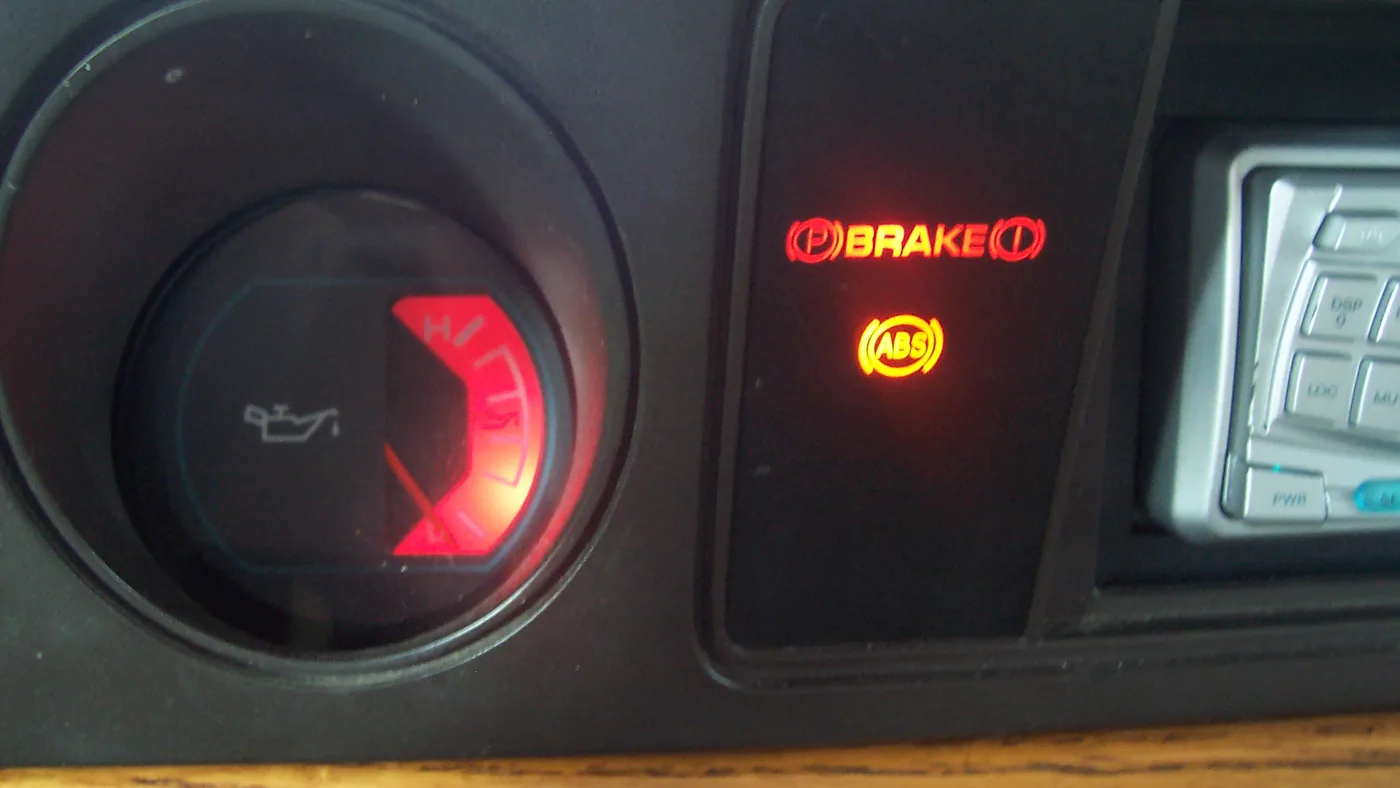
Rear cameras dominate; see our backup camera recall guide. For software behind automatic braking see phantom braking, and for battery software car battery recalls. Toyota’s 26V511, filed in August 2026 for 508,354 Camry Hybrids, says the instrument cluster display may fail at startup, disabling hazard lights, turn signals and the seat belt warning, and the fix is a dealer display software update.
Which automakers file them
| Automaker | Campaigns | Vehicles potentially affected | Repaired (vehicle-weighted) | Est. not yet repaired |
|---|---|---|---|---|
| Tesla | 15 | 6,750,244 | 99% | 77,409 |
| Stellantis (FCA US) | 19 | 5,970,859 | 73% | 1,523,581 |
| Ford | 37 | 5,323,547 | 69% | 1,655,203 |
| General Motors | 29 | 3,139,074 | 89% | 344,851 |
| Honda | 15 | 3,062,347 | 83% | 505,531 |
| Toyota | 12 | 2,784,577 | 82% | 411,957 |
| Mercedes-Benz | 33 | 2,128,873 | 94% | 124,407 |
| Nissan | 13 | 1,598,481 | 83% | 271,442 |
“Repaired” weights each campaign’s reported completion rate by its vehicle count; “not yet repaired” is the matching estimate. A vehicle in several campaigns is counted in each. Source: NHTSA recalls file and US DOT completion data, retrieved Oct 6, 2026; computed by PlainVIN.
Tesla leads by vehicles and reports 99% repaired. Ford has the lowest repaired share among the large makers shown (69%) and the most vehicles outstanding; Stellantis is next at 73%, mainly because of 18V332. Ford files the most recalls of the group. Trade reports that count any recall with a software element give larger totals: AutoTechInsight put the 2025 count at 166 by late November (Nov 26, 2025), against our component-coded count.
What to do about a software recall
- Check your VIN with our VIN decoder or our recall check guide, and read the remedy line, not just the title.
- If the remedy names OTA, keep the car connected and accept the update when prompted. Confirm in the manufacturer’s app or the recall check that it shows as completed.
- If it says dealers will update the software, book the free repair; ask whether an OTA option exists.
- If the repair was done years ago, re-check the VIN: a newer recall may cover cars already repaired.
- Report problems, even after the fix: see filing a complaint. For recalls versus service bulletins see TSB vs recall, and for the wider picture car electrical problems.
For one software recall family in detail see our tire pressure monitor recalls guide.
Recall figures are PlainVIN’s analysis of NHTSA’s files and update when we refresh the data; the tables that are not live were counted on the data retrieved Oct 6, 2026. “Repaired” is the automaker’s figure. “Over the air” means the remedy text says so. This guide is general information, not mechanical advice for a specific vehicle.
Frequently asked questions
What is a software recall?
A software recall is a safety recall whose repair is a software update to a vehicle’s control modules instead of a replacement part. NHTSA files it like any other recall; it has no separate category.
Do software recalls need a dealer?
Often, yes. Of 238 software-coded car recalls filed since 2020, 166 say only that dealers will update or reprogram the software, 40 name a dealer or an over-the-air update, and 30 name an over-the-air update alone. Read the remedy line in your recall notice.
Is an over-the-air update really a recall?
Yes. NHTSA told Tesla in 2021 that a manufacturer making an over-the-air update to fix a safety defect must file a recall notice, and owners still get a notice.
Are software recalls repaired more often than other recalls?
In the data they are. Software-coded car recalls filed from 2018 to mid-October 2025 are 89% repaired, against 68% for all other car recalls, though we have not controlled for vehicle age, size or maker.
Which software recall is the largest?
Chrysler’s 18V332, for cruise control that may not cancel, covers 4,815,661 vehicles and is 77% repaired. Tesla’s Autopilot recall 23V838 covers 2,031,220 vehicles and is 99% repaired.
Can a software recall come back after the car was repaired?
Yes. We found 45 recalls whose records say the vehicles were previously repaired under an earlier recall, 37 of them Ford’s. Nine Ford recalls filed on June 9, 2026 cover vehicles repaired under recalls from 2016 to 2024.
Do Tesla, Ford and Toyota fix software recalls the same way?
No. Tesla’s records name an over-the-air update in 13 of its 14 software-coded car recalls filed before mid-October 2025, Ford’s in 6 of 33, and none of Toyota’s eight does.
How do I find out if my car has a software recall?
Enter your VIN in a recall check, then read the remedy line for each open recall. A recall shown as completed can still be replaced by a newer recall for the same fault.
About the PlainVIN Recalls & Safety Desk
This desk covers recall campaigns and completion rates, owner complaints filed with NHTSA, and NHTSA 5-Star Safety Ratings.
Every figure in this guide links to its primary source. See our editorial policy, how we use AI and corrections log.
How this page was madeSources, processing, limits, review and changes
Data sources
- NHTSA recalls file (components with software; campaigns including 18V332, 19V743, 20V440, 20V771, 21V058, 21V264, 21V931, 22V045, 22V063, 22V235, 23V838, 24V444, 24V481, 24V554, 25V315, 26V123, 26V369, 26V374, 26V378, 26V511, 17V437), US DOT completion data
Retrieved Oct 6, 2026 - NHTSA recall record, Chrysler campaign 18V332 (cruise control cannot be cancelled)
nhtsa.gov - NHTSA recall record, Tesla campaign 23V838 (Autosteer controls)
nhtsa.gov - NHTSA recall record, GM campaign 24V481 (Bolt battery software reinstall)
nhtsa.gov - NHTSA recall record, Ford campaign 26V369 (previously repaired under 18V735)
nhtsa.gov - US regulator targets Tesla on NDAs, over-the-air software updates
TechCrunch, Oct 13, 2021 - Over-the-air recalls carry legal risks for auto manufacturers
Bloomberg Law, Jun 9, 2025 - Automotive software recalls approach record for 6th straight year
AutoTechInsight, Nov 26, 2025
Processing
- Complaints are counted per component. One complaint can list several, so component totals add up to more than the total.
- Fuel cost = miles per year ÷ EPA combined mpg × EIA weekly price for your region.
Limitations
- Complaint counts are owner reports, not verified findings or failure rates. There is no sales denominator.
- Recall campaigns are listed for the model year. Only NHTSA and the automaker know whether a specific car was repaired.
- Recent model years are still collecting reports.
Review
Researched by Daniel B. and Olivia C., technical check by Ethan B., edited by Sophia M. (see the editorial team page). Drafted with AI assistance and checked against primary sources by the Recalls & Safety desk.
Changelog
- 2026-10-06 Data refreshed from the official files.
Keep reading