Tire Pressure Monitor Recalls: TPMS Failures and Fixes
Every NHTSA tire pressure monitor recall for cars and pickups: Tesla, VW and Jeep warnings that may fail, why TPMS recalls happen and which were fixed.
Key takeaways
- NHTSA’s file holds 45 recalls for the tire pressure monitoring system (TPMS) in cars, SUVs and pickups, covering 1.8 million vehicles (a vehicle can be in more than one); 92% are reported repaired. Almost all say the warning may not come on, may not stay on, or may trigger at the wrong pressure.
- Reading each record, we count 13 recalls caused by a software or programming error, 16 by a wrong threshold or calibration, and 10 by a sensor, module or wiring fault. Software now dominates: 7 of the 11 filed since 2022, against 9 threshold or calibration faults among the 17 filed before 2013.
- The largest are Tesla’s 24V935 (696,281 vehicles, 99.93% repaired by over-the-air update), Volkswagen’s 22V815 (296,044, 84.39%) and Chrysler’s Jeep recall 26V559 (201,975, filed September 2026, no repair rate yet).
- Repairs are free, and some come back: Ford recalled 2022 F-150 Lightning trucks again for a repair done incorrectly. Check your VIN at nhtsa.gov/recalls, and until the repair is done check tire pressure with a gauge instead of relying on the light.
A tire pressure monitor recall means NHTSA’s records show a vehicle whose tire pressure monitoring system (TPMS) may fail to warn the driver of a significantly underinflated tire, most often because of a software error, a threshold set at the wrong pressure or a faulty sensor, and the fix is free. News coverage reports them one at a time; this guide reads all of them in NHTSA’s recall file and sorts them by what failed.
What a TPMS recall is, and the rule behind it
Most TPMS recalls are not about a tire failing. They are compliance recalls: the automaker found that the warning system does not meet Federal Motor Vehicle Safety Standard (FMVSS) 138, and NHTSA’s wording is that the vehicles “fail to comply with the requirements” of it. The standard applies to cars, SUVs, pickups and buses up to 10,000 pounds, and it has applied to every such vehicle built since September 1, 2007 (a year later for multistage vehicles). Its core requirement is a timing and a threshold:
“Illuminate a low tire pressure warning telltale not more than 20 minutes after the inflation pressure in one or more of the vehicle’s tires, up to a total of four tires, is equal to or less than either the pressure 25 percent below the vehicle manufacturer’s recommended cold inflation pressure, or the pressure specified in the 3rd column of Table 1 of this standard for the corresponding type of tire, whichever is higher.”49 CFR 571.138, S4.2(a), law.cornell.edu
A second requirement is easy to miss: the system must also warn the driver within 20 minutes of a malfunction of its own (S4.4), and that malfunction light must stay on for as long as the fault exists.
We count recalls NHTSA files under its tire pressure monitoring component that cover a car or light truck in our catalog; trucks, buses, motorhomes and makers outside the catalog (Aston Martin and Ferrari, for example) are not in these totals. Seventeen of the 45 were filed before 2013, and 17 report no repair rate, mostly older records plus the two filed in 2026. Here is who they belong to:
| Automaker | Campaigns | Vehicles potentially affected | Repaired (vehicle-weighted) | Est. not yet repaired |
|---|---|---|---|---|
| Tesla | 1 | 696,281 | 100% | 487 |
| Stellantis (FCA US) | 13 | 379,727 | 81% | 33,936 |
| Volkswagen Group | 3 | 296,414 | 84% | 46,337 |
| Nissan | 2 | 146,206 | – | – |
| Mazda | 1 | 99,711 | 82% | 18,297 |
| General Motors | 6 | 69,506 | 65% | 175 |
| Jaguar Land Rover | 5 | 40,783 | 78% | 8,780 |
| Toyota | 4 | 26,067 | 84% | 154 |
“Repaired” weights each campaign’s reported completion rate by its vehicle count; “not yet repaired” is the matching estimate. A vehicle in several campaigns is counted in each. Source: NHTSA recalls file and US DOT completion data, retrieved Oct 6, 2026; computed by PlainVIN.
Stellantis has the most recalls and Tesla the most vehicles.
Why TPMS recalls happen: six causes
NHTSA’s subject lines say only “TPMS may not illuminate”. The summary underneath says why. We read all 45 and placed each in one group, a judgment on our part where a record mentions two causes:
| Cause | Recalls | Vehicles (with overlap) | Examples | Usual fix |
|---|---|---|---|---|
| Software or programming error | 13 | 1,322,391 | Tesla 24V935, Jeep 26V559, Volkswagen 22V815 | Software update, over the air or at a dealer |
| Threshold or calibration wrong | 16 | 113,315 | Land Rover 20V585, GM 11V511, Toyota 11V148 | Recalibrate or reprogram |
| Sensor, module or wiring fault | 10 | 263,854 | Chrysler 22V504, Nissan 09V393, Jeep 25V527 | Replace the part |
| Sensors failed to learn their positions | 3 | 61,480 | Chrysler 14V632, Land Rover 14V618 | Reprogram the module |
| Not fitted or not activated at the factory | 2 | 3,304 | GM 16V184, Nissan 12V068 | Install or activate |
| Tire label states the wrong pressure | 1 | 8 | GM 26V530 | New label and software |
Source: NHTSA recalls file, retrieved Oct 15, 2026; grouping by PlainVIN from each recall’s summary, consequence and remedy.
The mix has changed. Before 2013 the commonest fault was a threshold set wrong: nine of 17 recalls, such as Toyota’s 11V148, where accessory wheels were fitted without recalibrating the system. Since 2022 software is the main cause (seven of 11). Our software recalls guide covers over-the-air fixes. Software faults also reach the most vehicles, because one release runs on every car that has it: 1.3 million of the 1.76 million.
The biggest TPMS recalls
Tesla (24V935, December 2024). The 2024 Cybertruck, 2017–2025 Model 3 and 2020–2025 Model Y vehicles in this recall, 696,281 in NHTSA’s file, are the largest TPMS recall in this set. NHTSA’s summary says the warning light “may not remain illuminated between drive cycles.” Tesla’s own filing is more specific: it was the system’s malfunction light, not the low-pressure light, and a software release broke the standard’s requirement that the malfunction light stay on for as long as the fault exists. Tesla says it found the problem on November 6, 2024 in compliance tests for non-US markets, and knew of 76 warranty claims, one field report and no collisions or injuries.
“The analysis traced the introduction of the condition to software release 2024.38.3, which inadvertently reset the TPMS warning telltale when the vehicle turned on or awakened from sleep between drive cycles.”Tesla Part 573 report, NHTSA recall 24V-935, static.nhtsa.gov
The repair is a free over-the-air update that Tesla says began reaching cars on or shortly after November 12, 2024, five weeks before the recall was filed, which is why 99.93% show as repaired. The filing lists 694,304 vehicles; NHTSA’s file shows 696,281. See also our EV recalls guide.
Volkswagen and Audi (22V815, October 2022). This recall covers 296,044 2019–2021 vehicles, including the Tiguan, Golf family, Jetta, Atlas and Atlas Cross Sport and the Audi Q3 and A3. NHTSA says the system “may not detect an air pressure loss in adequate time when deflating occurs among all four tires simultaneously.” The dealer software update is 84.39% complete.
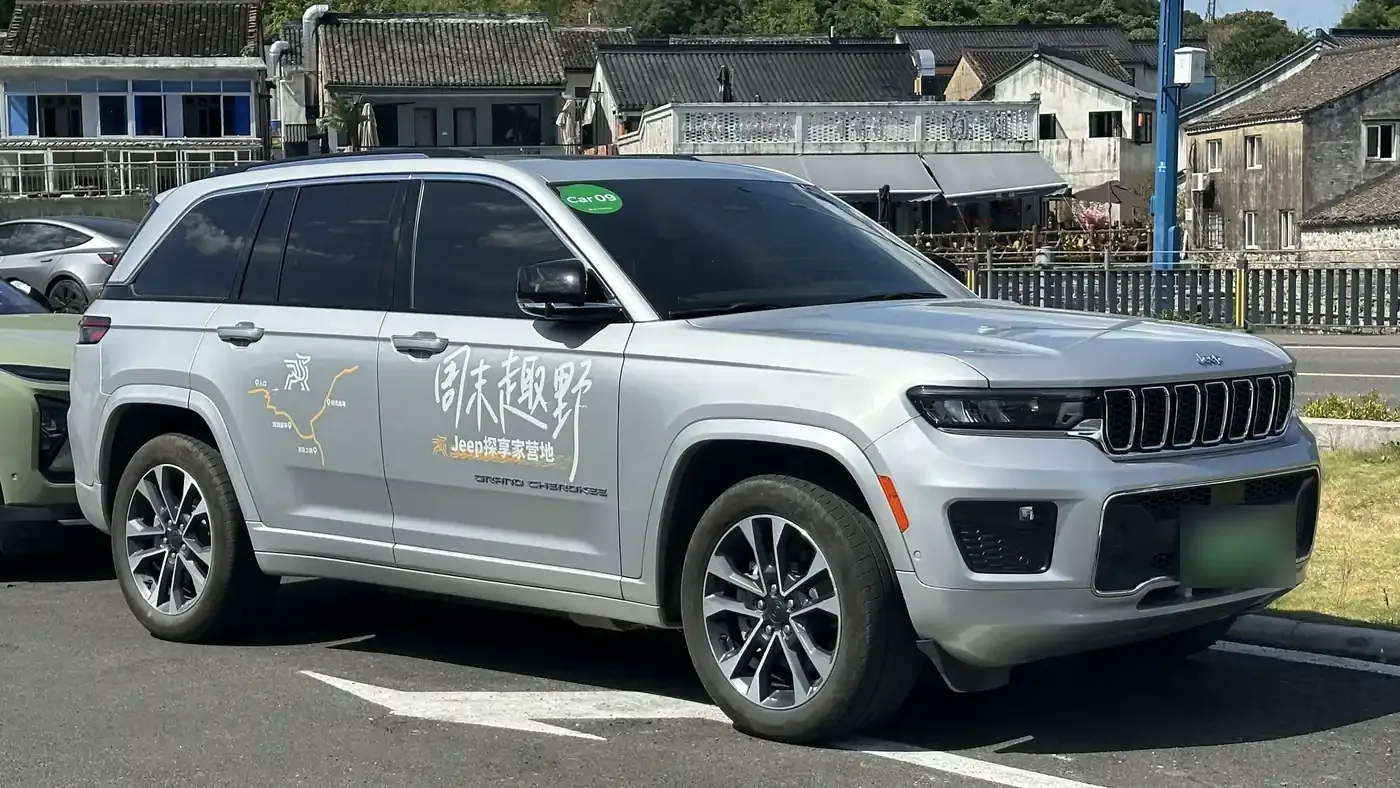
Jeep (26V559, September 2026). The newest large one: 201,975 2024–2026 Grand Cherokee, Grand Cherokee L and 4XE, Wagoneer and Grand Wagoneer models, plus the 2025 Wagoneer L and 2026 Cherokee. A software error may make the system fail to detect low pressure or fail to light the warning, and dealers update the radio frequency hub software. No repair rate exists yet. News reports round the count to 201,976; the NHTSA file says 201,975.
Nissan and Infiniti (09V393, 2009). This one is regional. NHTSA’s record covers 143,223 2008–2010 vehicles originally sold in or registered in 20 states and Washington, DC, including New York, Pennsylvania, Ohio, Michigan, Illinois and Minnesota, because the nut that secures each sensor “may corrode and potentially crack” where road salt is heavy. The dealer fix was a sturdier nut.
| Filed | Vehicles (NHTSA wording) | Problem | Units | Repaired |
|---|---|---|---|---|
| Dec 2024 24V935000 | Certain 2024 Cybertruck, 2017-2025 Model 3, and 2020-2025 Model Y vehicles | TPMS Light May Not Remain Illuminated/FMVSS 138 | 696,281 | 100% |
| Oct 2022 22V815000 | Certain 2019 Volkswagen Tiguan LWB, Golf Sportswagen A7, Golf Alltrack, Golf R GP, Audi Q3, Audi A3 Cabriolet, 2019-2020 Jetta NF, Jetta GLI, Golf GTI, Atlas, Golf A7, Audi A3 and others | Tire Pressure Loss Not Detected/FMVSS 138 | 296,044 | 84% |
| Sep 2026 26V559000 | Certain 2024-2025 Jeep Wagoneer, 2024-2026 Jeep Grand Cherokee, Jeep Grand Cherokee L, Jeep Grand Cherokee 4XE, Jeep Grand Wagoneer, 2025 Jeep Wagoneer L and others | Tire Pressure Monitor System May Fail/FMVSS 138 | 201,975 | – |
| Oct 2014 14V675000 | Certain model year 2014-2015 Mazda6 vehicles manufactured October 25, 2012, to October 10, 2014 | Tire Pressure Monitoring System/FMVSS 138 | 99,711 | 82% |
| Jul 2022 22V504000 | Certain 2022 Dodge Challenger, Dodge Charger, and Chrysler 300 vehicles | Inoperative TPMS Sensor/FMVSS 138 | 52,340 | 86% |
| Oct 2022 22V808000 | Certain 2022 Dodge Challenger, Dodge Charger, and Chrysler 300 vehicles | Inoperative TPMS Sensor/FMVSS 138 | 44,212 | 85% |
| Oct 2014 14V618000 | Certain model year 2014 Range Rover and Range Rover Sport and 2013-2014 LR4 vehicles manufactured September 16, 2013, to June 30, 2014 | TPMS may not Locate Sensors | 28,037 | 70% |
| Oct 2014 14V633000 | Certain model year 2014 Ram ProMaster vehicles manufactured April 23, 2013, to August 22, 2014 | TPMS may not Locate Sensors/FMVSS 138 | 23,053 | 85% |
| Aug 2025 25V527000 | Certain 2024-2025 Jeep Wrangler vehicles | TPMS Light May Not Illuminate as Intended/FMVSS 138 | 22,906 | 81% |
| Jun 2024 24V474000 | Certain 2014-2019 Fiat 500 vehicles | TPMS Light May Not Illuminate/FMVSS 138 | 12,675 | 39% |
Vehicle descriptions are NHTSA’s own summary wording; “repaired” is the share the manufacturer reports as fixed, and new campaigns start near zero. Source: NHTSA recalls file and US DOT completion data, retrieved Oct 6, 2026.
Sensors that fail, and a light that cries wolf
Some systems use a battery-powered sensor in each wheel. In 2022 Chrysler recalled the 2022 Dodge Challenger, Dodge Charger and Chrysler 300 because that battery “may fail prematurely and cause the sensor to become inoperative” (22V504, 52,340 vehicles, 86.45% repaired). NHTSA then described a second danger:
“In addition, a TPMS warning light that is already illuminated from a failed battery sensor will mask an actual tire pressure failure issue.”NHTSA recall record 22V504, Chrysler, nhtsa.gov
A light that is always on tells the driver nothing. Three recalls filed within five days in October 2014 are about exactly that: Land Rover’s 14V618 (28,037 vehicles), Chrysler’s 14V632 (10,390 Town and Country, Grand Caravan and Wrangler vehicles) and 14V633 (23,053 Ram ProMasters) each say the system may fail to learn the location of its sensors while the vehicle is driven, so the light stays on although pressures are within specification, and if a tire then lost air the driver “would not be notified.” Together that is 61,480 vehicles, with repair rates of 70% to 85%.
Other part faults include wrong sensors fitted at the factory (Ram 1500, 19V887; Cadillac CT6, 19V731) and a pinched remote start antenna cable that can stop the light from coming on in 2024–2025 Jeep Wranglers (25V527, 22,906 vehicles, 81.17% repaired), a part with nothing to do with tires. NHTSA’s August 2025 acknowledgment letter for 25V527 listed 78,989 units, while its current file shows 22,906; the two NHTSA documents differ, and we use the file.
Recalls that came back
Two TPMS chains stand out:
| First recall | Follow-up | Vehicles | What NHTSA says |
|---|---|---|---|
| 22V453 (Jun 2022): 2,666 vehicles, 94.82% repaired | 25V340 (May 2025): 197 vehicles, 60.41% repaired | 2022 Ford F-150 Lightning with 20- or 22-inch all-season tires | Trucks “repaired incorrectly under recall 22V-453”; the TPMS light may not illuminate; dealers update the body control module software |
| 22V504 (Jul 2022): 52,340 vehicles, 86.45% repaired | 22V808 (Oct 2022): 44,212 vehicles, 84.83% repaired | 2022 Dodge Challenger, Dodge Charger, Chrysler 300 | Sensor battery may fail prematurely; NHTSA notes the second is “an expansion of previous recall number 22V-504,” so together about 96,552 vehicles |
Source: NHTSA recall records, retrieved Oct 15, 2026. “Repaired” is the automaker’s figure.
The Lightning is the smaller recall and the sharper lesson: 197 trucks needed the repair redone, and only 60% of those have been. If you buy a car that had a TPMS recall, ask the dealer for proof the repair was completed.
When the placard is wrong, the warning is wrong
The 25% threshold in FMVSS 138 is measured from the pressure printed on the vehicle’s placard. If the placard is wrong, the warning light trips at the wrong pressure, and a separate FMVSS 110 recall can quietly become a TPMS problem. GM’s 26V530 (August 2026; eight 2024–2025 Silverado 2500 and Sierra 2500 trucks with the 20-inch accessory wheel package) says the tire information label “may state the incorrect rear tire pressure, resulting in underinflated tires and preventing the tire pressure monitoring system (TPMS) from displaying a low tire pressure warning.” Land Rover’s 2020–2021 Range Rover Sport needed both: a TPMS recall (20V585, 11,159 vehicles with 20- to 22-inch wheels) because the “recommended pressure has been set incorrectly in the instrument cluster,” and a label recall (20V586, 1,087 vehicles with 19-inch wheels) because the placard stated incorrect pressures.
Label-only recalls are not in our 45, but they exist, such as Alfa Romeo’s 2017–2024 Giulia and 2021–2024 Stelvio (24V512, 9,037 vehicles), whose placard pressure and size information is incorrect. Our used car inspection checklist covers a tire check and an open-recall check before you buy.
When a blank display hides the TPMS light
The warning light has to be visible to work. Four larger recalls are filed under the instrument cluster and are outside our 45: Toyota’s 25V595 (591,377 vehicles; the panel may fail to display speed, brake and tire pressure warning lights, 49.54% repaired), Kia’s 23V298 (108,936, 91.87%) and 26V046 (42,677, 87.78%), citing FMVSS 101 and 138, and Honda’s 15V668 (35,406 2016 Pilots, 92.43%), where the panel may not light a TPMS warning until the ignition is cycled. See our instrument cluster recalls guide, and car electrical problems for the wider pattern.
What to do if your car has a TPMS recall
- Check your VIN at nhtsa.gov/recalls or with our VIN decoder. Recalls vary by model year and build date.
- Do not rely on the light until it is repaired. NHTSA’s records say a TPMS light that fails may leave the driver unaware of low pressure. Check the pressure with a gauge, with the tires cold, against the number on the placard in the door jamb, and check again before long trips. This is general guidance, not a statement from a recall notice.
- Ask what the fix is. The records here say a software update, recalibration, a new sensor or a new cable, all free under a recall.
- If it fails again after the repair, or you had a light problem that no recall covers, file a complaint: see our guide to filing a complaint.
Recall figures are PlainVIN’s analysis of NHTSA’s recall files and update when we refresh the data. “Reported repaired” is the automaker’s figure. This guide is general information, not mechanical advice for a specific vehicle; see the official NHTSA recall lookup for your VIN.
Frequently asked questions
What is a tire pressure monitor recall?
It is a recall because a vehicle’s tire pressure monitoring system (TPMS) may not warn the driver of a significantly underinflated tire. In NHTSA’s records the cause is usually software, a threshold or calibration set at the wrong pressure, or a faulty sensor, and the repair is free.
What is FMVSS 138?
Federal Motor Vehicle Safety Standard 138 covers tire pressure monitoring systems on cars, SUVs, pickups and buses up to 10,000 pounds. It requires a warning within 20 minutes once a tire is 25 percent below the recommended cold pressure, and a separate warning when the system itself malfunctions.
Which cars have had the biggest TPMS recalls?
The largest are Tesla’s 24V935 (696,281 vehicles: 2017–2025 Model 3, 2020–2025 Model Y and 2024 Cybertruck), Volkswagen and Audi’s 22V815 (296,044 vehicles from 2019–2021) and Chrysler’s 26V559 (201,975 2024–2026 Jeeps).
Why did Tesla recall nearly 700,000 cars over the TPMS light?
Tesla’s filing to NHTSA says a software release reset the TPMS malfunction warning when the car woke from sleep between drives, which does not meet FMVSS 138. A free over-the-air update fixed it, and 99.93% of the vehicles are reported repaired.
Why do TPMS recalls happen?
Reading all 45 records, we count 13 software or programming errors, 16 wrong thresholds or calibrations, 10 sensor, module or wiring faults, 3 sensor-learning errors, 2 systems not fitted or activated at the factory and 1 wrong tire label.
Is it safe to drive a car with an open TPMS recall?
None of the 45 carries a do-not-drive or park-outside advisory. NHTSA’s records say a warning that fails increases the risk of a crash, so check pressure with a gauge until the repair is done and book it with a dealer.
Can a TPMS recall come back after the repair?
Yes. Ford recalled 2022 F-150 Lightning trucks again (25V340) because they were repaired incorrectly under 22V453, and Chrysler widened its 2022 sensor-battery recall 22V504 with 22V808.
How do I check my car for a TPMS recall?
Enter your VIN at nhtsa.gov/recalls or use the PlainVIN VIN decoder. Recalls vary by model year and build date, so a model name alone is not enough.
About the PlainVIN Recalls & Safety Desk
This desk covers recall campaigns and completion rates, owner complaints filed with NHTSA, and NHTSA 5-Star Safety Ratings.
Every figure in this guide links to its primary source. See our editorial policy, how we use AI and corrections log.
How this page was madeSources, processing, limits, review and changes
Data sources
- NHTSA recalls file (tire pressure monitoring component, catalog cars and light trucks), including campaigns 08V166, 09V393, 11V148, 11V511, 12V004, 14V618, 14V632, 14V633, 14V675, 16V184, 17V146, 19V731, 19V887, 20V517, 20V585, 20V586, 20V635, 22V453, 22V504, 22V808, 22V815, 24V474, 24V512, 24V935, 25V340, 25V527, 26V530 and 26V559
Retrieved Oct 15, 2026 - 49 CFR 571.138, Standard No. 138: Tire pressure monitoring systems
Legal Information Institute, Cornell Law School - Part 573 Safety Recall Report 24V-935, Tesla, Inc.
NHTSA (static.nhtsa.gov) - NHTSA acknowledgment letter, recall 25V527 (Jeep Wrangler)
NHTSA (static.nhtsa.gov) - NHTSA recall record, Tesla campaign 24V935
nhtsa.gov - NHTSA recall record, Chrysler campaign 22V504
nhtsa.gov - NHTSA recall record, Volkswagen campaign 22V815
nhtsa.gov - NHTSA recall record, Chrysler campaign 26V559
nhtsa.gov - NHTSA recall record, Ford campaign 25V340
nhtsa.gov
Processing
- Complaints are counted per component. One complaint can list several, so component totals add up to more than the total.
- Fuel cost = miles per year ÷ EPA combined mpg × EIA weekly price for your region.
Limitations
- Complaint counts are owner reports, not verified findings or failure rates. There is no sales denominator.
- Recall campaigns are listed for the model year. Only NHTSA and the automaker know whether a specific car was repaired.
- Recent model years are still collecting reports.
Review
Researched by Daniel B. and Olivia C., technical check by Ethan B., edited by Sophia M. (see the editorial team page). Drafted with AI assistance and checked against primary sources by the Recalls & Safety desk.
Changelog
- 2026-10-06 Data refreshed from the official files.
Keep reading