Side Mirror Recalls: Fire Risk, Detaching Glass, Wrong Mirrors
Every NHTSA car mirror recall: mirrors that may short or catch fire, glass that may detach and wrong mirrors fitted, with unit counts and repair rates.
Key takeaways
- NHTSA’s file holds 20 recalls for car, SUV, pickup and van mirrors, covering 2,199,548 vehicles with overlap. They fall into three groups: five fire risks, five mirrors or mirror glass that may detach, and nine cars fitted with the wrong mirror under federal standard FMVSS 111.
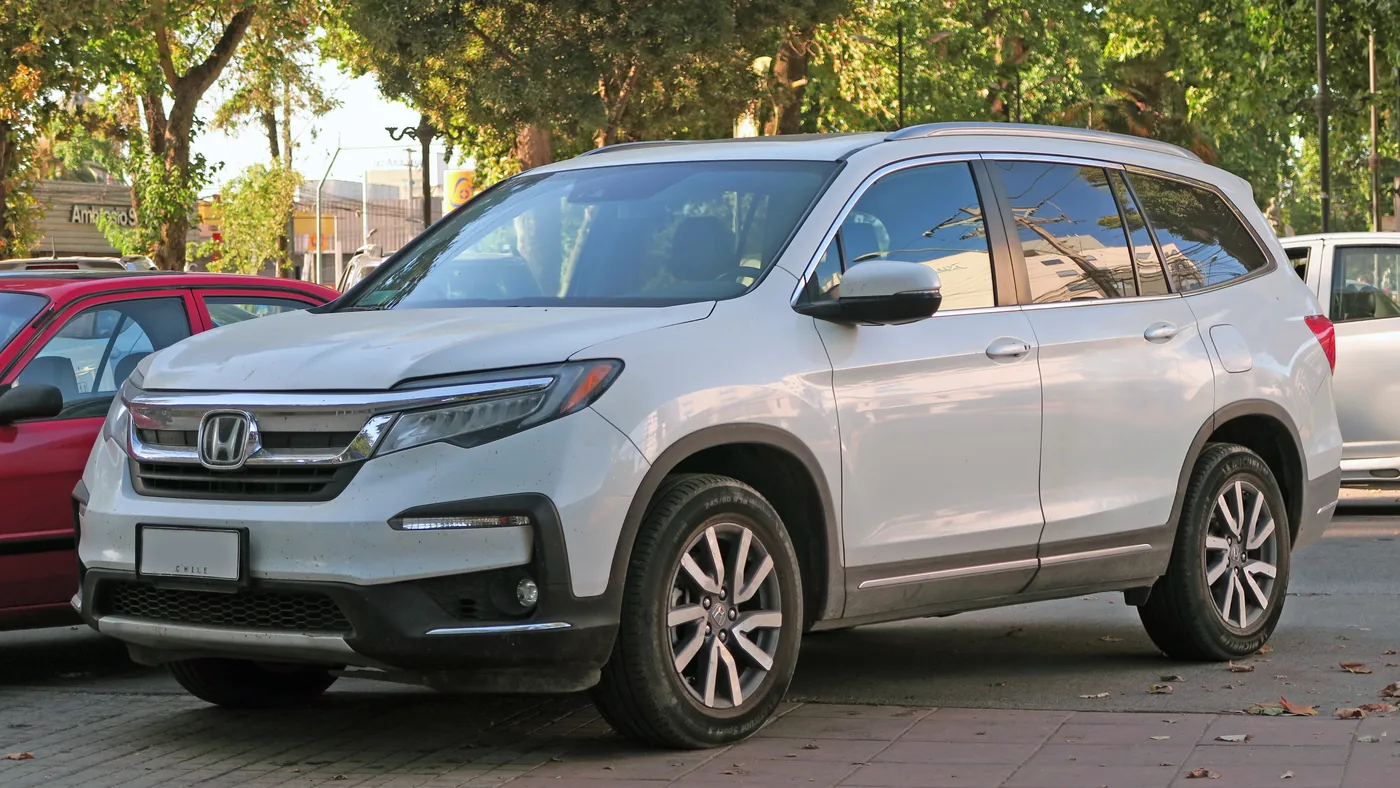
- The largest current ones are Honda’s 2023 recall of 339,404 2020–2022 Pilot, Passport, Ridgeline and Odyssey vehicles (side-view mirror glass may detach, 88% reported repaired) and Chrysler’s 2014 recall of 313,772 Jeep Wranglers (heated exterior mirror may short and cause a fire, 65%).
- Mirror fire is not new. Five recalls from 1997 to 2025 cover about 1.5 million vehicles, and the fault has moved from the mirror switch to the heated mirror to LED lights in the mirror housing. Lincoln’s 2025 Navigator recall is only 42% reported repaired.
- None of the 20 is flagged Do Not Drive or Park Outside in NHTSA’s file. Check your VIN anyway: repairs are free, and Ram has recalled mirror glass on its 1500 pickups twice.
A side mirror recall means the mirror may fall apart, short out or fail a federal visibility rule, and NHTSA’s file shows all three. Most articles on the subject describe one headline recall, usually Honda’s, and stop. This guide goes through all 20 recalls on record for passenger vehicles, by what failed, with the unit counts and repair rates from NHTSA’s own data.
Side mirror recalls: the big picture
We counted a recall when NHTSA files it under rearview mirrors (or its subject names a mirror), it covers a vehicle in our catalog, and it is about a mirror. NHTSA files 90 recalls under the rearview mirror component, but 64 of them cover no car, SUV, pickup or van we can match: buses, heavy trucks, motorcycles, RVs and warning-label fixes, which we leave out (see truck, bus and RV recalls below). We also set aside six rearview camera and display recalls that NHTSA files under the same component, such as Honda’s 232,140-vehicle 18V629; they belong in our backup camera recall guide. One 2008 filing for 107 imported right-hand-drive Jeep Cherokees that failed many standards at once is also left out.
Only nine of the 20 have a repair rate, because NHTSA’s completion data starts with 2014 filings; those nine are 74.8% repaired, weighted by vehicles. The 11 older recalls have none.
Mirrors that may short or catch fire
Mirrors carry current for adjustment, heating and lights, and each has had a recall:
| What can fail | Recall | Vehicles (NHTSA catalog) | Units | Repaired |
|---|---|---|---|---|
| Remote power mirror switch may short and cause smoke or fire | Ford 97V083 (1997) | 1992–1994 Explorer | 610,000 | not reported |
| Electric mirror switch short circuit may ignite door components | GM 03V093 (2003) | 1997–1998 Blazer, Jimmy, Suburban, Astro, Safari, C/K pickups | 507,171 | not reported |
| Heated mirror connector corrodes and may short | Chrysler 14V631 (2014) | 2011–2013 Jeep Wrangler | 313,772 | 65% |
| Power mirror switch collects road salt and may short | Chrysler 97V015 (1997) | 1996 Chrysler Sebring | 39,000 | not reported |
| LED logo lights in the mirrors may short circuit | Ford 25V091 (2025) | 2015–2017 Lincoln Navigator | 35,328 | 42% |
Source: NHTSA recalls file and US DOT completion data, retrieved Oct 6, 2026; table compiled by PlainVIN from each campaign’s record. “Repaired” is the automaker’s figure; NHTSA has no completion rate for recalls filed before 2014.
The pattern is that the fire risk has moved. In 1997 and 2003 the culprit was the switch on the door: Ford’s record says a short on the control switch circuit board could overheat the switch and cause smoke or fire, and the fix was an in-line 10 amp fuse, while GM’s says the short could mean heat damage to the driver’s door and a vehicle fire without prior warning, fixed with a fused jumper harness. In 2014 it was the heated mirror itself. Chrysler’s record (14V631) gives the cause as “corrosion in the exterior heated power mirror electrical connector,” which “may result in an electrical short.” Dealers move the mirror’s power feed to a separate connector. The recall was filed in October 2014 and began in March 2015 after an interim notice in December 2014, and 65% are reported repaired, which leaves about 110,000 Wranglers without a reported repair. The newest is Ford’s:
An electrical short circuit in the exterior mirror increases the risk of fire.
NHTSA recall record, Ford campaign 25V091 (2025)
The cause is the LED logo lights in the mirror housings, and dealers disconnect their wires. Only 42% of the 35,328 Navigators are reported repaired, about 20,500 without a reported repair. No car recall in the file ties a turn-signal light in a mirror to a short, so the LED logo lights are the only lighting failure on record. For fire in general see our car fire statistics and car electrical problems guides.
Mirror glass and housings that may detach
| What can fail | Recall | Vehicles (NHTSA catalog) | Units | Repaired |
|---|---|---|---|---|
| Heating pad behind the glass not bonded; glass may detach | Honda 23V174 (2023) | 2020–2021 Pilot, Ridgeline; 2020–2022 Passport, Odyssey | 339,404 | 88% |
| Three base screws per mirror can come loose from vibration | Suzuki 10V513 (2010) | 2007–2010 SX4 | 69,587 | not reported |
| Driver-side heated trailer tow mirror glass may detach | Ram 24V754 (2024) | 2020–2023 Ram 1500 Classic | 31,676 | 49% |
| Interior mirror may detach from its housing (manual-dimming mirrors) | Mazda 19V558 (2019) | 2019 Mazda3 | 22,571 | 95% |
| Driver-side mirror glass can detach from the backing plate | Ram 20V622 (2020) | 2020 Ram 1500, 2500 | 19,075 | 80% |
Source: NHTSA recall records, retrieved Oct 6, 2026; table compiled by PlainVIN. Total 482,313 vehicles; the four with a repair rate are 84.9% repaired, weighted by vehicles.
Honda’s is the biggest and the best documented. NHTSA’s record says:
The heating pads behind both side-view mirrors may not be bonded properly, allowing the mirror glass to detach.
NHTSA recall record, Honda campaign 23V174 (2023)
Detached glass “can reduce driver visibility, increasing the risk of a crash,” the record adds, and dealers replace both the left and right side-view mirrors. At 88% reported repaired, about 41,000 vehicles remain without a reported repair. News reports at filing gave about 330,000 vehicles; NHTSA’s record now says 339,404, and we use the record.
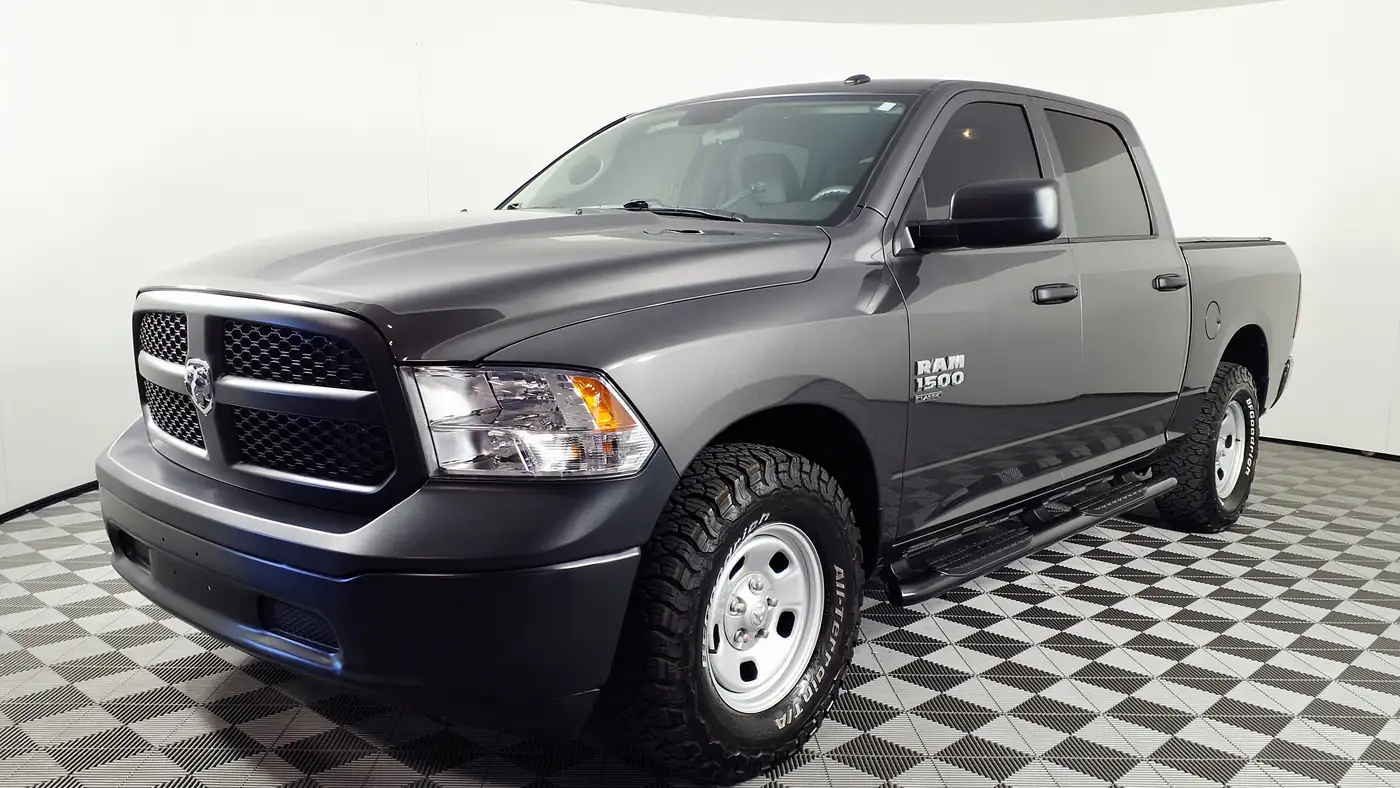
Ram’s two recalls show a repair that did not end the problem. In 2020 it recalled 19,075 2020 Ram 1500 and 2500 pickups because driver-side mirror glass can detach from the backing plate (20V622), and in 2024 it recalled 31,676 2020–2023 Ram 1500 Classic trucks with heated trailer tow mirrors for the same fault on the driver’s side (24V754). Our catalog links both recalls to the 2020 Ram 1500, so some trucks may be in both. Only 49% of the second are reported repaired, about 16,100 trucks. Mazda’s 2019 recall is for the interior mirror, whose adhesive may not be properly bonded; Suzuki’s 2010 SX4 recall is for loose screws rather than adhesive.
The wrong mirror: what FMVSS 111 requires
Nine recalls are not about a part failing at all. The car left the factory with a mirror that does not meet Federal Motor Vehicle Safety Standard 111, the rule that governs mirrors (and, since 2018, rearview camera images). The standard as written in 49 CFR 571.111 asks for the following on a passenger car:
- an inside rearview mirror of unit magnification, meaning flat glass that shows true distance (S5.1);
- a driver-side outside mirror, also unit magnification (S5.2.1);
- a passenger-side outside mirror, which may be convex only where the inside mirror cannot meet the field-of-view rule (S5.3), with a radius of curvature between 889 mm and 1,651 mm and the words “Objects in Mirror Are Closer Than They Appear” marked on it (S5.4).
Trucks, vans and SUVs of 4,536 kg or less may instead have outside unit-magnification mirrors of at least 126 cm² on both sides (S6.1). The standard also covers mounting; for the outside mirror it says the mounting:
shall provide a stable support for the mirror
49 CFR 571.111, S5.2.2, as published by Cornell Law School’s Legal Information Institute
That is why Honda’s detaching glass carries an FMVSS 111 citation in NHTSA’s record: an unsupported mirror fails the standard, even when no one has been hurt. The compliance recalls are small, and nearly all were filed before 2018:
| What was wrong | Recall | Vehicles (NHTSA catalog) | Units |
|---|---|---|---|
| No passenger-side outside mirror, with sunscreen rear glass | Chrysler 85V164 (1985) | 1984–1985 Dodge Caravan, Plymouth Voyager | 10,800 |
| Passenger-side outside mirrors do not comply | Mitsubishi 00V123002 (2000) | 2001 Montero | 4,275 |
| Outside mirrors smaller than the 50 square inch minimum | Ford 86V048 (1986) | 1986 F-350 | 630 |
| Convex right outside glass instead of flat | DaimlerChrysler 06V380 (2006) | 2006–2007 Ram 3500 | 309 |
| Convex right outside mirror instead of flat | GM 17V033 (2017) | 2016–2017 Suburban HD | 214 |
| Convex right outside glass instead of flat | Chrysler 94V025002 (1995) | 1994 Dodge Ram | 90 |
| Driver and passenger outside mirrors may have been omitted | Ford 82V098 (1982) | 1982 F-250, F-350 | 53 |
| Driver’s mirror built to non-US rules | BMW 14V648 (2014) | 2015 X3, X4 | 53 |
| Built with no inside mirror and a convex right mirror | GM 16V700 (2016) | 2016–2017 Express, 2016 Savana | 40 |
Source: NHTSA recall records, retrieved Oct 6, 2026; table compiled by PlainVIN. Total 16,464 vehicles; only the 2014–2017 recalls have repair rates (55%–81%).
Convex glass is the recurring mistake, and the records explain the danger plainly: a convex mirror shows traffic smaller, so it looks farther away than it is. BMW’s record says the driver may not notice that vehicles in the mirror are closer than they appear.
Power, heated and folding mirror faults
Power mirrors are the source of most of the electrical recalls above. Three recalls name the power mirror switch itself (Ford 97V083, GM 03V093, Chrysler 97V015), covering 1,156,171 vehicles, and all three are about heat or fire. Heated mirrors appear in Honda’s heating-pad recall, Chrysler’s Wrangler fire and Ram’s heated trailer tow mirrors. In the one purely mechanical case, DaimlerChrysler’s 2003 recall of 195,500 pickup trucks (03V077; a 2002 Ram 1500 in our catalog), the detent system in the exterior mirror housings may lose its function, which could affect the rearward field of view; dealers install a mirror detent retainer kit.
We found no car recall whose record names a power-folding mirror mechanism, a mirror memory system, or a mirror-mounted blind-spot or turn signal light as the defect. A mirror that folds or sticks is a warranty or repair matter unless a recall applies to your VIN; a Technical Service Bulletin (TSB) is not a recall. For other visibility recalls see our windshield wiper guide, sunroof guide and headlight guide.
Truck, bus and RV mirror recalls
Heavy vehicles have their own run of detaching mirrors. They are not in our car count, and we cannot match them to a VIN in our catalog, so check with the manufacturer. Examples in NHTSA’s file: PACCAR’s 2024 recall of 10,611 trucks whose cab mirror assembly may detach (24V017, 74% reported repaired), Hino’s 2021 recall of 4,848 whose mirror glass may detach from its carrier plate (21V146, 87%), and Mack’s 2019 recall of 3,906 trucks whose passenger down-view mirror may detach (19V054, 68%).
What to do about a mirror recall
- Check your VIN at nhtsa.gov/recalls or with our VIN decoder. Mirrors are shared across trims, so a recall may cover your model only in some years or with heated mirrors.
- Read the notice. NHTSA does not flag any of the 20 car recalls as Do Not Drive or Park Outside. Owner letters can carry interim instructions (the Wrangler recall had an interim notice months before its repair was ready), so follow yours.
- Expect a free fix: new mirrors, glass or screws, a moved power feed (Chrysler) or disconnected wires (Ford).
- Report what you see. Detached or loose mirrors and warm or smoking door switches belong in an NHTSA complaint, even if the car is later repaired.
If you are shopping for a used car, mirrors are on the list in our used car inspection checklist.
Recall figures are PlainVIN’s analysis of NHTSA’s files and update when we refresh the data. “Reported repaired” is the automaker’s figure, and repair-gap estimates are our arithmetic from it. This guide is general information, not mechanical or safety advice for a specific vehicle; the official source for any recall is its NHTSA recall record.
Frequently asked questions
Which side mirror recalls are the biggest?
Honda’s 2023 recall 23V174 covers 339,404 2020–2022 Pilot, Passport, Ridgeline and Odyssey vehicles whose side-view mirror glass may detach, and Chrysler’s 14V631 covers 313,772 2011–2013 Jeep Wranglers with a heated mirror fire risk. Older mirror switch fire recalls were larger: Ford’s 1997 recall covers 610,000 vehicles and GM’s 2003 recall 507,171.
Can a side mirror catch fire?
Yes, according to five NHTSA recalls from 1997 to 2025. The cause was a shorted mirror switch, a corroded heated-mirror connector (Jeep Wrangler, 14V631) or LED logo lights in the housing (2015–2017 Lincoln Navigator, 25V091).
Can side mirror glass fall off while driving?
Several recalls say so. Honda’s 23V174, two Ram recalls (20V622 and 24V754) and Suzuki’s 2010 SX4 recall (10V513) describe mirror glass or a whole mirror that may detach or come loose, reducing visibility and raising the risk of a crash.
What does FMVSS 111 say about mirrors?
A passenger car needs a flat (unit magnification) inside mirror and driver-side outside mirror. A passenger-side outside mirror may be convex only where the inside mirror cannot meet the field-of-view rule, with the words “Objects in Mirror Are Closer Than They Appear.” Nine car recalls were filed because the wrong mirror was fitted.
Is there a recall for rearview (interior) mirrors?
Mazda recalled 22,571 2019 Mazda3 cars with manual-dimming mirrors in 2019 (19V558) because the interior mirror may detach from its housing. Rearview camera display recalls are separate and are covered in our backup camera guide.
Is a mirror recall repair free?
Yes. In NHTSA’s records dealers replace the mirrors or glass, replace screws, move a power feed or disconnect LED wires, all at no charge to the owner.
Is it safe to drive with a recalled mirror?
None of the 20 car mirror recalls in NHTSA’s file carries a Do Not Drive or Park Outside flag. Follow the instructions in your owner letter and have the free repair done.
Are there recalls for power-folding or heated mirrors?
Heated mirrors appear in three recalls: Honda’s heating pads, the Jeep Wrangler connector and Ram’s heated trailer tow mirrors. We found no car recall that names a power-folding mechanism as the defect.
About the PlainVIN Recalls & Safety Desk
This desk covers recall campaigns and completion rates, owner complaints filed with NHTSA, and NHTSA 5-Star Safety Ratings.
Every figure in this guide links to its primary source. See our editorial policy, how we use AI and corrections log.
How this page was madeSources, processing, limits, review and changes
Data sources
- NHTSA recalls file (rearview mirrors component and recalls naming mirrors) and US DOT completion data, including campaigns 82V098, 85V164, 86V048, 94V025, 97V015, 97V083, 00V123, 03V077, 03V093, 06V380, 10V513, 14V631, 14V648, 16V700, 17V033, 19V558, 20V622, 23V174, 24V754 and 25V091
Retrieved Oct 6, 2026 - NHTSA recall record, Honda campaign 23V174
nhtsa.gov - NHTSA recall record, Chrysler campaign 14V631
nhtsa.gov - NHTSA recall record, Ford campaign 25V091
nhtsa.gov - 49 CFR 571.111, Standard No. 111; Rear visibility
Cornell Law School Legal Information Institute, read Oct 15, 2026 - NHTSA, Report a Safety Problem
nhtsa.gov
Processing
- Complaints are counted per component. One complaint can list several, so component totals add up to more than the total.
- Fuel cost = miles per year ÷ EPA combined mpg × EIA weekly price for your region.
Limitations
- Complaint counts are owner reports, not verified findings or failure rates. There is no sales denominator.
- Recall campaigns are listed for the model year. Only NHTSA and the automaker know whether a specific car was repaired.
- Recent model years are still collecting reports.
Review
Researched by Daniel B. and Olivia C., technical check by Ethan B., edited by Sophia M. (see the editorial team page). Drafted with AI assistance and checked against primary sources by the Recalls & Safety desk.
Changelog
- 2026-10-06 Data refreshed from the official files.
Keep reading