Vehicle Seat Recalls: Seat Backs, Power Seats, Fire Risk
703 NHTSA recalls cover vehicle seats. See the largest by cause, the Kia Telluride fire recall, 2026 seat recalls, repair rates and what to do.
Key takeaways
- NHTSA’s file holds 703 recalls filed first under seats, covering 22.0 million vehicles; 71% are reported repaired. Most are about seat backs that may not hold in a crash, power seats and loose or broken seat frames.
- Seat recalls are busy in 2026: Toyota’s Highlander second-row seat backs (26V128), Kia’s Telluride power seat fire recall (26V430), Ford’s Explorer and Aviator second-row seats (26V451) and driver’s seat (26V470) and Hyundai’s and Cadillac’s power rear seats that can trap a person (26V160, 26V394).
- The Kia Telluride is on its second recall for the same fire risk. The 2024 repair (24V407) was reported 85% complete, yet the 2026 recall says an improper repair can still lead to overheating, and Kia advises owners to park outside until it is fixed.
- If a seat back reclines or moves on its own, or smells hot, stop using that seat, and check your VIN at nhtsa.gov/recalls. Recall repairs are free.
A seat that reclines on its own, slides forward in a hard stop or overheats can hurt the person in it, and NHTSA’s recall file holds hundreds of recalls for exactly these faults. This guide covers vehicle seats (not child car seats, which are handled as separate equipment recalls). It uses NHTSA’s recall and complaint files to show which vehicles have been recalled for seat backs, power seats and seat frames, what failed, and how many remain unrepaired.
Seat recalls: the big picture
We count a recall when NHTSA files it first under “seats.” Within those, 166 mention a seat back or recliner, 127 a power, sliding or easy-entry seat, 46 a head restraint, 21 a seat that can trap or pinch a person and 17 a fire or overheating risk (a recall can fall in more than one group). Here is who they belong to, for 2014 onward:
| Automaker | Campaigns | Vehicles potentially affected | Repaired (vehicle-weighted) | Est. not yet repaired |
|---|---|---|---|---|
| Ford | 21 | 2,444,908 | 64% | 711,316 |
| Honda | 10 | 1,710,156 | 81% | 328,549 |
| Toyota | 11 | 1,455,013 | 55% | 345,165 |
| Kia | 6 | 1,036,112 | 78% | 124,317 |
| General Motors | 18 | 688,245 | 82% | 119,426 |
| Stellantis (FCA US) | 14 | 195,730 | 65% | 69,437 |
| Mazda | 2 | 183,289 | 39% | 111,819 |
| Daimler Truck | 16 | 94,977 | 74% | 24,342 |
“Repaired” weights each campaign’s reported completion rate by its vehicle count; “not yet repaired” is the matching estimate. A vehicle in several campaigns is counted in each. Source: NHTSA recalls file and US DOT completion data, retrieved Oct 6, 2026; computed by PlainVIN.
Ford has the most seat recalls and the largest estimated number still unrepaired. Toyota’s weighted repair rate (55%) trails Ford’s, Honda’s, Kia’s and GM’s, and Toyota’s newest seat recall (26V128) has no completion rate yet.
The largest seat recalls
These are the biggest seat campaigns in NHTSA’s file, old and new, with repair rates where the automaker reported one. Rows without a rate are older campaigns, or ones still being rolled out.
| What can fail | Recall | Vehicles covered | Units | Repaired |
|---|---|---|---|---|
| Recliner bolt may fracture (driver’s high-back seat) | Ford 03V281 (2003) | Certain SUVs with high-back seats | 1,552,880 | not reported |
| Recliner bolt may break, seat back reclines | DaimlerChrysler 03V035 (2003) | Certain passenger vehicles | 1,066,000 | not reported |
| Second-row seat can tip forward when braking | Honda 17V725 (2017) | 2011–2017 Odyssey | 806,936 | 80% |
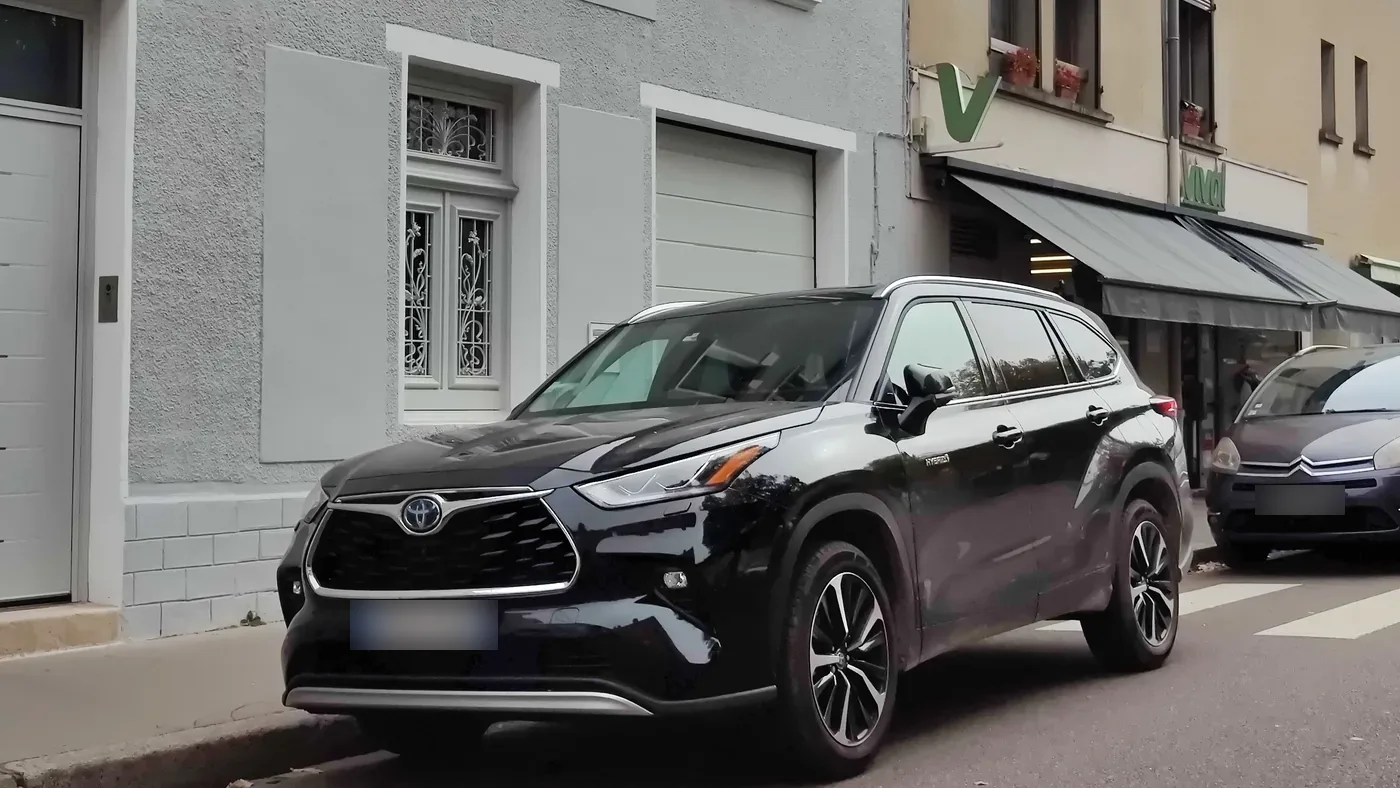
| Second-row seat back may fail to lock | Toyota 26V128 (2026) | 2021–2025 Highlander, Highlander Hybrid | 686,588 | not reported |
| Recliner may be missing a pawl, reduced seat back strength | Ford 19V633 (2019) | 2018–2020 F-150 and Super Duty, 2018–2020 Explorer, Expedition, Escape and others | 639,137 | 78% |
| Second-row outboard seats may stay unlocked | Honda 16V933 (2016) | 2011–2016 Odyssey | 633,753 | 81% |
| Power seat motor may overheat and burn | Kia 26V430 (2026) | 2020–2024 Telluride | 462,869 | not reported |
| Easy-entry second-row seat may move unexpectedly | Ford 26V451 (2026) | 2020–2027 Aviator, 2020–2026 Explorer | 387,911 | not reported |
| Loose seat frame pivot bolt | Ford 26V268 (2026) | 2024–2026 Ranger, Bronco | 179,698 | 34% |
| Seat back frame may fail to restrain occupant | Kia 26V105 (2026) | 2025 Telluride with power front seats | 85,515 | 38% |
Source: NHTSA recalls file and US DOT completion data, retrieved Oct 6, 2026; table compiled by PlainVIN from each campaign’s record.
Seat backs and recliners that may not hold
A seat back is the part that holds an occupant in place in a rear impact. The recall records describe two kinds of failure: a recliner that lets the seat back move when it should not, and a seat back that is too weak to hold in a crash.
- Fractured or broken bolts. Ford’s 2003 recall says the upper bolt that attaches the seat recliner mechanism to the seat back frame “could fracture” on the driver’s side, and that the seat back may then recline until it hits an object behind it. The consequence NHTSA lists is that the driver could lose contact with the steering wheel or pedals. DaimlerChrysler’s 2003 recall describes the same outcome, a seat back reclining unexpectedly.
- A missing part. Ford’s 2019 recall (19V633) says manual recliner mechanisms in several trucks and SUVs may be missing the third pawl required for seat back strength, so the seat may not adequately restrain an occupant in a crash. Dealers inspect and replace the seat structure as necessary.
- Springs that don’t lock. For the 2021–2025 Highlander (26V128), the recall says second-row seat backs may fail to lock into position during adjustment. Dealers will replace the return springs in the recliner assemblies, and Toyota’s owner letters were mailed September 9, 2026 as part of a phased recall.
- A frame that fails. Kia’s 2025 Telluride recall (26V105) says a manufacturing error may leave the driver and passenger seat back frames unable to restrain occupants. Only about 38% were reported repaired.
| Filed | Vehicles (NHTSA wording) | Problem | Units | Repaired |
|---|---|---|---|---|
| Mar 2026 26V128000 | Certain 2021-2025 Highlander and Highlander Hybrid vehicles | Second-Row Seat Backs May Fail to Lock | 686,588 | – |
| Feb 2025 25V086000 | Certain 2021-2025 Sienna Hybrid vehicles | Loose Third-Row Seatback Bolts/FMVSS 202 | 167,802 | 80% |
| Feb 2026 26V105000 | Certain 2025 Telluride vehicles, equipped with power front seat(s) | Front Seat Back Frames May Fail | 85,515 | 38% |
| Jul 2026 26V470000 | Certain 2025-2027 Explorer and Lincoln Aviator vehicles | Driver's Seat May Recline Unexpectedly | 76,748 | – |
| Sep 2022 22V732000 | Certain 2021 AMG GLS63, 2020-2022 GLS450 and GLS580 vehicles | Seatback Lock Failure | 59,574 | 81% |
| Sep 2021 21V743000 | Certain 2022 Pathfinder vehicles | Second-Row Seat Back Weld May Separate | 5,895 | 97% |
| Aug 2020 20V505000 | Certain 2020 Volkswagen Atlas Cross Sport, Jetta, Jetta GLI and Tiguan and Audi Q5 and SQ5 and 2021 Volkswagen Atlas vehicles | Front Seat Backrest Frame Not Welded Properly | 5,376 | 98% |
| Aug 2024 24V573000 | Certain 2023 Dodge Challenger vehicles | Seat May Not Lock into Upright Position//FMVSS 207 | 2,852 | 65% |
| Apr 2021 21V302000 | Certain 2021 Elantra vehicles | Seat Back Recliners Improperly Welded | 1,464 | 98% |
| Jun 2020 20V328000 | Certain 2020 E450, AMG E63S, GLC300, AMG GLC43, AMG GLC63, AMG GT53, and AMG GT63 vehicles equipped with rear seatbacks that can be electrically unlatched | Left Rear Seat Back Electric Latch May Fail | 1,352 | 98% |
Vehicle descriptions are NHTSA’s own summary wording; “repaired” is the share the manufacturer reports as fixed, and new campaigns start near zero. Source: NHTSA recalls file and US DOT completion data, retrieved Oct 6, 2026.
Second-row seats that unlatch or tip
Minivans and three-row SUVs have second-row seats that slide or fold for access, and several recalls cover latches that do not hold. Honda’s Odyssey has two of the largest: the 2016 recall (16V933) says the release lever on the second-row outboard seats may remain unlocked so the seats move unexpectedly, and the 2017 recall (17V725) says a seat placed between its two positions will not latch to the striker and can tip forward when braking. Honda’s repair was an added bracket (and a spring in the 2016 recall) for the second-row outboard seats. Ford’s July 2026 recall (26V451) covers the 2020–2027 Aviator and 2020–2026 Explorer, where the easy-entry switch may stick and let the seats unlatch, tip or slide. Ford’s 26V470 recall adds that an unoccupied driver’s seat may recline unintentionally during remote unlock or remote start, which may trap a second-row occupant.
Power seats: fires and entrapment
Power seats add motors, switches and wiring, and the recalls follow from that.
- Fire. Kia’s 2024 recall (24V407) said the front power seat motor of 2020–2024 Telluride vehicles may overheat because of a stuck slide knob, causing a fire while parked or driving. The repair was a bracket for the switch covers and new slide knobs, and 85% were reported repaired. In July 2026 Kia filed a second recall (26V430) for the same vehicles, saying the motor may overheat because of a stuck knob or an improper 24V407 repair. The remedy is a new electronic fuse assembly, owner letters were expected from August 13, 2026, and owners are advised to park outside and away from structures until repaired. See our park-outside recall list.
- Entrapment. Hyundai’s 2026 Palisade recall (26V160) says the second- and third-row power seats may fail to detect a person and keep moving during one-touch tilt-and-slide or power fold-and-stow. GM’s Cadillac Vistiq recall (26V394) says the third-row power seatback may fail to reverse when it meets a person; the repair is a software update.
“A person, especially a child, may become trapped by a rear powered seat, increasing the risk of injury or death.”NHTSA recall record 26V160, Hyundai Palisade, nhtsa.gov
Hyundai’s record advises owners to exercise caution with the second and third row power seat functions and to keep children out of the rear seats and rear seating area during power folding until the repair is done. Hyundai’s repair was already reported 95% complete.
Loose bolts and broken frames
Not every seat recall involves a moving part. Ford’s April 2026 recall (26V268) says the front seats of 2024–2026 Ranger and Bronco vehicles may have a loose or dislodged seat frame height-adjust pivot bolt, so the seat may not restrain an occupant in a crash; dealers inspect and replace the pivot links and bolts. Older recalls include a 1989 Ford recall for a seat track pedestal that could suffer fatigue fracture (89V170, 1,375,500 vehicles) and a 1987 GM recall for a floor anchor bar around the seat adjuster stud (87V079), a reminder that the weak point is often the hardware that holds the seat to the floor.
| Filed | Vehicles (NHTSA wording) | Problem | Units | Repaired |
|---|---|---|---|---|
| Jul 2026 26V430000 | Certain 2020-2024 Telluride vehicles | Fire from Overheated Power Seat Motors | 462,869 | – |
| Jun 2024 24V407000 | Certain 2020-2024 Telluride vehicles | Fire from Overheated Power Seat Motor | 462,869 | 85% |
| Jul 2026 26V451000 | Certain 2020-2027 Aviator and 2020-2026 Explorer vehicles | Second-Row Seat May Move Unexpectedly | 387,911 | – |
| Jun 2025 25V393000 | Certain 2020-2025 Aviator, and Explorer vehicles | Second-Row Seat May Move Unexpectedly | 304,662 | 64% |
| Mar 2026 26V160000 | Certain 2026 Palisade and 2026 Palisade Hybrid vehicles equipped with a Limited or Calligraphy trim package | Power Rear Seats May Trap a Person | 61,307 | 95% |
| Apr 2022 22V278000 | Certain 2020-2021 Taycan vehicles | Driver and Passenger Seat Wire Harness Damage | 9,570 | 98% |
| Mar 2025 25V153000 | Certain 2025 Sentra vehicles | Improperly Secured Seat Frame /FMVSS 207 & 210 | 199 | 93% |
| Feb 2022 22V111000 | Certain 2022 INFINITI QX60 and Nissan Pathfinder vehicles | Second-Row Seat Track Missing Bolt/FMVSS 210 | 21 | 100% |
Vehicle descriptions are NHTSA’s own summary wording; “repaired” is the share the manufacturer reports as fixed, and new campaigns start near zero. Source: NHTSA recalls file and US DOT completion data, retrieved Oct 6, 2026.
Seat complaints: which cars and years
NHTSA also records owner complaints under a “seats” category. It does not say which part failed, but it shows where owners report seat trouble.
| Vehicle | Complaints naming it | Share of that year’s complaints |
|---|---|---|
| 2005 Nissan Murano | 456 | 46% |
| 2006 Nissan Murano | 402 | 50% |
| 2014 Jeep Grand Cherokee | 338 | 14% |
| 2015 Jeep Grand Cherokee | 314 | 23% |
| 2007 Nissan Murano | 221 | 33% |
| 2025 Toyota Sienna Hybrid | 212 | 79% |
| 2000 Jeep Grand Cherokee | 192 | 13% |
| 2014 Dodge Durango | 163 | 21% |
| 2004 Jeep Grand Cherokee | 149 | 12% |
| 2001 Jeep Grand Cherokee | 142 | 15% |
| 2003 Nissan Murano | 111 | 14% |
| 2010 Mazda Mazda3 | 106 | 15% |
| 2003 Volkswagen Jetta | 101 | 22% |
| 2002 Volkswagen Jetta | 101 | 14% |
Source: NHTSA owner complaints file, retrieved Oct 6, 2026; computed by PlainVIN.
Counts follow sales, so high-volume models rank high; the share column compares model years more fairly. Two patterns stand out. The 2025 Toyota Sienna Hybrid has the highest share by far, and it matches two recalls: loose third-row seatback bolts on 2021–2025 Sienna Hybrids (25V086, 167,802 vehicles, filed February 2025) and improperly welded second-row seat rails on 2025 models (25V668, 54,631 vehicles, October 2025). The 2003–2007 Nissan Murano shows the opposite: it has some of the highest complaint counts and shares, yet we found no seat recall for it in NHTSA’s file, which is a reason to check those seats in person rather than evidence of a defect. A year with many complaints and no recall is worth testing before you buy: sit in every seat, recline each seat back and let it spring forward, slide the second-row seats and check that they latch.
Seat recalls in 2026
This year’s seat recalls are the most concentrated on power features:
- 26V105 (February): 85,515 2025 Telluride, seat back frames.
- 26V128 (March): 686,588 2021–2025 Highlander and Highlander Hybrid, second-row seat backs may fail to lock.
- 26V160 (March): 61,307 2026 Palisade and Palisade Hybrid, power rear seats may trap a person.
- 26V268 (April): 179,698 2024–2026 Ranger and Bronco, loose seat frame bolt.
- 26V394 (June): 14,540 2026–2027 Cadillac Vistiq, third-row power seatback may trap an occupant.
- 26V430 (July): 462,869 2020–2024 Telluride, power seat motor fire.
- 26V451 and 26V470 (July): Ford Explorer and Aviator second-row seats and driver’s seat.
| Filed | Vehicles (NHTSA wording) | Problem | Units | Repaired |
|---|---|---|---|---|
| Mar 2026 26V128000 | Certain 2021-2025 Highlander and Highlander Hybrid vehicles | Second-Row Seat Backs May Fail to Lock | 686,588 | – |
| Jul 2026 26V430000 | Certain 2020-2024 Telluride vehicles | Fire from Overheated Power Seat Motors | 462,869 | – |
| Jul 2026 26V451000 | Certain 2020-2027 Aviator and 2020-2026 Explorer vehicles | Second-Row Seat May Move Unexpectedly | 387,911 | – |
| Apr 2026 26V268000 | Certain 2024-2026 Ranger and Bronco vehicles | Loose Bolt in Front Seat Frame | 179,698 | 34% |
| Feb 2026 26V105000 | Certain 2025 Telluride vehicles, equipped with power front seat(s) | Front Seat Back Frames May Fail | 85,515 | 38% |
| Jul 2026 26V470000 | Certain 2025-2027 Explorer and Lincoln Aviator vehicles | Driver's Seat May Recline Unexpectedly | 76,748 | – |
| Mar 2026 26V160000 | Certain 2026 Palisade and 2026 Palisade Hybrid vehicles equipped with a Limited or Calligraphy trim package | Power Rear Seats May Trap a Person | 61,307 | 95% |
| Mar 2026 26V120000 | Certain 2026 Lincoln Navigator vehicles | Driver's Seat May Move Unexpectedly | 1,189 | 72% |
| Jan 2026 26V037000 | Certain 2025 Polestar 3 vehicles | Loose Rear Seat Backrest/FMVSS 207 | 213 | 46% |
| Jan 2026 26V054000 | Certain 2023 Honda Accord, Accord Hybrid, and 2024 HR-V, Pilot, and Acura Integra vehicles | Driver's Seat Frame Improperly Tightened/FMVSS 207 | 32 | 38% |
Vehicle descriptions are NHTSA’s own summary wording; “repaired” is the share the manufacturer reports as fixed, and new campaigns start near zero. Source: NHTSA recalls file and US DOT completion data, retrieved Oct 6, 2026.
What to do if your seat has a problem
- Stop using the seat if the seat back moves on its own, will not lock, or a seat slides or tips. Do not put anyone, especially a child, in it.
- Smell or smoke from under a seat: stop, get everyone out and keep away from the car. For a recalled Telluride follow Kia’s park-outside advice.
- Check your VIN at nhtsa.gov/recalls or with our VIN decoder. Repairs are free, and some phased recalls start with an interim letter.
- Ask about earlier repairs. The Telluride shows a repair can fail, so ask the dealer to confirm what was done and whether a newer recall applies.
- Report it, even if it is fixed: see our guide to filing a complaint.
For the belts that go with the seats see our seat belt guide, for air bags in the seat air bag problems, and for the wider picture our most common car problems guide.
Complaint and recall figures are PlainVIN’s analysis of NHTSA’s files and update when we refresh the data; complaints are owner reports, not verified defects. “Reported repaired” is the automaker’s figure. This guide is general information, not mechanical advice for a specific vehicle.
Frequently asked questions
Can a car seat back recline or collapse by itself?
Yes. NHTSA’s file holds 166 recalls that name a seat back or recliner. Ford’s 2003 recall (03V281) covered a recliner bolt that could fracture so the seat back reclined, and Ford’s 2019 recall (19V633) covered recliners that may be missing a pawl needed for seat back strength.
Which cars have had seat recalls in 2026?
Toyota Highlander second-row seat backs (26V128), Kia Telluride power seat fire (26V430) and seat back frames (26V105), Ford Explorer and Aviator second-row seats (26V451) and driver’s seat (26V470), Ford Ranger and Bronco seat frame bolt (26V268), Hyundai Palisade power rear seats (26V160) and Cadillac Vistiq third-row seatback (26V394).
Is the Kia Telluride power seat fire recall serious?
Kia says the front power seat motor may overheat and cause a fire while parked or driving, and advises owners to park outside and away from structures until repaired. The 2026 recall (26V430) follows the 2024 recall (24V407) because an improper repair can still lead to overheating.
Can a power seat trap a child?
Recalls say it can. Hyundai’s 2026 Palisade recall (26V160) and GM’s Cadillac Vistiq recall (26V394) cover rear power seats that may fail to detect or reverse for a person. Keep children out of the rear seating area while power seats fold or slide.
How many vehicles have had seat recalls?
NHTSA’s file lists 703 recalls filed first under seats, covering about 22.0 million vehicles, with 71% reported repaired. Some vehicles are in more than one recall.
Are seat recall repairs free?
Yes. The automaker pays for repairs under a safety recall, for example new return springs for the Highlander, a bracket for Honda Odyssey seats or software for the Cadillac Vistiq. Check your VIN at nhtsa.gov/recalls.
Do child car seat recalls appear here?
No. This guide covers seats installed in vehicles. Child restraints are filed as equipment recalls; check them at nhtsa.gov/recalls.
About the PlainVIN Recalls & Safety Desk
This desk covers recall campaigns and completion rates, owner complaints filed with NHTSA, and NHTSA 5-Star Safety Ratings.
Every figure in this guide links to its primary source. See our editorial policy, how we use AI and corrections log.
How this page was madeSources, processing, limits, review and changes
Data sources
- NHTSA owner complaints file (component: seats) and recalls file, including campaigns 03V281, 03V035, 89V170, 87V079, 16V933, 17V725, 19V633, 24V407, 26V105, 26V128, 26V160, 26V268, 26V394, 26V430, 26V451 and 26V470
Retrieved Oct 6, 2026 - NHTSA recall record, Hyundai campaign 26V160
nhtsa.gov - NHTSA recall record, Kia campaign 26V430
nhtsa.gov - NHTSA recall record, Ford campaign 19V633
nhtsa.gov - NHTSA, Report a Safety Problem
nhtsa.gov
Processing
- Complaints are counted per component. One complaint can list several, so component totals add up to more than the total.
- Fuel cost = miles per year ÷ EPA combined mpg × EIA weekly price for your region.
Limitations
- Complaint counts are owner reports, not verified findings or failure rates. There is no sales denominator.
- Recall campaigns are listed for the model year. Only NHTSA and the automaker know whether a specific car was repaired.
- Recent model years are still collecting reports.
Review
Researched by Daniel B. and Olivia C., technical check by Ethan B., edited by Sophia M. (see the editorial team page). Drafted with AI assistance and checked against primary sources by the Recalls & Safety desk.
Changelog
- 2026-10-06 Data refreshed from the official files.
Keep reading