Instrument Cluster Recalls: Blank Displays, Warning Lights
Every NHTSA instrument cluster recall for cars and pickups: Tesla, Toyota and Ford displays that may go blank, warning lights that may fail, and re-recalls.
Key takeaways
- NHTSA’s file holds 95 instrument cluster recalls for cars, SUVs, pickups and vans, covering 6.5 million vehicles counted with overlap. Almost all are software faults: a display that goes blank, a panel that does not light, or a warning light that is missing, wrong or too small.
- The pace has jumped. Filings ran at 10 or fewer a year through 2024, then reached 18 in 2025 and 14 so far in 2026. The biggest are Tesla’s 24V051 (2,193,869 vehicles, warning light font size), Toyota’s 25V595 (591,377, 49.5% reported repaired) and 26V511 (508,354), and Ford’s 25V540 (355,656).
- Many of these are filed because the car breaks FMVSS 101, the federal standard for controls and displays, which NHTSA’s records name in 57 of the campaigns.
- Fixes sometimes fail. Ford has filed six cluster recalls for vehicles it says were “previously repaired incorrectly”, and Chrysler recalled the same Ram trucks twice in about four months. A repaired car can still have an open recall.
An instrument cluster recall means the panel behind the steering wheel, the one that shows your speed and warning lights, may not show them. Almost every recent record blames software: the cluster fails at start-up, a control module resets while the car is moving, or a warning light is the wrong size or color. This guide puts every such recall for cars, SUVs, pickups and vans in one place, from NHTSA’s file, with what each record says failed and how many vehicles the automakers report repaired.
Instrument cluster recalls in numbers
NHTSA files a recall under “electrical system: instrument cluster/panel” when the cluster is one of the defective parts. That label covers 220 recalls and 7.2 million vehicles, but it is crowded. We keep the 120 campaigns that cover vehicles in our catalog (cars, SUVs, pickups and vans) and then drop 25 whose real problem lies elsewhere, such as air bags that may not deploy, a blower motor, rear door latches or a wiring harness damaged by a bracket. We checked each subject line and, for borderline ones, the summary. The other 100 campaigns (230,822 vehicles) cover trucks, buses, motorhomes, ambulances, fire apparatus and powersports vehicles, and are not counted; the largest is PACCAR’s 22V779, a digital display that may freeze on 74,730 Kenworth and Peterbilt trucks. Camera displays are mostly a separate topic: see our backup camera recalls guide. One campaign straddles both, Honda’s 26V112 for 65,135 2024 Acura ZDX and Honda Prologue SUVs, whose instrument panel display may fail and whose rearview camera may show a blank screen.
| Automaker | Campaigns | Vehicles potentially affected | Repaired (vehicle-weighted) | Est. not yet repaired |
|---|---|---|---|---|
| Tesla | 2 | 2,242,053 | 100% | 5 |
| Toyota | 4 | 1,190,613 | 50% | 298,523 |
| Ford | 16 | 742,238 | 93% | 49,012 |
| Stellantis (FCA US) | 9 | 387,166 | 72% | 106,857 |
| Hyundai | 6 | 259,344 | 91% | 14,526 |
| Kia | 5 | 174,418 | 90% | 17,864 |
| Mercedes-Benz | 1 | 144,049 | 85% | 21,535 |
| Volkswagen Group | 2 | 119,710 | 59% | 48,994 |
“Repaired” weights each campaign’s reported completion rate by its vehicle count; “not yet repaired” is the matching estimate. A vehicle in several campaigns is counted in each. Source: NHTSA recalls file and US DOT completion data, retrieved Oct 6, 2026; computed by PlainVIN.
Ford has filed the most cluster recalls, many of them small; Toyota and Tesla file fewer but far larger ones.
Why cluster recalls are rising
Modern clusters are screens run by software, and software can fail in ways a needle never did. Of the campaigns we count, 74 mention software in the summary or remedy. Hyundai’s 2026 records, for example, say simply that “due to a software error, the instrument panel display may fail.”
The second reason is regulatory. NHTSA’s standard for controls and displays, FMVSS 101 (49 CFR 571.101), exists to ensure “the accessibility, visibility and recognition” of controls, telltales and indicators. It requires brightness that can be adjusted to at least two levels (S5.3.2.2) and bars the brake, high beam, turn signal and seat belt telltales from being dimmed to invisibility (S5.3.3). A blank display, or a dash whose brightness is stuck, fails the standard, so the automaker must recall it even if no crash has occurred. Records often add other standards a blank screen would also break: 102 (gear display), 105 and 135 (brakes), 108 (lights), 138 (tire pressure) and 208 (seat belts).
The largest cluster recalls
| Recall | Vehicles covered | What the record says | Units | Repaired |
|---|---|---|---|---|
| Tesla 24V051 (2024) | 2012–2023 Model S, 2016–2024 Model X, 2017–2023 Model 3, 2019–2024 Model Y, 2024 Cybertruck | Incorrect font size on the Brake, Park and ABS warning lights (FMVSS 105, 135); over-the-air update | 2,193,869 | not reported |
| Toyota 25V595 (2025) | 2023–2025 RAV4, Highlander, GR Corolla, Crown, 2023–2024 Venza, 2024–2025 Tacoma, Grand Highlander, Lexus TX and LS, 2025 Camry, 4Runner, Lexus RX and others | Start-up software error; panel may not show speed, brake and tire pressure warning lights | 591,377 | 49.5% |
| Toyota 26V511 (2026) | 2025–2026 Camry Hybrid | Display may fail at start-up, deactivating hazard lights, turn signals, seat belt warning and smart key reminder | 508,354 | not reported |
| Ford 25V540 (2025) | 2025–2026 F-250 to F-550 Super Duty, 2025 F-150 | Instrument panel cluster may fail at start-up | 355,656 | 94.7% |
| DaimlerChrysler 07V092 (2007) | “Some sport utility vehicles”; our catalog lists the 2004–2006 Dodge Durango | Circuit that controls interior lighting may overheat, possibly causing an instrument panel fire | 328,424 | not reported |
| Ford 25V788 (2025) | 2025–2026 Bronco, Bronco Sport | Instrument panel cluster may fail at start-up | 229,609 | 97.7% |
| Ford 15V406 (2015) | 2014–2015 Escape, Transit Connect | Software incompatibility: blank display, no chimes, messages or warning lights | 184,519 | 84.7% |
| Chrysler 23V576 (2023) | 2022–2023 Jeep Compass | Cluster brightness may not be adjustable (FMVSS 101) | 181,999 | 88.6% |
| Mercedes-Benz 26V281 (2026) | 2024–2026 AMG GT, C-Class, E-Class, SL, CLE, GLC | Infotainment unit may reset in motion and blank the instrument display | 144,049 | 85.1% |
| Kia 23V298 (2023) | 2023 Sportage, Niro, Soul, Telluride with a 4.2-inch LCD cluster | Cluster may show no information when the car is started | 108,936 | 91.9% |
Source: NHTSA recalls file and US DOT completion data, retrieved Oct 15, 2026; table compiled by PlainVIN from each campaign’s record. “Repaired” is the automaker’s reported completion rate; recalls filed in 2026 may not report one yet. Overlapping recalls cover some of the same cars.
The Toyota recalls show how fast these multiply. 25V595 is a phased recall: the record says owner letters were mailed December 5, 2025, with more expected in May 2026. Toyota reports 49.5% repaired, which leaves an estimated 298,000 vehicles in that one campaign without a reported repair. Eleven months after it was filed, Toyota filed 26V511 for a further 508,354 vehicles. The two overlap on the 2025 Camry Hybrid, so the counts must not be added. A third, 26V341, covers 81,893 Lexus UX Hybrid, Lexus GX, Mirai and Land Cruiser Hybrid vehicles whose combination meter may fail to display certain warnings. The record for 25V595 is blunt about what is at stake:
Due to an error in the instrument panel software at vehicle startup, the instrument panel may fail to display vehicle speed, brake system, and tire pressure warning lights.
NHTSA recall record, Toyota campaign 25V595 (2025)
Warning lights that may not light, or look wrong
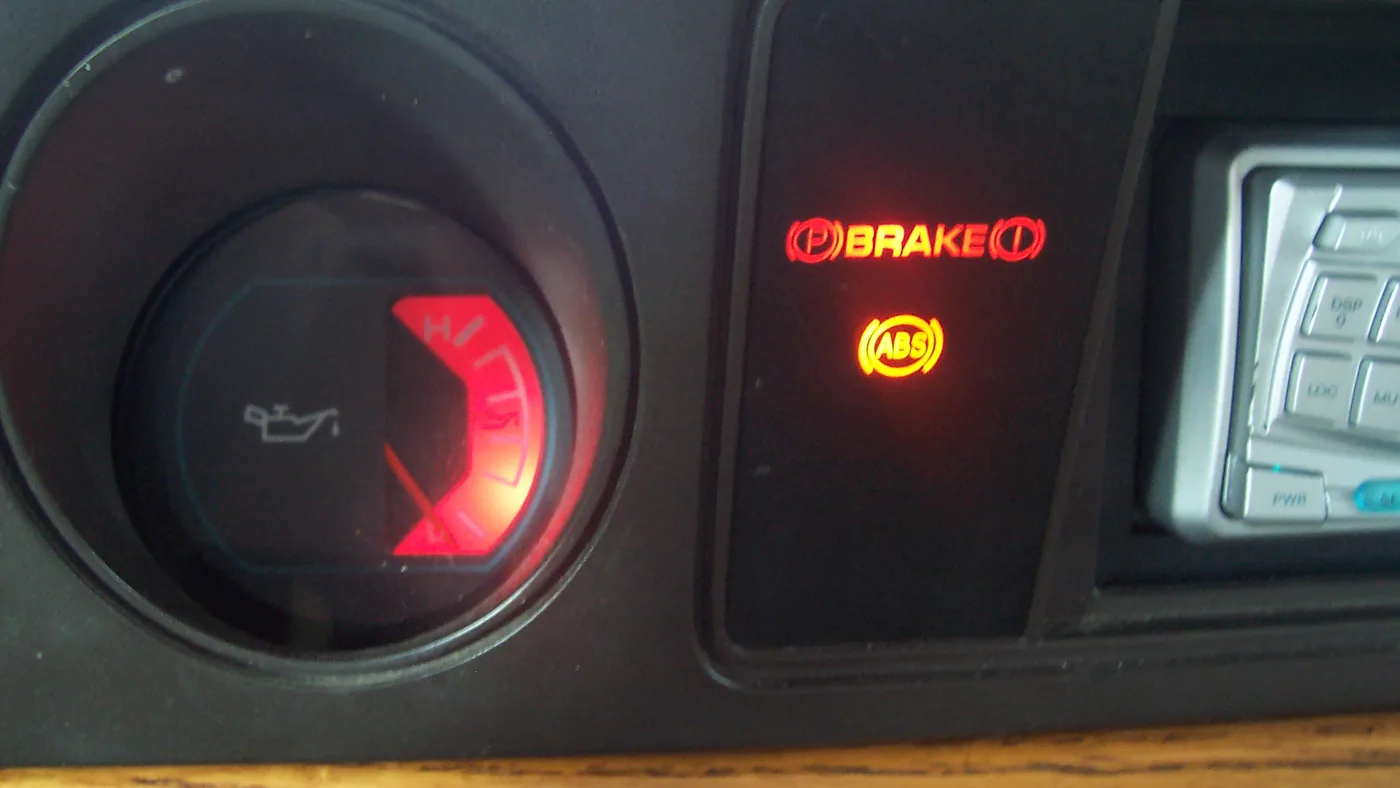
The largest recall in the group is not about a blank screen at all. Tesla’s 24V051 says the instrument panel shows the wrong font size for the Brake, Park and ABS warning lights. NHTSA’s consequence line explains the risk:
Warning lights with a smaller font size can make critical safety information on the instrument panel difficult to read, increasing the risk of a crash.
NHTSA recall record, Tesla campaign 24V051 (2024)
The brake standard, FMVSS 135 (49 CFR 571.135), says brake indicator lettering must be “not less than 3.2 mm” high unless otherwise specified, and the same standard sets colors, with red as one of the contrasting colors. Tesla’s record does not give the size or the measurements it missed, so we cannot say by how much. Fisker’s 24V405 (2023 Ocean) cited the same font fault, plus warning lights shown in amber instead of red. Tesla reports no repair rate for 24V051, whose remedy is an over-the-air update.
Other warning-light recalls in NHTSA’s file say a light may not come on or may come on late:
- Honda 15V668 (35,406 2016 Pilots): the panel may not light the tire pressure, ABS or stability control warning when that system malfunctions, though it lights after the ignition is cycled.
- Daimler Vans 16V833 (17,501 2003–2006 Dodge and Freightliner Sprinters): the BRAKE lamp does not light during the start-up bulb check. Only 17.2% are reported repaired, the lowest rate of any campaign above 5,000 vehicles in this group.
- Chrysler 19V203 (7,929 2019 Challengers, Chargers and 300s): driver warnings may not illuminate.
- Mazda 19V363 (17,016 2019 Mazda3): the passenger air bag deactivation and seat belt indicators may turn off while the air bag is deactivated or belts are unfastened.
- GM 19V644 (91,399 2019 Express and Savana vans): the seat belt warning light is delayed about five seconds after the ignition goes on.
- Chrysler 17V485 (3,002 2017 Jeep Renegades): several malfunction indicator lamps may light when nothing is wrong.
Speedometer, odometer and fuel gauge faults
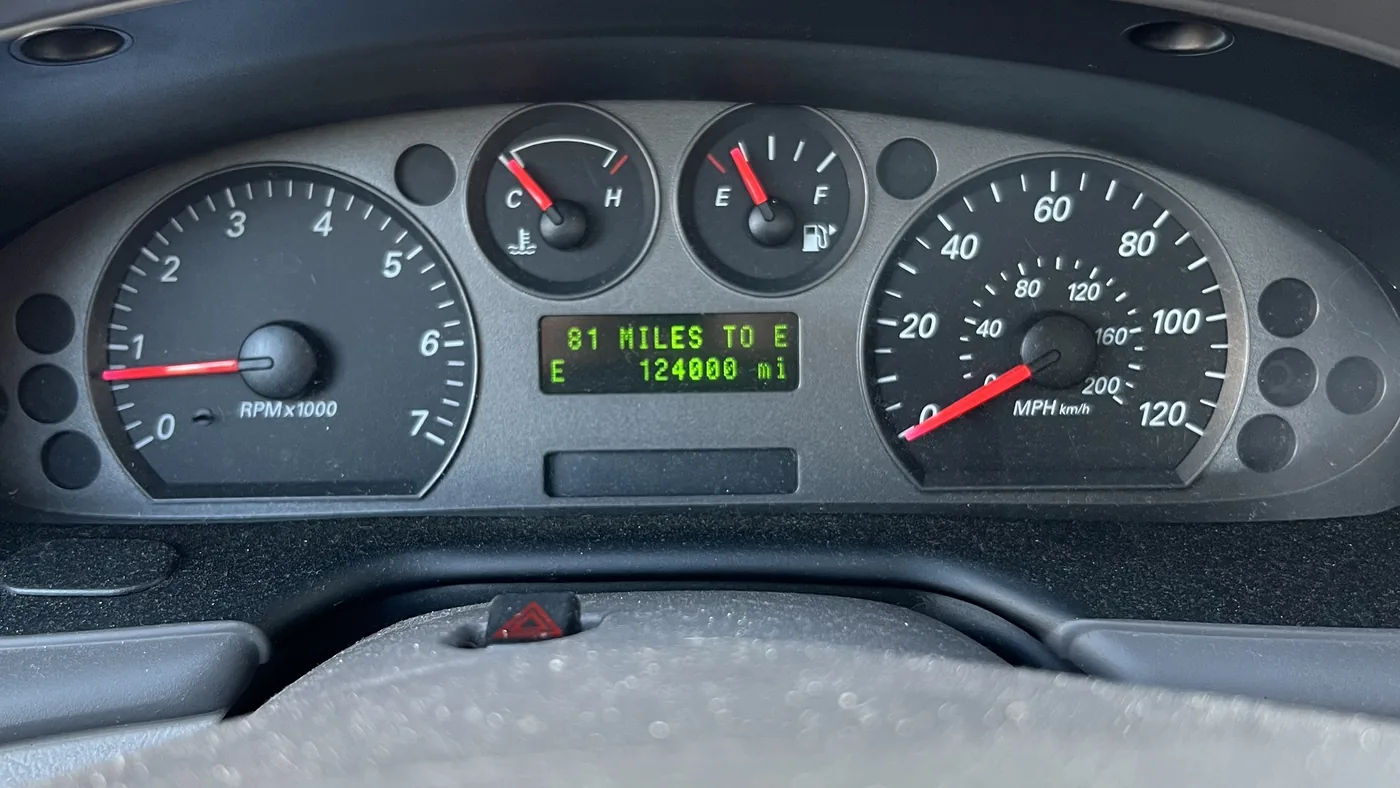
Several recalls concern the numbers themselves. Tesla’s 22V263 covers 48,184 2018–2022 Model 3 Performance cars whose unit of speed (mph or km/h) may not display on the speedometer in Track Mode; Tesla reports 99.99% repaired. Toyota’s 19V876 covers 3,751 2019 Prius cars where a short circuit in the combination meter may blank the speedometer, odometer and fuel gauge. Chrysler’s 21V949 covers 2,903 vehicles with a missing odometer display.
Fuel gauges can mislead. GM’s 14V223 covers 51,640 vehicles with inaccurate fuel gauge readings, and Chrysler’s 19V551 covers 21,914 2018–2019 Alfa Romeo Giulia and Stelvio models whose gauge may read higher than the real level; the record warns the car may be driven without enough fuel and stall. Where a rate is reported, these are 88% to 99.99% repaired.
Recalls filed again for the same vehicles
A recurring pattern in the records is a second recall because the first repair did not hold. Ford’s record for 25V339 puts it plainly:
Ford Motor Company (Ford) is recalling certain 2022-2023 Transit vehicles previously repaired incorrectly under recall number 22V415. The Instrument Panel Cluster may not properly illuminate warning lights or gauges.
NHTSA recall record, Ford campaign 25V339 (2025)
| First recall | Later recall | What the later record says | Repaired |
|---|---|---|---|
| Ford 17V053 (2017 F-150, 6,792) | 26V370 (June 2026, 4,445) | Previously repaired incorrectly; cluster may lose power after a cold start | not reported |
| Ford 19V076 (2019 Mustang, Nautilus, Navigator, 4,212) | 26V372 (June 2026, 2,349) | Previously repaired incorrectly; cluster may go blank at start-up | not reported |
| Ford 20V263 (2019 Expedition, 2019–2020 Mustang, 10,460) | 25V886 (Dec 2025, 890) | Expedition repaired incorrectly; “Transmission Not In Park” warning and chime too short | 97.5% |
| Ford 22V415 (2022 Transit, 30,467) | 25V339 (May 2025, 3,506) | Previously repaired incorrectly; cluster may not light warning lights or gauges | 41.7% |
| Ford 24V140 (2022–2023 Maverick Hybrid, 62,813) | 25V123 (Feb 2025, 933) | Previously repaired incorrectly; same fault | 70.7% |
| Ford 24V802 (2024 Mustang, 6,212) | 25V516 (Aug 2025, 1) | One Mustang repaired incorrectly | 100% |
| Chrysler 25V826 (Dec 2025, 72,509 2025–2026 Ram 1500–5500) | 26V225 (Apr 2026, 65,348) | A software error may cause the display to fail; separate recall, same trucks (Ram 1500 to 5500) | 34.6% |
Source: NHTSA recall records for each campaign, retrieved Oct 15, 2026; comparison compiled by PlainVIN. The Ram pair are separate defects listed under different standards, not a repair failure, but they hit the same trucks within four months. A third Ram recall, 25V530, replaced the cluster on 2,885 2026 heavy-duty trucks for an incorrect brake warning light.
Hyundai’s Tucson has the same pattern: 26V047 (41,651, January 2026) and 26V400 (96,310, June 2026) both cover 2025–2026 Tucsons for a software display failure. Check campaign numbers on your VIN, not just whether a cluster recall was done.
What to do if your cluster goes blank
- Check your VIN at nhtsa.gov/recalls or with our VIN decoder. The records above stay open until repaired, and a car can be in more than one.
- Know the fix. Most are free software updates, often over the air. The Genesis 26V019 record advises owners to disable the HD radio until the repair is done; follow any such advice.
- Ask for every open campaign to be completed, especially if a cluster fix was done before.
- If it goes dark while driving, you may lose speed and warning information, as the records note. Get the car to a dealer.
- Report a problem even if the car is not recalled: see our guide to filing an NHTSA complaint. For fixes that are not recalls, see TSB vs recall.
For other electronics faults, see our car electrical problems guide; for lighting recalls under FMVSS 108, our headlight recalls guide; and for brake warnings, the brake recalls guide.
A dashboard light that fails is sometimes the tire pressure monitor: see our tire pressure monitor recalls guide.
Recall figures are PlainVIN’s analysis of NHTSA’s files and update when we refresh the data. “Repaired” is the automaker’s figure. This guide is general information, not mechanical or safety advice for a specific vehicle; the official source for any recall is its NHTSA recall record.
Frequently asked questions
What is an instrument cluster recall?
It is a recall for the panel behind the steering wheel that shows speed, gauges and warning lights. Most recent records say a software fault may blank the display, leave it unlit or show the wrong warning lights, and the usual fix is a free software update.
Which cars have been recalled for a blank instrument cluster?
Large recent recalls cover 2023–2025 Toyota and Lexus models (25V595), the 2025–2026 Camry Hybrid (26V511), 2025–2026 Ford Super Duty trucks and Broncos (25V540, 25V788), 2025–2026 Ram trucks, Hyundai, Kia and Genesis models, the 2025 Volkswagen Jetta and Taos, and the 2025–2026 Nissan Kicks.
Is it safe to drive with a blank instrument cluster?
NHTSA’s records say a display that does not show critical information, such as speed and warning lights, increases the risk of a crash. If your car’s display fails, have it checked at a dealer rather than rely on a display you cannot read.
What is FMVSS 101?
Federal Motor Vehicle Safety Standard 101 covers controls and displays. It aims to ensure the visibility and recognition of controls, telltales and indicators, and requires display brightness adjustable to at least two levels, so a blank or stuck display is a failure to comply.
Why did Tesla recall over 2 million cars for warning lights?
Tesla’s 24V051 says the Brake, Park and ABS warning lights show an incorrect font size, which breaks federal brake standards 105 and 135. It covers 2,193,869 Model S, X, 3, Y and Cybertruck vehicles and is fixed with an over-the-air update.
Can a cluster recall come back after it was repaired?
Yes. Ford has filed six cluster recalls for vehicles it says were previously repaired incorrectly, including Transit, Maverick Hybrid, F-150 and Mustang models, and Chrysler recalled the same Ram trucks twice within about four months.
How do I check whether my car has an instrument cluster recall?
Enter your VIN at nhtsa.gov/recalls or use the VIN decoder on PlainVIN. Ask the dealer to confirm that every open campaign on your VIN is complete.
About the PlainVIN Recalls & Safety Desk
This desk covers recall campaigns and completion rates, owner complaints filed with NHTSA, and NHTSA 5-Star Safety Ratings.
Every figure in this guide links to its primary source. See our editorial policy, how we use AI and corrections log.
How this page was madeSources, processing, limits, review and changes
Data sources
- NHTSA recalls file (instrument cluster/panel component, catalog cars and trucks), including campaigns 07V092, 14V223, 15V406, 15V668, 16V833, 17V053, 17V485, 19V076, 19V203, 19V363, 19V551, 19V556, 19V644, 19V876, 20V263, 21V949, 22V263, 22V415, 22V779, 23V298, 23V576, 24V051, 24V140, 24V405, 24V802, 25V123, 25V339, 25V516, 25V530, 25V540, 25V595, 25V788, 25V826, 25V886, 26V019, 26V047, 26V112, 26V225, 26V281, 26V341, 26V370, 26V372, 26V400 and 26V511
Retrieved Oct 15, 2026 - NHTSA recall record, Toyota campaign 25V595
nhtsa.gov - NHTSA recall record, Tesla campaign 24V051
nhtsa.gov - NHTSA recall record, Ford campaign 25V339
nhtsa.gov - 49 CFR 571.101, Standard No. 101: Controls and displays
Legal Information Institute, Cornell Law School - 49 CFR 571.135, Standard No. 135: Light vehicle brake systems
Legal Information Institute, Cornell Law School
Processing
- Complaints are counted per component. One complaint can list several, so component totals add up to more than the total.
- Fuel cost = miles per year ÷ EPA combined mpg × EIA weekly price for your region.
Limitations
- Complaint counts are owner reports, not verified findings or failure rates. There is no sales denominator.
- Recall campaigns are listed for the model year. Only NHTSA and the automaker know whether a specific car was repaired.
- Recent model years are still collecting reports.
Review
Researched by Daniel B. and Olivia C., technical check by Ethan B., edited by Sophia M. (see the editorial team page). Drafted with AI assistance and checked against primary sources by the Recalls & Safety desk.
Changelog
- 2026-10-06 Data refreshed from the official files.
Keep reading