Takata Air Bag Recall: How to Check Your Car and What to Do
About 67 million Takata air bags were recalled because they can explode. Which vehicles are affected, why your state mattered, how many are still unrepaired, and how to get the free fix.
Key takeaways
- About 67 million Takata air bags were recalled in the United States because their inflators can explode in a crash. NHTSA has confirmed 28 deaths and at least 400 alleged injuries in the US.
- You can’t tell by looking whether your car has a Takata inflator. Check the VIN at nhtsa.gov/recalls or on your automaker’s site; the repair is free at a franchised dealer.
- Risk rises with age, heat and humidity, which is why repairs were phased by region, starting with hot, humid states such as Florida and Texas.
- Across all 238 air bag inflator rupture recalls in NHTSA’s file, about 60% of affected vehicles are reported repaired. The rest are still out there, many on older cars that changed hands.
The Takata air bag recall is the largest vehicle recall in US history: about 67 million air bag inflators in vehicles from more than 30 brands, recalled because they can rupture and spray metal fragments into the cabin. This guide explains which vehicles are affected, why your location mattered, what our analysis of NHTSA’s recall data shows about repair progress, and exactly how to get the free fix.
What went wrong with Takata air bags
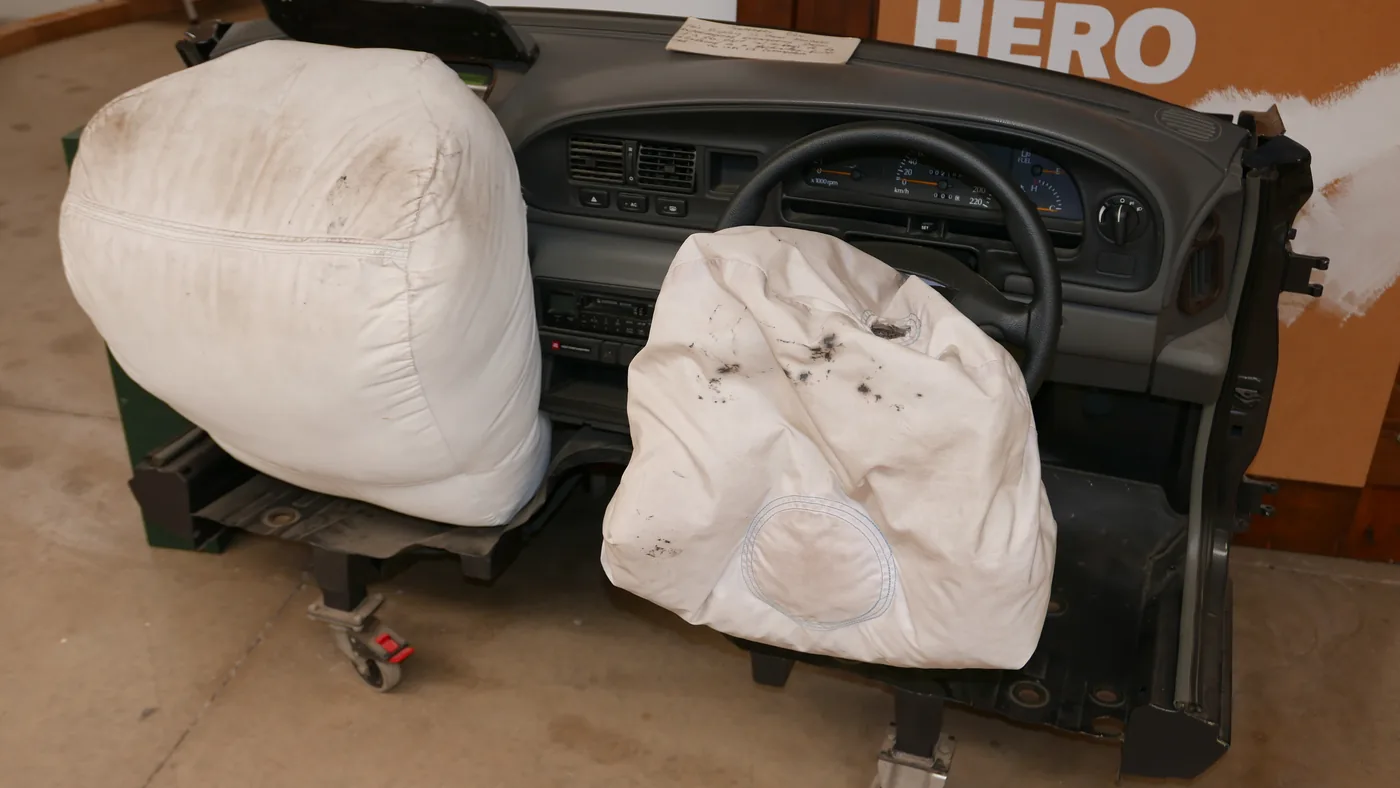
An air bag inflator is a small canister of propellant that burns in milliseconds to fill the bag. Takata’s inflators used phase-stabilized ammonium nitrate (PSAN), a propellant that is cheap and powerful but can break down after years of exposure to heat and humidity. A degraded inflator burns too fast, builds too much pressure and can split its metal housing, throwing fragments toward the driver or passenger.
NHTSA has confirmed 28 deaths in the United States from Takata PSAN inflator ruptures, and at least 400 people have allegedly been injured (NHTSA Takata Recall Spotlight). The age of the inflator is a major factor:
“An older air bag is more likely to explode than a newer version of the same air bag.”National Highway Traffic Safety Administration, Takata Recall Spotlight FAQ
The recalls began in 2013 and grew in waves as testing showed more inflator types were at risk. NHTSA coordinated the repair program and ordered automakers to speed up repairs. Takata itself went bankrupt in 2017; replacement parts now come from other suppliers.
Which vehicles are affected
NHTSA lists 34 brands with vehicles in the Takata recalls: Acura, Audi, BMW, Cadillac, Chevrolet, Chrysler, Daimler Trucks (Sterling Bullet), Daimler Vans (Sprinter), Dodge and Ram, Ferrari, Fisker (Karma), Ford, GMC, Honda, Infiniti, Jaguar, Jeep, Land Rover, Lexus, Lincoln, Mazda, McLaren, Mercedes-Benz, Mercury, Mitsubishi, Nissan, Pontiac, Saab, Saturn, Scion, Subaru, Tesla, Toyota and Volkswagen.
Within each brand only certain models, years and seating positions are affected; some recalls cover only the driver’s air bag, others only the passenger’s. For example, GM lists 2007–2014 Chevrolet Tahoe and Suburban, 2007–2013 Silverado 1500, 2007–2014 GMC Yukon and Cadillac Escalade, 2003–2010 Pontiac Vibe and several Saab and Saturn models (GM). The oldest and highest-risk group carries a separate warning: see our Do Not Drive recall list for those models.
Because the lists are long and change, a VIN check is the only reliable way to know. You can also browse recall histories on our Honda, Toyota, Ford and Chevrolet recall pages.
Why where you live matters
Long-term heat and humidity drive the risk, so NHTSA phased the recalls by region. Vehicles registered for years in the hottest, most humid states were repaired first. The schedule below is NHTSA’s.
| Zone | States and territories |
|---|---|
| A: hot and humid | Alabama, California, Florida, Georgia, Hawaii, Louisiana, Mississippi, South Carolina, Texas, Puerto Rico, American Samoa, Guam, Northern Mariana Islands, U.S. Virgin Islands |
| B: less hot and humid | Arizona, Arkansas, Delaware, District of Columbia, Illinois, Indiana, Kansas, Kentucky, Maryland, Missouri, Nebraska, Nevada, New Jersey, New Mexico, North Carolina, Ohio, Oklahoma, Pennsylvania, Tennessee, Virginia, West Virginia |
| C: least hot and humid | Alaska, Colorado, Connecticut, Idaho, Iowa, Maine, Massachusetts, Michigan, Minnesota, Montana, New Hampshire, New York, North Dakota, Oregon, Rhode Island, South Dakota, Utah, Vermont, Washington, Wisconsin, Wyoming |
| Defect filing date | Zone A | Zone B | Zone C |
|---|---|---|---|
| May 16, 2016 | MY 2011 and older | MY 2008 and older | MY 2004 and older |
| Dec 31, 2016 | MY 2012 and older | MY 2009 and older | MY 2008 and older |
| Dec 31, 2017 | MY 2013 and older | MY 2010 and older | MY 2009 and older |
| Dec 31, 2018 | All remaining vehicles | ||
| Dec 31, 2019 | All like-for-like replacement parts | ||
Source: NHTSA Takata Recall Spotlight, read Oct 7, 2026. MY = model year.
Every phase has now been filed, so a vehicle in a cooler state is just as entitled to the repair today. Spending winters in Florida doesn’t move a northern-registered car up the list: NHTSA says a car that “winters” somewhere hot doesn’t get the same continuous heat and humidity as one driven there year-round.
The inflator recalls by the numbers
Takata is the largest part of a wider problem. We counted every recall in NHTSA’s file whose air bag summary describes an inflator that can rupture or explode. That set is mostly Takata, plus inflators from other suppliers, such as ARC. Since 1999 there have been 238 such campaigns covering 73.1 million vehicle recall notices.
The peak came in 2018, with 47 campaigns, as the phased Takata expansions were filed. Repair progress differs widely by automaker:
| Automaker | Campaigns | Vehicles potentially affected | Repaired (vehicle-weighted) | Est. not yet repaired |
|---|---|---|---|---|
| Honda | 25 | 25,203,594 | 67% | 8,333,935 |
| Toyota | 13 | 9,032,667 | 86% | 1,300,910 |
| Ford | 16 | 8,872,040 | 36% | 5,668,474 |
| General Motors | 28 | 7,196,863 | 54% | 3,336,666 |
| Stellantis (FCA US) | 12 | 7,063,072 | 48% | 3,666,215 |
| BMW | 26 | 3,438,020 | 38% | 2,120,880 |
| Nissan | 15 | 2,921,022 | 47% | 1,542,089 |
| Subaru | 17 | 2,686,645 | 92% | 209,389 |
| Volkswagen Group | 18 | 2,662,216 | 58% | 1,080,784 |
| Mercedes-Benz | 6 | 1,494,444 | 93% | 100,656 |
“Repaired” weights each campaign’s reported completion rate by its vehicle count; “not yet repaired” is the matching estimate. A vehicle in several campaigns is counted in each. Source: NHTSA recalls file and US DOT completion data, retrieved Oct 6, 2026; computed by PlainVIN.
A vehicle can appear in more than one campaign, for example driver and passenger inflators, and some unrepaired vehicles have since been scrapped. So the “not yet repaired” figure counts recall notices, not cars on the road. It is still a clear signal that millions of affected vehicles haven’t been fixed.
How to check your car and get it fixed
- Find your VIN on the dashboard plate or the driver’s door-jamb label (where to find the VIN).
- Search it at nhtsa.gov/recalls or on your automaker’s recall page. “0 unrepaired recalls” means nothing is open for that car.
- If a recall is open, call a franchised dealer for your brand. The repair is free. For GM vehicles, GM says many repairs take about an hour and the parts are only available at its dealers.
- If it carries a Do Not Drive warning, don’t drive it; ask for a tow or a mobile repair.
- Ask about alternate transportation if parts must be ordered. It isn’t required by law, but many automakers offer it for these recalls.
- Sign up for alerts. NHTSA’s free SaferCar app or email alerts will tell you about future recalls. NHTSA recommends checking your VIN at least twice a year.
Who to call: automaker Takata recall numbers
If you can’t get an appointment, or a dealer says it can’t do the repair, call the automaker’s Takata recall line. These are the numbers NHTSA publishes for each manufacturer.
| Brand | Phone |
|---|---|
| Audi / Volkswagen | 877-781-7070 (Audi) · 833-394-0906 (VW) |
| BMW | 877-398-7105 |
| Chevrolet, Cadillac, GMC (GM) | 866-467-9700 |
| Chrysler, Dodge, Jeep, Ram | 833-585-0144 |
| Daimler Trucks | 800-385-4357 |
| Daimler Vans / Mercedes-Benz | 877-496-3691 |
| Ferrari | 201-816-2668 |
| Fisker (Karma) | 949-541-6420 |
| Ford, Lincoln, Mercury | 866-436-7332 |
| Honda, Acura | 888-234-2138 |
| Jaguar | 800-452-4827 |
| Land Rover | 800-637-6837 |
| Mazda | 877-684-0748 |
| McLaren | 646-429-8916 |
| Mitsubishi | 888-648-7820 |
| Nissan, Infiniti | 888-546-1048 |
| Subaru | 877-715-9135 |
| Tesla | 877-798-3752 |
| Toyota, Lexus, Scion | 888-254-3001 |
Source: NHTSA Takata contact information, read Oct 7, 2026. Where NHTSA lists no separate Takata line, the brand’s recall line is shown. If a dealer refuses a recall repair, you can also file a complaint with NHTSA; our guide explains how to file a complaint with NHTSA.
Interim repairs and repair priority
When parts were scarce, NHTSA prioritized repairs by risk, so older vehicles from hot, humid areas came first. Some automakers offered an “interim” or “like for like” repair: a newly made inflator of the same design, to be replaced again later with a final fix. NHTSA advises accepting it. A new inflator is safer than an aged one, and you remain entitled to the final repair free.
Accepting an interim repair does move you down the queue for the final part, because your risk is now lower. NHTSA’s view is that the trade is still worth it. Don’t ask the dealer to disable the air bag while you wait: NHTSA says a disabled air bag offers no protection in a crash.
Bankruptcy and class-action letters
Many owners have received mail about the Takata bankruptcy or class-action settlements. NHTSA says these notices are legal mailings, not part of the recall, and they don’t affect your right to a free repair. Receiving one usually means you own, or once owned, an affected vehicle. Check the VIN and book the repair whether or not you respond to the legal notice.
Buying a used car with a Takata air bag
Federal law doesn’t stop a used car with an open recall from being sold, and many Takata-equipped cars are now inexpensive older models that change hands often. Before you buy, run the VIN through NHTSA and ask for the repair order if the seller says it was fixed. Our free VIN check vs. history report guide covers the other checks worth doing, and each model-year report on PlainVIN lists the recall campaigns and how many vehicles have been repaired. Open yours with the VIN decoder.
This guide is general safety information. NHTSA’s VIN lookup and your manufacturer are the authority for your specific vehicle.
Frequently asked questions
What cars are in the Takata air bag recall?
Vehicles from 34 brands, including Honda, Acura, Toyota, Lexus, Ford, GM brands, Chrysler, Dodge, Jeep, Ram, BMW, Mercedes-Benz, Mazda, Nissan, Subaru, Volkswagen, Audi, Mitsubishi and Tesla. Only certain models, years and seating positions are affected, so check your VIN at nhtsa.gov/recalls.
How do I know if my car has a Takata air bag?
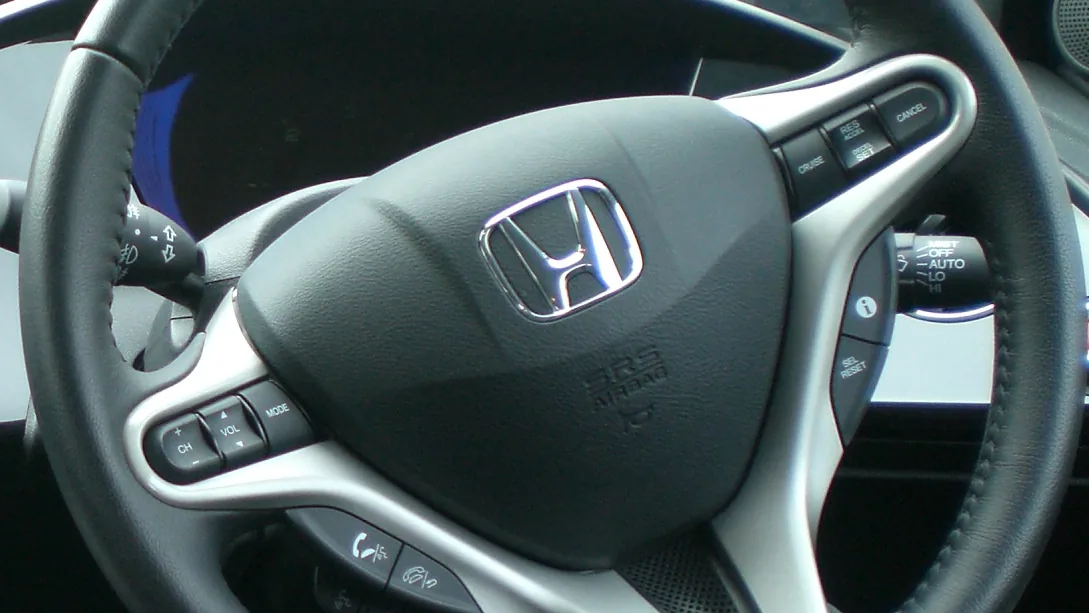
You can’t tell by looking at the steering wheel or dashboard. Enter your VIN at nhtsa.gov/recalls or on your automaker’s recall page; if a Takata recall applies and hasn’t been repaired, it will be listed.
What Chevrolet vehicles are affected by the Takata air bag recall?
GM lists 2007–2013 Silverado 1500, 2007–2014 Silverado 2500/3500 HD, 2007–2013 Avalanche and 2007–2014 Tahoe and Suburban, along with related GMC, Cadillac, Pontiac, Saturn and Saab models. Check your VIN on GM’s recall page or at nhtsa.gov.
Is the Takata air bag repair free?
Yes. The replacement is free at a franchised dealer for your brand, and receiving a bankruptcy or class-action letter doesn’t change that.
How long does the Takata air bag repair take?
GM says many of its Takata repairs take about an hour, though the dealer may need the car longer for scheduling. Ask the dealer when you book, and ask about alternate transportation if parts must be ordered.
Does it matter where I live?
It mattered for when repairs started: vehicles long registered in hot, humid states (Zone A, such as Florida and Texas) were recalled first because heat and humidity degrade the inflators. All phases have now been filed, so every affected vehicle is eligible.
Should I have my air bag disabled until it’s fixed?
No. NHTSA says a disabled air bag has a 100-percent chance of failing to protect you in a crash. Get the repair instead, and don’t drive the car at all if the recall carries a Do Not Drive warning.
What is an interim Takata repair?
A temporary replacement with a newly made inflator of the same design, offered by some automakers while final parts were produced. NHTSA advises accepting it because a new inflator is safer than an aged one; you still get the final repair free.
About the PlainVIN Recalls & Safety Desk
This desk covers recall campaigns and completion rates, owner complaints filed with NHTSA, and NHTSA 5-Star Safety Ratings.
Every figure in this guide links to its primary source. See our editorial policy, how we use AI and corrections log.
How this page was madeSources, processing, limits, review and changes
Data sources
- Takata Recall Spotlight (zones, schedule, FAQ, affected brands)
NHTSA, read Oct 7, 2026 - Takata contact information by automaker
NHTSA, read Oct 7, 2026 - Takata Airbag Recall (affected GM vehicles, repair time)
General Motors, read Oct 7, 2026 - NHTSA recalls flat file and completion data
Retrieved Oct 6, 2026 - Deployed air bags photo (public domain)
OSX via Wikimedia Commons - Steering wheel air bag photo (public domain)
Janipewter via Wikimedia Commons
,_airbag_display_(2015-08-29)_01.jpg)

Processing
- Complaints are counted per component. One complaint can list several, so component totals add up to more than the total.
- Fuel cost = miles per year ÷ EPA combined mpg × EIA weekly price for your region.
Limitations
- Complaint counts are owner reports, not verified findings or failure rates. There is no sales denominator.
- Recall campaigns are listed for the model year. Only NHTSA and the automaker know whether a specific car was repaired.
- Recent model years are still collecting reports.
Review
Written and checked against primary sources by the Recalls & Safety desk.
Changelog
- 2026-10-06 Data refreshed from the official files.
Keep reading