Recall for Incorrect Label or Manual: What It Means
159 NHTSA recalls since 2010 fix a wrong label or manual, not a broken part. See which rules they cite, the biggest ones, repair rates and which need more.
Key takeaways
- A recall for an incorrect label or owner’s manual is a compliance recall: the car breaks a federal rule because a printed item is wrong or missing. Since 2010 NHTSA’s file holds 159 such recalls for catalog cars, covering about 3.4 million vehicles (overlaps counted), and 95% are reported repaired.
- Most concern the tire and loading placard or the certification label (FMVSS 110 and Part 567): wrong weight ratings, tire sizes or pressures. The largest manual error covered 691,133 Fords with no head restraint instructions (23V420).
- Usually the fix is a mailed label or manual addendum. Not always: some recalls replace sun visors, brake fluid caps or tires, and one Sprinter manual error (20V180) described an automatic parking function wrongly, with a rollaway risk.
- Treat an overloading or air bag recall as real safety information: act on it, but you do not need to stop driving.
A car can be recalled because a sticker or a book is wrong. Federal safety standards require certain labels and instructions, so when a manufacturer prints the wrong weight rating or leaves out the head restraint instructions, it must notify owners and correct it at no charge. Most coverage stops at one headline recall. This guide counts them across NHTSA’s file, shows which standards are cited, how often they are fixed and which ones are more than paperwork.
Why a label or manual can be recalled
These are noncompliance recalls, not defect recalls: nothing is broken, but the vehicle fails a standard. For the difference see our guide to technical service bulletins and recalls. Two rules account for most cases. FMVSS 110 requires a placard, normally on the driver’s side B-pillar, that gives seating capacity, the tire sizes and the cold inflation pressures, with a warning that, in the regulation’s words, “The combined weight of occupants and cargo should never exceed XXX kilograms or XXX pounds” (49 CFR 571.110). Part 567 requires a certification label that lists the gross vehicle weight rating (GVWR), the gross axle weight rating (GAWR) for each axle and the VIN (49 CFR 567.4). If the numbers are wrong, an owner may overload the vehicle or fit the wrong tires, which is why NHTSA treats it as a safety matter.
Not every error becomes a recall. Federal rules let a manufacturer petition NHTSA to treat a noncompliance as inconsequential (49 CFR Part 556), so the recalls below are the ones where the risk was judged real or no petition was made.
What NHTSA’s file shows
We count recalls filed since January 2010 whose NHTSA component is “labels” or “owner’s/service manual”, or whose subject names a label, placard or owner’s manual, for vehicles in our catalog of cars and light trucks. The same text search finds 663 recalls in total, but 504 belong to trucks, buses, trailers, motorcycles and equipment, so we leave them out. We also dropped one record about a missing brake inspection gauge. The repaired figure is the weighted average over the recalls that report one, about 1.99 million of the 3.4 million vehicles, because recalls filed this year usually have none yet. Filings run at about 9 a year, peaking at 15 in 2024 and 14 in each of 2017 and 2018; the ten recalls of 2026 add up to about 738,600 vehicles, dominated by two weight-rating recalls.
| Rule cited | What it covers | Recalls | Vehicles | Repaired |
|---|---|---|---|---|
| FMVSS 110 | Tire selection, placard, load capacity | 85 | 1,776,882 | 87% |
| Part 567 | Certification label | 23 | 99,787 | 75% |
| FMVSS 208 | Occupant crash protection, air bag warnings | 15 | 579,973 | 96% |
| FMVSS 225 | Child restraint anchorages | 4 | 17,473 | 76% |
Source: NHTSA recalls file and US DOT completion data, retrieved Oct 15, 2026; counts by PlainVIN from each recall’s subject and summary. Counts depend on how each record names the rule and can shift by a few under a different matching rule. A recall can cite more than one rule, and 145 of the 159 cite at least one; FMVSS 103, 120, 135, 202 and 108 appear in smaller numbers.
The largest label and manual recalls
| What was wrong | Recall | Vehicles covered | Units | Repaired |
|---|---|---|---|---|
| Manual lacks head restraint instructions (FMVSS 202) | Ford 23V420 (2023) | 2018–2023 Expedition, Navigator with third row; 2019–2023 F-250 to F-550 SuperCab | 691,133 | 99% |
| Incorrect GAWR on certification label | Subaru 26V436 (2026) | 2019–2026 Ascent, 2025–2026 Forester, 2026 Crosstrek Hybrid | 541,237 | not reported |
| Guide misdescribes “Passenger Airbag Off” light (FMVSS 208) | Honda 19V694 (2019) | 2019 CR-V | 336,468 | 99.9% |
| Placard shows wrong vehicle capacity weight | Toyota 11V560 (2011) | 2011–2012 Sienna | 210,000 | not reported |
| Incorrect GAWR on certification label | Nissan 26V455 (2026) | 2020–2026 Armada, 2011–2013 QX56, 2014–2027 QX80 with 22-inch wheels | 168,149 | not reported |
| Labels and manuals claim air bags the vehicle lacks | Chrysler 17V273 (2017) | 2014–2017 Ram ProMaster | 113,896 | 99.8% |
| Wrong defroster instructions (FMVSS 103) | Nissan 23V296 (2023) | 2013–2017 Leaf | 94,343 | 100% |
| Wrong defroster instructions (FMVSS 103) | Nissan 23V048 (2023) | 2018–2023 Leaf | 64,732 | 100% |
| Manual misdescribes the automatic parking function | Daimler Vans 20V180 (2020) | 2019 Sprinter | 52,127 | 94% |
Source: NHTSA recalls file, retrieved Oct 15, 2026; compiled by PlainVIN from each campaign’s record. Recalls filed in 2026 usually have no repaired figure yet.
The recalls come in pairs and clusters. Nissan split the Leaf defroster error into two campaigns by model year, so the whole 2013–2023 range is covered only by checking both. Ford’s 23V420 has the highest count, 691,133, yet is 99% repaired, which shows how easy a mailed insert is to complete.
Owner’s manual errors
We found 20 manual recalls since 2010, covering 1,316,330 vehicles, and 98.8% are reported repaired. Many concern child restraints, head restraints and air bags, where the manual’s words are part of the safety system. For example, Honda’s 19V694 says the guide “incorrectly describes when the ‘Passenger Airbag Off’ indicator should illuminate”, and Honda provided a sticker to add to the guide.
The Owner’s Manual instructions for defroster operation are incorrect and may result in reduced defroster performance under specific conditions.
NHTSA recall 23V296, Nissan LEAF
That defroster error is why the Leaf recalls count as safety, not clerical: NHTSA’s stated consequence is that reduced defroster performance “can limit visibility out of the windshield, increasing the risk of a crash”. Nissan mails an addendum with corrected instructions. See also our EV recall guide.
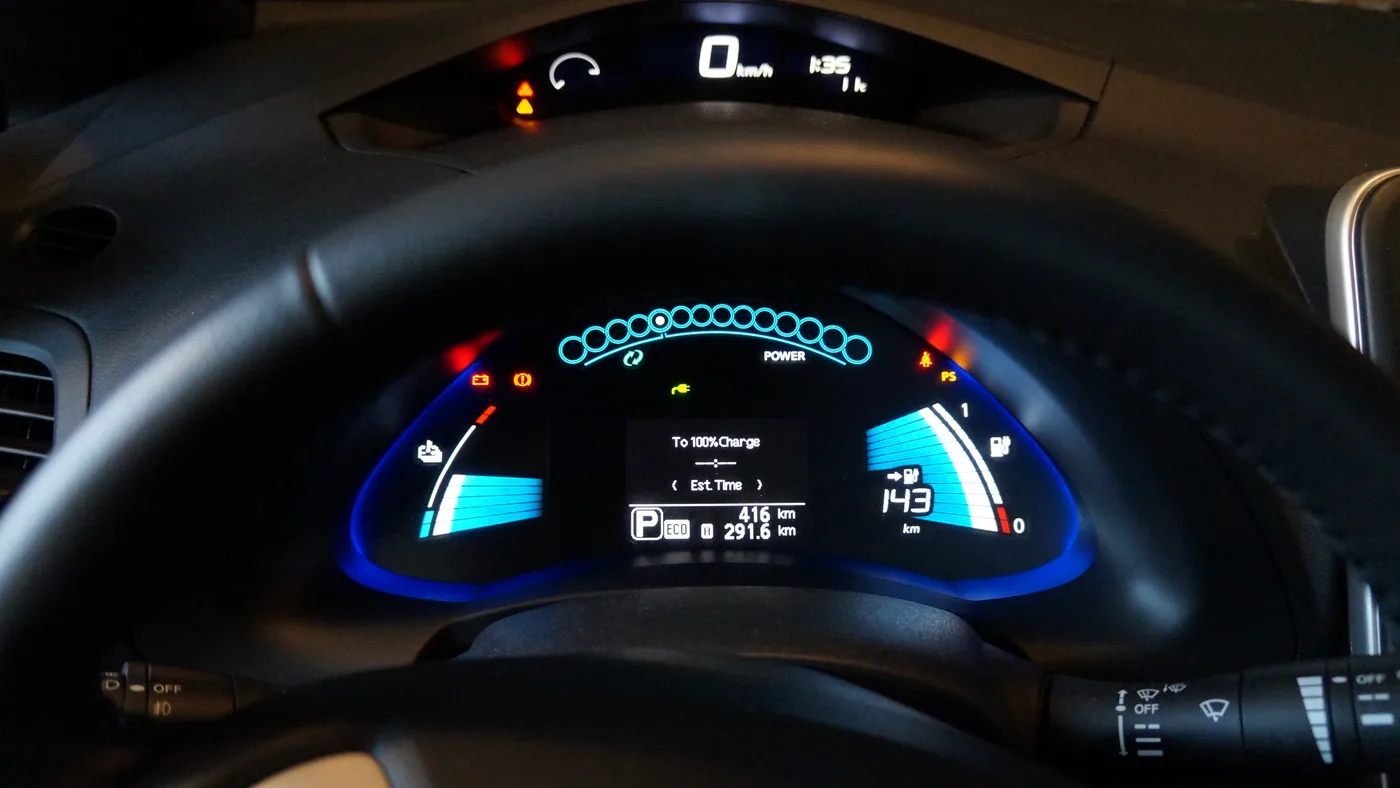
Newer cases show how digital manuals change the fix. In 2026 General Motors recalled 5,861 vehicles across dozens of 2025–2026 models (26V114) because the radio may not have been set to download the electronic owner’s manual, and dealers reset the radio so it downloads automatically. A related 2025 recall (25V815) covers 3,408 2026 Silverados that may not have received a printed manual. Both are only about 63% repaired so far, compared with 99% or more for the older mailed-insert recalls.
Tire, loading and certification labels
Of the 159 recalls, 101 name tires, loads, weights, rims, spares or placards in the subject, and most of the rest concern certification labels, air bag warnings and brake fluid caps. The causes are simple: a label that overstates the load, lists the wrong tire size or pressure, shows the wrong rim, or is missing, illegible or carries incorrect axle ratings. NHTSA’s own wording for the risk is that an overloaded vehicle “can increase the risk of a crash”, and for Subaru’s 26V436 that “an incorrect GAWR label may lead to an overloaded vehicle”. Subaru will mail a new certification label or have a dealer install it; owner letters were mailed August 27, 2026 per the NHTSA record.
One pattern stands out: Toyota’s distributors. Southeast Toyota Distributors and Gulf States Toyota account for 21 of these recalls (480,853 vehicles), and 17 of the 21 name a load carrying or weight capacity label. Gulf States’ 24V548 covers Toyotas equipped with its accessories, whose added weight the label may not reflect correctly. Toyota itself filed 26V179 in March 2026 for the same label on 2024–2026 Tundra, Tacoma, RAV4 Hybrid, Grand Highlander and other models; only 12.14% of 8,230 vehicles are reported repaired so far.
Wrong labels also feed other systems: when the placard is wrong, the warning in a tire pressure monitor trips at the wrong pressure, covered in our TPMS guide.
When the fix is more than paper
“Replace the label” covers most recalls, but not all. We read the remedies for the exceptions:
- Air bag warning labels on sun visors. Kia’s 23V579 (2023 Sorento, 50,517 vehicles, 84.62% repaired) and Mercedes’ 19V914 (10,041, 90.82%) have dealers inspect and, as necessary, replace the visors; GM’s 13V463 (18,941) does the same when the sticker may detach.
- Brake fluid reservoir caps (FMVSS 135). Ford’s 14V406 (2014 Transit Connect) replaces a cap lacking the required text; Ford’s 18V312 covers 2018 EcoSports shipped with a European cap label and European English manual kits, and dealers replace both; GM’s 22V392 (2022 Cadillac XT6) inspects the cap and replaces it if necessary.
- Tires. Daimler Vans’ 22V073 (2,564 Sprinters, 62.88% repaired) has dealers replace the tire and loading label, inspect tires for excessive wear and replace them as necessary, because the stated GVWR was wrong. Honda’s 12V025 (2011–2012 Ridgeline) can exchange a spare tire that does not match the placard.
- Vehicles themselves. For a handful of cars with a missing certification label or a mismatched VIN, the remedy is a replacement vehicle or a refund (Jaguar 14V123; Volkswagen 17V352).
- Software. GM’s 26V114 is a radio reset, in the spirit of the software recalls we cover elsewhere.
Repair rates and the slowest recalls
Manual recalls are completed more often (98.8%) than label recalls (87.9%, on the 672,274 vehicles with a reported figure). The slowest, among recalls older than a year with at least 1,000 vehicles:
| Recall | What was wrong | Units | Repaired |
|---|---|---|---|
| Toyota 14V475 (2014) | Wrong spare tire size and pressure on placard, FJ Cruiser and Tacoma | 20,000 | 32.65% |
| Audi 23V086 (2023) | Incorrect rear GAWR, 2009–2015 Q7 | 12,100 | 34.30% |
| Daimler Vans 17V364 (2017) | Tire pressure on B-pillar label too low, 2016 Sprinter | 1,257 | 36.36% |
| Volkswagen 17V137 (2017) | Incorrect tire information label | 4,875 | 57.99% |
| Honda 18V817 (2018) | Owner’s guide missing or lacking required information, 2017–2018 Civic Hatchback and Type R | 7,016 | 58.72% |
Source: NHTSA recalls file and US DOT completion data, retrieved Oct 15, 2026; table compiled by PlainVIN.
Several are overlay stickers on older vehicles whose current owners may never have received the letter. Our recall statistics guide shows how those rates compare with recalls generally.
How urgent is a paperwork recall?
It depends on what the document controls. A wrong air bag description changes how a passenger sits; wrong weight ratings can lead to overloading; wrong defroster instructions can limit visibility; a wrong Auto-P description let drivers rely on a function that may not hold the vehicle. NHTSA’s consequence for Daimler’s 20V180 is that “vehicle rollaway or movement may occur”. Minor label errors are the ones a manufacturer may ask NHTSA to excuse under Part 556. None of these recalls is a stop-driving warning: none appears on our do-not-drive list, but a weight rating is only useful if someone reads it. See our air bag guide for when an air bag recall is about the hardware.
What to do
- Check your VIN with our VIN decoder or at nhtsa.gov/recalls. Newly filed recalls are searchable before the remedy is ready.
- Use the corrected figure. When the new label or addendum arrives, stick it on as directed and keep the manual addendum in the glove box. Until then, take the tire size and load limits from the sidewall and the tire placard, and avoid loading to the stated maximum.
- Ask the dealer to apply it if you do not want to do it yourself; it is free.
- Report real problems. If a label or manual misled you, see how to file a complaint with NHTSA.
Recall figures are PlainVIN’s analysis of NHTSA’s files and update when we refresh the data. “Reported repaired” is the automaker’s figure. This guide is general information, not advice for a specific vehicle; follow the notice you receive from the manufacturer.
Frequently asked questions
Why would a car be recalled for an incorrect label?
Federal rules require a tire and loading placard (FMVSS 110) and a certification label (49 CFR Part 567) with weight ratings, tire sizes and pressures. If a label is wrong or missing, the manufacturer must notify owners and fix it free, because owners might overload the vehicle or fit the wrong tires.
Are label and owner’s manual recalls serious?
They range from minor to important. NHTSA’s record for Subaru 26V436 says an incorrect axle rating may lead to an overloaded vehicle, increasing the risk of a crash, and Daimler’s 20V180 manual error could allow rollaway. None of the recalls we reviewed is on a do-not-drive or park-outside list.
What is the fix for an owner’s manual recall?
Usually a mailed addendum, insert, sticker or corrected guide, free of charge. Nissan mailed defroster instructions for the Leaf (23V296) and Ford mailed head restraint instructions for 691,133 vehicles (23V420). Newer cases can be a radio reset that downloads the electronic manual (GM 26V114).
How many label and manual recalls are there?
Since 2010, NHTSA’s file holds 159 for cars and light trucks in our catalog, covering about 3.4 million vehicles with overlaps counted. About 95% of the vehicles with a reported figure are repaired.
Which federal standard do most of these recalls cite?
FMVSS 110, tire selection and rims, appears in 85 of the 159, followed by Part 567 certification (23), FMVSS 208 occupant crash protection (15) and FMVSS 225 child restraint anchorages (4). A recall can cite more than one.
Does a label recall mean the car is unsafe to drive?
Not by itself. Use the corrected figures once you have them, avoid loading to the stated maximum in the meantime, and check tire size and pressure on the sidewall and placard. Some recalls also replace parts such as sun visors or tires, so read your notice.
Can I check whether my car has a label or manual recall?
Yes. Enter your VIN at nhtsa.gov/recalls or use the PlainVIN VIN decoder. Recalls are searchable by VIN once filed, even if the remedy is not yet available.
Why are some label recalls repaired so slowly?
Older overlay-sticker recalls such as Toyota 14V475 (32.65% of 20,000) and Audi 23V086 (34.30% of 12,100) show low rates, and recalls filed this year usually have no figure yet. The repaired percentage is the automaker’s own figure.
About the PlainVIN Recalls & Safety Desk
This desk covers recall campaigns and completion rates, owner complaints filed with NHTSA, and NHTSA 5-Star Safety Ratings.
Every figure in this guide links to its primary source. See our editorial policy, how we use AI and corrections log.
How this page was madeSources, processing, limits, review and changes
Data sources
- NHTSA datasets and APIs: recalls file and US DOT completion data
NHTSA, retrieved Oct 15, 2026 - NHTSA recall 23V296 (Nissan LEAF owner’s manual)
NHTSA - NHTSA recall 26V436 (Subaru certification label)
NHTSA - NHTSA recall acknowledgment letter 26V436
NHTSA - NHTSA recall 19V694 (Honda CR-V owner’s guide)
NHTSA - NHTSA recall 23V420 (Ford head restraint instructions)
NHTSA - 49 CFR 571.110, FMVSS 110 Tire selection and rims
Legal Information Institute, Cornell Law School - 49 CFR 567.4, Requirements for manufacturers of motor vehicles (certification label)
Legal Information Institute, Cornell Law School - 49 CFR Part 556, Exemption for inconsequential defect or noncompliance
Legal Information Institute, Cornell Law School
Processing
- Complaints are counted per component. One complaint can list several, so component totals add up to more than the total.
- Fuel cost = miles per year ÷ EPA combined mpg × EIA weekly price for your region.
Limitations
- Complaint counts are owner reports, not verified findings or failure rates. There is no sales denominator.
- Recall campaigns are listed for the model year. Only NHTSA and the automaker know whether a specific car was repaired.
- Recent model years are still collecting reports.
Review
Researched by Daniel B. and Olivia C., technical check by Ethan B., edited by Sophia M. (see the editorial team page). Drafted with AI assistance and checked against primary sources by the Recalls & Safety desk.
Changelog
- 2026-10-06 Data refreshed from the official files.
Keep reading