Recalls (3)
NHTSA lists 3 recall campaigns for the 2000 Ford Mustang. Check whether yours was repaired with NHTSA's free VIN lookup ↗
Only NHTSA and your automaker know whether your specific car was repaired. PlainVIN shows every recall campaign listed for a model year, with the official text and how many cars have been fixed so far.
Check on NHTSA ↗FORD/FMVSS 103/COOLANT BLOCKAGE
- Summary
- VEHICLE DESCRIPTION: PASSENGER VEHICLES EQUIPPED WITH 4.6L ENGINES. A COOLANT FLOW BLOCKAGE EXISTS AT THE INTAKE MANIFOLD HEATER CORE NIPPLE RESULTING IN NO COOLANT FLOW TO THE HEATER AND, THEREFORE, NO WARM AIR FLOW FROM THE HEATER OR WINDSHIELD DEFROSTER. VEHICLES WITH THIS CONDITION DO NOT COMPLY WITH THE REQUIREMENTS OF FMVSS NO. 103, "WINDSHIELD DEFROSTING AND DEFOGGING SYSTEMS."
- Consequence
- LOSS OF VISIBILITY COULD OCCUR, INCREASING THE RISK OF A CRASH.
- Remedy
- CUSTOMERS WILL BE ASKED TO VERIFY, FOLLOWING INSTRUCTIONS PROVIDED, THAT HEATED AIR FLOWS FROM THEIR VEHICLE'S HEATER/DEFROSTER OUTLETS. THE CUSTOMERS WILL BE ADVISED TO CONTACT THEIR DEALERS TO MAKE ARRANGEMENTS FOR REPAIR OF THEIR VEHICLES IF NO HEATED AIR FLOW EXISTS AT THESE OUTLETS.
FORD/PARKING BRAKE PAWL
- Summary
- VEHICLE DESCRIPTION: PASSENGER VEHICLES EQUIPPED WITH MANUAL TRANSMISSIONS. IF A VEHICLE IS PARKED WITH THE PARKING BRAKE NOT FULLY APPLIED AND NOT IN FIRST GEAR, AS DIRECTED IN THE OWNER GUIDE, AND THE SELF ADJUSTMENT PAWL SUBSEQUENTLY SKIPS ONE OR TWO TEETH, THE VEHICLE COULD MOVE ON SOME GRADES.
- Consequence
- THIS COULD RESULT IN UNINTENDED VEHICLE MOVEMENT AND A VEHICLE CRASH WITHOUT PRIOR WARNING.
- Remedy
- DEALERS WILL MODIFY THE PARKING BRAKE CONTROL AND INSTALL A PLATE OR OVER-BRACKET TO THE CONTROL TO LOCK THE SELF ADJUST MECHANISM IN POSITION FOLLOWING ADJUSTMENT.
FORD/SEAT BELT RETRACTOR
- Summary
- VEHICLE DESCRIPTION: PASSENGER VEHICLES. THE SEAT BELT RETRACTOR MAY HAVE A PIN SHAFT IN THE SWITCHABLE ELR/ALR MECHANISM THAT IS INCORRECTLY FORMED. IN SOME CIRCUMSTANCES, THE SWITCHING MECHANISM COULD BECOME NONFUNCTIONAL, PREVENTING THE SEAT BELT WEBBING FROM BEING EXTRACTED FROM THE RETRACTOR. IT IS ALSO POSSIBLE THAT MALFUNCTION OF THE MECHANISM COULD PREVENT THE BELT FROM BEING SWITCHED INTO THE ALR MODE. THE ELR MECHANISM IS NOT AFFECTED BY THIS CONDITION.
- Consequence
- IF THE MECHANISM MALFUNCTIONS AND DOES NOT ALLOW THE WEBBING TO BE EXTRACTED, THE LAP AND SHOULDER BELT COULD NOT BE WORN BY A VEHICLE OCCUPANT. IN THE EVENT THAT THE MECHANISM DOES NOT ALLOW THE ALR MODE TO BE ENGAGED, THE OPERATOR MAY BE UNABLE TO PROPERLY INSTALL A CHILD SEAT IN THAT SEATING POSITION.
- Remedy
- DEALERS WILL INSPECT THE LAP AND SHOULDER BELT ASSEMBLIES. ASSEMBLIES WITH JULIAN DATE CODES OF 200 THROUGH 223 ARE SUSPECT AND WILL BE REPLACED.
PlainVIN shows public government records for education. It isn't a vehicle inspection or legal advice. Check your own VIN with NHTSA or your dealer.
Owner complaints (395)
395 complaints filed with NHTSA (owner reports, not verified findings). The engine and engine cooling is mentioned most often.
As reported by owners in their complaints. These are reports, not NHTSA findings.
Most-reported components
| Component | Complaints | % of 395 |
|---|---|---|
| Engine and engine cooling | 60 | 15.2% |
| Air bags | 47 | 11.9% |
| Power train | 45 | 11.4% |
| Service brakes | 44 | 11.1% |
| Seat belts | 43 | 10.9% |
| Parking brake | 27 | 6.8% |
| Vehicle speed control | 25 | 6.3% |
| Electrical system | 24 | 6.1% |
| Fuel system | 22 | 5.6% |
| Structure | 21 | 5.3% |
How 2000 compares with other Mustang years
Best and worst Mustang years →| Model year | Complaints | Recall campaigns |
|---|---|---|
| 1996 | 286 | 3 |
| 1997 | 208 | 2 |
| 1998 | 300 | 4 |
| 1999 | 258 | 3 |
| 2000 | 395 | 3 |
| 2001 | 249 | 1 |
| 2002 | 166 | 0 |
| 2003 | 231 | 1 |
| 2004 | 130 | 1 |
| 2005 | 868 | 5 |
Counts are owner reports, not failure rates. Higher sales years tend to draw more reports. Owners are still filing reports for recent model years, so these counts will grow. Source: NHTSA ODI, retrieved Oct 6, 2026.
Fuel economy: up to 21 mpg combined
- EPA annual fuel cost
- $3,200
- CO₂ tailpipe
- 423 g/mi
- EPA class
- Subcompact Cars
What it costs you to run
Miles ÷ 21 mpg × $4.354 (EIA US average regular, week of Oct 5, 2026, all taxes included). Source: EPA · EIA.
EPA label estimates from lab tests; your mileage will vary.
Specs by configuration
| Engine · transmission | Drive | City / Hwy / Comb | EPA $/yr | CO₂ g/mi |
|---|---|---|---|---|
| 3.8 L 6-cyl · 5-speed manual | Rear-Wheel Drive | 17 / 26 / 21 | $3,200 | 423 |
| 3.8 L 6-cyl · 4-speed automatic | Rear-Wheel Drive | 18 / 25 / 20 | $3,350 | 444 |
| 4.6 L 8-cyl · 4-speed automatic | Rear-Wheel Drive | 16 / 22 / 18 | $3,700 | 494 |
| 4.6 L 8-cyl · 5-speed manual | Rear-Wheel Drive | 15 / 23 / 18 | $3,700 | 494 |
| 4.6 L 8-cyl · 5-speed manual | Rear-Wheel Drive | 15 / 23 / 18 | $4,550 | 494 |
| 5.4 L 8-cyl · 6-speed manual | Rear-Wheel Drive | 12 / 17 / 14 | $5,850 | 635 |
Source: EPA fuel economy data, retrieved Oct 6, 2026. Configurations are listed when EPA and NHTSA records match.
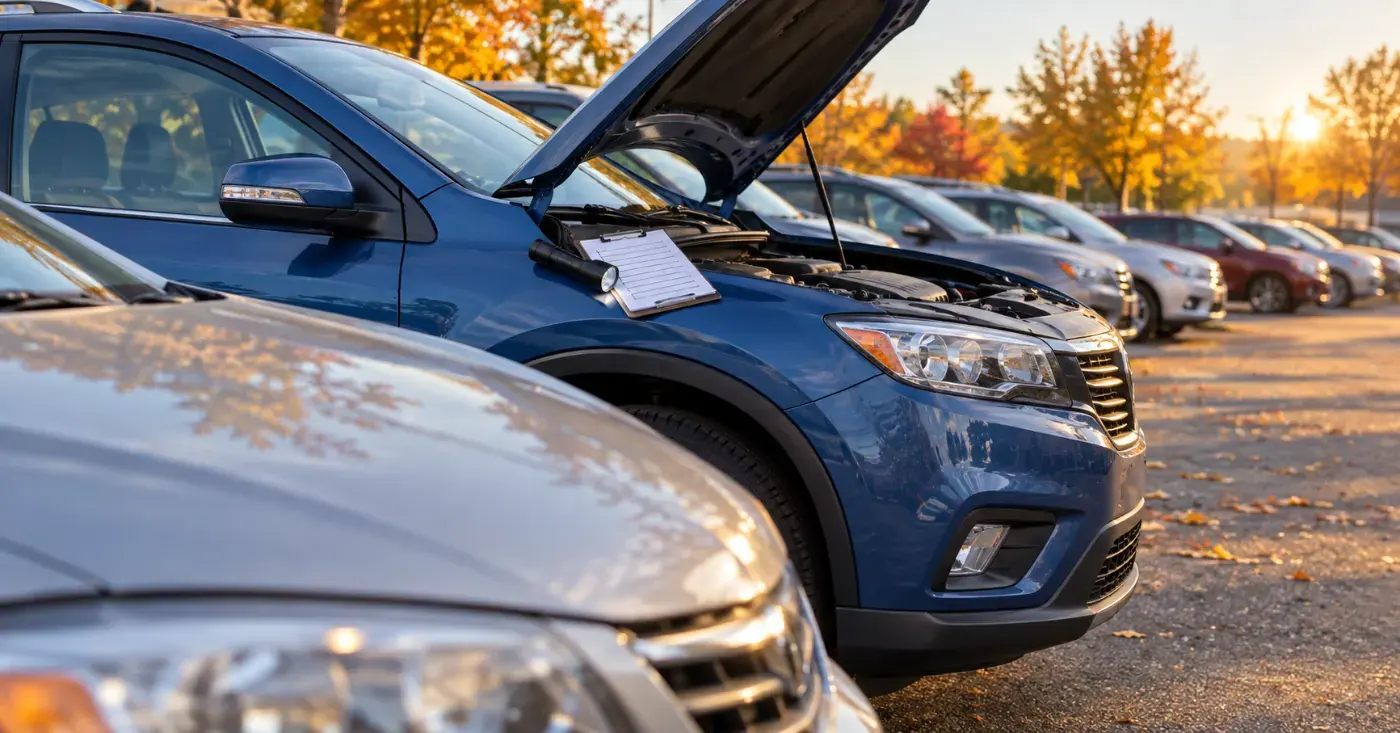
Looking at a 2000 Mustang for sale?
Print a one-page buyer's checklist: each recall campaign with a box to tick when the seller shows proof of repair, the top complaint areas to inspect, crash stars, MPG, and a link back to this page.
Where to next
2000 Ford Mustang FAQ
How many recalls does the 2000 Ford Mustang have?
NHTSA lists 3 recall campaigns: 00V355000 (visibility), 00V349000 (brake), 99V250000 (seat belt). Use NHTSA's VIN lookup to see whether a specific car was repaired.
What are the most common 2000 Ford Mustang problems?
Owners filed 395 complaints with NHTSA. Engine and engine cooling (60), Air bags (47), Power train (45) are mentioned most. These are owner reports, not verified findings.
What mpg does the 2000 Ford Mustang get?
EPA rates the 3.8 L 6-cyl · 5-speed manual version at 17 city, 26 highway and 21 combined mpg. Other configurations are listed in the fuel economy section.
How does the 2000 Mustang compare with other years?
Among the 1996–2005 Ford Mustang model years at least five years old, the 2004 drew the fewest complaints (130) and the 2005 the most (868). The 2000 drew 395. Counts are owner reports, not failure rates.
How this page was madeSources, processing, limits, review and changes
Data sources
- NHTSA recalls by vehicle
Retrieved Oct 6, 2026 - US DOT recall completion rates (data.transportation.gov)
Retrieved Oct 6, 2026 - NHTSA ODI owner complaints
Retrieved Oct 6, 2026 - NHTSA NCAP 5-Star Safety Ratings
Retrieved Oct 6, 2026 - EPA fuel economy data (licence confirmation pending)
Retrieved Oct 6, 2026 - EIA weekly retail gasoline prices
Weekly, all taxes included
Processing
- Complaints are counted per component. One complaint can list several, so component totals add up to more than the total.
- Fuel cost = miles per year ÷ EPA combined mpg × EIA weekly price for your region.
Limitations
- Complaint counts are owner reports, not verified findings or failure rates. There is no sales denominator.
- Recall campaigns are listed for the model year. Only NHTSA and the automaker know whether a specific car was repaired.
- Recent model years are still collecting reports.
Review
Data compiled automatically from the official files listed here.
Changelog
- 2026-10-06 Data refreshed from the official files.