Recalls (9)
NHTSA lists 9 recall campaigns for the 2017 Tesla Model S. Check whether yours was repaired with NHTSA's free VIN lookup ↗
Only NHTSA and your automaker know whether your specific car was repaired. PlainVIN shows every recall campaign listed for a model year, with the official text and how many cars have been fixed so far.
Check on NHTSA ↗Seat Belt Warning System Malfunction/FMVSS 208
- Summary
- Tesla, Inc. (Tesla) is recalling certain 2012-2024 Model S, 2015-2024 Model X, 2017-2023 Model 3, and 2020-2023 Model Y vehicles. In the event of an unbelted driver, the seat belt warning light and audible chime may not activate as intended. As such, these vehicles fail to comply with the requirements of Federal Motor Vehicle Safety Standard number 208, "Occupant Crash Protection."
- Consequence
- A seat belt warning system that fails to alert occupants of an unbelted seat belt can increase the risk of injury during a crash.
- Remedy
- Tesla will release an over-the-air (OTA) software update. Owner notification letters were mailed July 26, 2024. Owners may contact Tesla customer service at 1-877-798-3752. Tesla's number for this recall is SB-24-00-008.
Incorrect Font Size on Warning Lights/FMVSS 105
- Summary
- Tesla, Inc. (Tesla) is recalling certain 2012-2023 Model S, 2016-2024 Model X, 2017-2023 Model 3, 2019-2024 Model Y, and 2024 Cybertruck vehicles. An incorrect font size is displayed on the instrument panel for the Brake, Park, and Antilock Brake System (ABS) warning lights. As such, these vehicles fail to comply with the requirements of Federal Motor Vehicle Safety Standard number 105, "Hydraulic and Electric Brake Systems" and 135, "Light Vehicle Brake Systems."
- Consequence
- Warning lights with a smaller font size can make critical safety information on the instrument panel difficult to read, increasing the risk of a crash.
- Remedy
- Tesla began releasing an over-the-air (OTA) software update, free of charge. Owners may contact Tesla customer service at 1-877-798-3752. Tesla's number for this recall is SB-24-00-003.
Autopilot Controls Insufficient to Prevent Misuse
- Summary
- Tesla, Inc. (Tesla) is recalling 2012-2023 Model S, 2016-2023 Model X, 2017-2023 Model 3, and 2020-2023 Model Y vehicles equipped with all versions of Autosteer leading up to the version(s) that contains the recall remedy. In certain circumstances when Autosteer is engaged, the prominence and scope of the feature's controls may not be sufficient to prevent driver misuse of the SAE Level 2 advanced driver-assistance feature.
- Consequence
- In certain circumstances when Autosteer is engaged, and the driver does not maintain responsibility for vehicle operation and is unprepared to intervene as necessary or fails to recognize when Autosteer is canceled or not engaged, there may be an increased risk of a crash.
- Remedy
- Tesla will release an over-the-air (OTA) software update, free of charge. Owner notification letters were mailed February 10, 2024. Owners may contact Tesla customer service at 1-877-798-3752. Tesla's number for this recall is SB-23-00-008.
Full Self-Driving Software May Cause Crash
- Summary
- Tesla, Inc. (Tesla) is recalling certain 2016-2023 Model S, Model X, 2017-2023 Model 3, and 2020-2023 Model Y vehicles equipped with Full Self-Driving Beta (FSD Beta) software or pending installation. The FSD Beta system may allow the vehicle to act unsafe around intersections, such as traveling straight through an intersection while in a turn-only lane, entering a stop sign-controlled intersection without coming to a complete stop, or proceeding into an intersection during a steady yellow traffic signal without due caution. In addition, the system may respond insufficiently to changes in posted speed limits or not adequately account for the driver's adjustment of the vehicle's speed to exceed posted speed limits.
- Consequence
- FSD Beta software that allows a vehicle to exceed speed limits or travel through intersections in an unlawful or unpredictable manner increases the risk of a crash.
- Remedy
- Tesla will release an over-the-air (OTA) software update, free of charge. Owner notification letters were mailed April 15, 2023. Owners may contact Tesla customer service at 1-877-798-3752. Tesla's number for this recall is SB-23-00-001.
Loss of Power Steering Assist
- Summary
- Tesla, Inc. (Tesla) is recalling certain 2017-2021 Model S and Model X vehicles. The electronic power assist steering (EPAS) system may experience a loss of power steering assist when driving on rough roads or after hitting a pothole.
- Consequence
- A loss of power steering assist can require greater steering effort, especially at low speeds, increasing the risk of a crash.
- Remedy
- Tesla has released an over-the-air (OTA) software update to recalibrate the EPAS system, free of charge. Owner notification letters were mailed December 31, 2022. Owners may contact Tesla customer service at 1-877-798-3752. Tesla's number for this recall is SB-22-00-014.
Vehicle May Fail to Stop at Stop Sign
- Summary
- Tesla, Inc. (Tesla) is recalling certain 2016-2022 Model S and Model X, 2017-2022 Model 3, and 2020-2022 Model Y vehicles. The "rolling stop" functionality available as part of the Full Self-Driving (Beta) software may allow the vehicle to travel through an all-way stop intersection without first coming to a stop.
- Consequence
- Failing to stop at a stop sign can increase the risk of a crash.
- Remedy
- Tesla will perform an over-the-air (OTA) software update that disables the "rolling stop" functionality, free of charge. Owner notification letters were mailed March 28, 2022. Owners may contact Tesla customer service at 1-877-798-3752. Tesla's number for this recall is SB-22-00-001.
Front Trunk Hood May Open Unexpectedly/FMVSS 113
- Summary
- Tesla, Inc. (Tesla) is recalling certain 2014-2021 Model S vehicles. The front trunk latch assembly may be misaligned, preventing the secondary hood latch from engaging. As such, these vehicles fail to comply with the requirements of Federal Motor Vehicle Safety Standard number 113, "Hood Latch System."
- Consequence
- If the primary latch is inadvertently released and the secondary latch is not engaged, the hood could open unexpectedly, obstructing the driver's view and increasing the risk of a crash.
- Remedy
- Tesla Service will inspect and reposition the latch assembly as necessary, free of charge. Owner notification letters were mailed February 18, 2022. Owners may contact Tesla customer service at 1-877-798-3752. Tesla's number for this recall is SB-21-11-003.
Unexpected Activation of Automatic Emergency Brake
- Summary
- Tesla, Inc. (Tesla) is recalling certain 2017-2021 Model S, Model 3, Model X, and 2020-2021 Model Y vehicles operating software version 2021.36.5.2. A communication error may cause false forward-collision warning (FCW) or unexpected activation of the automatic emergency brake (AEB) system.
- Consequence
- Unexpected activation of the AEB system may cause the car to stop suddenly, increasing the risk of a crash.
- Remedy
- Tesla Service has released an over-the-air (OTA) software update, free of charge. The recall began October 25, 2021. Owners may contact Tesla customer service at 1-877-798-3752. Tesla's number for this recall is SB-21-00-004.
Center Display Can Lose Rearview Camera Image
- Summary
- Tesla, Inc. (Tesla) is recalling certain 2012-2018 Tesla Model S and 2016-2018 Model X vehicles with a center display equipped with a NVIDIA Tegra 3 processor and an 8GB eMMC NAND flash memory device. When the 8GB eMMC NAND flash memory device for the center display reaches lifetime wear, the eMMC controller will no longer be able to maintain the integrity of the filesystem, causing a failure in some of the center display functions.
- Consequence
- The eMMC controller wear-out condition can cause the loss of the rearview camera display, defrost/defog control settings, and exterior turn signal lighting, reducing visibility and increasing the risk of a crash.
- Remedy
- Owners should ensure their vehicles are operating firmware release 2020.48.48.12 or newer, which will alert owners if the eMMC is approaching lifetime wear. Tesla will notify owners, and will replace the VCM daughterboard with one containing an enhanced eMMC controller, free of charge. The recall began March 29, 2021. Owners may contact Tesla customer service at 1-877-798-3752. Tesla's number for this recall is SB-21-21-001.
PlainVIN shows public government records for education. It isn't a vehicle inspection or legal advice. Check your own VIN with NHTSA or your dealer.
Owner complaints (426)
426 complaints filed with NHTSA (owner reports, not verified findings). The electrical system is mentioned most often.
As reported by owners in their complaints. These are reports, not NHTSA findings.
Most-reported components
| Component | Complaints | % of 426 |
|---|---|---|
| Electrical system | 114 | 26.8% |
| Suspension | 107 | 25.1% |
| Unknown or other | 96 | 22.5% |
| Forward collision avoidance | 66 | 15.5% |
| Steering | 47 | 11% |
| Vehicle speed control | 35 | 8.2% |
| Exterior lighting | 28 | 6.6% |
| Service brakes | 25 | 5.9% |
| Lane departure | 23 | 5.4% |
| Back over prevention | 20 | 4.7% |
How 2017 compares with other Model S years
Best and worst Model S years →| Model year | Complaints | Recall campaigns |
|---|---|---|
| 2013 | 460 | 11 |
| 2014 | 365 | 9 |
| 2015 | 668 | 9 |
| 2016 | 647 | 10 |
| 2017 | 426 | 9 |
| 2018 | 169 | 11 |
| 2019 | 44 | 10 |
| 2020 | 80 | 11 |
| 2021 | 179 | 23 |
| 2022 | 138 | 20 |
Counts are owner reports, not failure rates. Higher sales years tend to draw more reports. Owners are still filing reports for recent model years, so these counts will grow. Source: NHTSA ODI, retrieved Oct 6, 2026.
Fuel economy: up to 104 mpg combined
- EPA annual fuel cost
- $700
- CO₂ tailpipe
- —
- EPA class
- Large Cars
What it costs you to run
Miles ÷ 104 mpg × $4.354 (EIA US average regular, week of Oct 5, 2026, all taxes included). Source: EPA · EIA.
EPA label estimates from lab tests; your mileage will vary.
Specs by configuration
| Engine · transmission | Drive | City / Hwy / Comb | EPA $/yr | CO₂ g/mi |
|---|---|---|---|---|
| Electric · Automatic | All-Wheel Drive | 101 / 107 / 104 | $700 | — |
| Electric · Automatic | All-Wheel Drive | 102 / 107 / 104 | $700 | — |
| Electric · Automatic | All-Wheel Drive | 102 / 105 / 103 | $750 | — |
| Electric · Automatic | All-Wheel Drive | 101 / 102 / 102 | $750 | — |
| Electric · Automatic | Rear-Wheel Drive | 98 / 101 / 99 | $750 | — |
| Electric · Automatic | All-Wheel Drive | 92 / 105 / 98 | $800 | — |
| Electric · Automatic | Rear-Wheel Drive | 97 / 100 / 98 | $750 | — |
| Electric · Automatic | All-Wheel Drive | 92 / 100 / 95 | $800 | — |
Source: EPA fuel economy data, retrieved Oct 6, 2026. Configurations are listed when EPA and NHTSA records match.
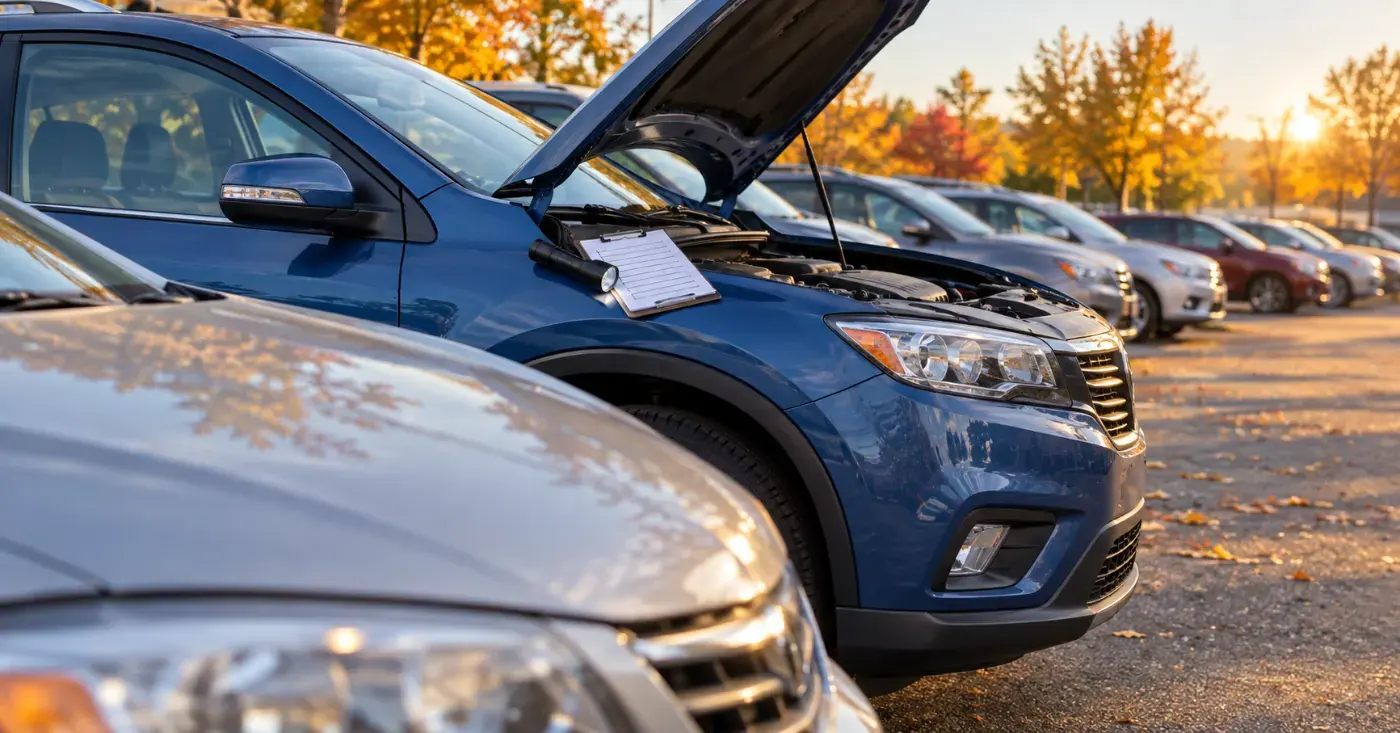
Looking at a 2017 Model S for sale?
Print a one-page buyer's checklist: each recall campaign with a box to tick when the seller shows proof of repair, the top complaint areas to inspect, crash stars, MPG, and a link back to this page.
Where to next
2017 Tesla Model S FAQ
How many recalls does the 2017 Tesla Model S have?
NHTSA lists 9 recall campaigns: 24V376000 (seat belt), 24V051000 (electrical), 23V838000 (electrical), 23V085000 (steering), 22V818000 (steering), 22V037000 (steering), 21V00B000 (latch), 21V846000 (rear camera), 21V035000 (lighting). Use NHTSA's VIN lookup to see whether a specific car was repaired.
What are the most common 2017 Tesla Model S problems?
Owners filed 426 complaints with NHTSA. Electrical system (114), Suspension (107), Unknown or other (96) are mentioned most. These are owner reports, not verified findings.
What mpg does the 2017 Tesla Model S get?
EPA rates the Electric · Automatic version at 101 city, 107 highway and 104 combined mpg. Other configurations are listed in the fuel economy section.
How does the 2017 Model S compare with other years?
Among the 2013–2021 Tesla Model S model years at least five years old, the 2019 drew the fewest complaints (44) and the 2015 the most (668). The 2017 drew 426. Counts are owner reports, not failure rates.
How this page was madeSources, processing, limits, review and changes
Data sources
- NHTSA recalls by vehicle
Retrieved Oct 6, 2026 - US DOT recall completion rates (data.transportation.gov)
Retrieved Oct 6, 2026 - NHTSA ODI owner complaints
Retrieved Oct 6, 2026 - NHTSA NCAP 5-Star Safety Ratings
Retrieved Oct 6, 2026 - EPA fuel economy data (licence confirmation pending)
Retrieved Oct 6, 2026 - EIA weekly retail gasoline prices
Weekly, all taxes included
Processing
- Complaints are counted per component. One complaint can list several, so component totals add up to more than the total.
- Fuel cost = miles per year ÷ EPA combined mpg × EIA weekly price for your region.
Limitations
- Complaint counts are owner reports, not verified findings or failure rates. There is no sales denominator.
- Recall campaigns are listed for the model year. Only NHTSA and the automaker know whether a specific car was repaired.
- Recent model years are still collecting reports.
Review
Data compiled automatically from the official files listed here.
Changelog
- 2026-10-06 Data refreshed from the official files.