SUV Rollover Risk: Which Vehicles Roll Over Most and Least
NHTSA’s rollover ratings for every tested vehicle: which SUVs, pickups and cars have the lowest and highest rollover risk, how the numbers have changed since 2011, and how to lower yours.
Key takeaways
- SUVs and pickups roll over more easily than cars because they sit higher and are narrower for their height. For 2024–2026 models, NHTSA’s median rollover risk is 16.4% for SUVs and 19.1% for pickups, against 9.7% for cars.
- The range inside each type is wide: SUVs rated by NHTSA run from 7.9% to 26.7%. The lowest-risk SUVs in recent years are all electric, because their heavy batteries sit low.
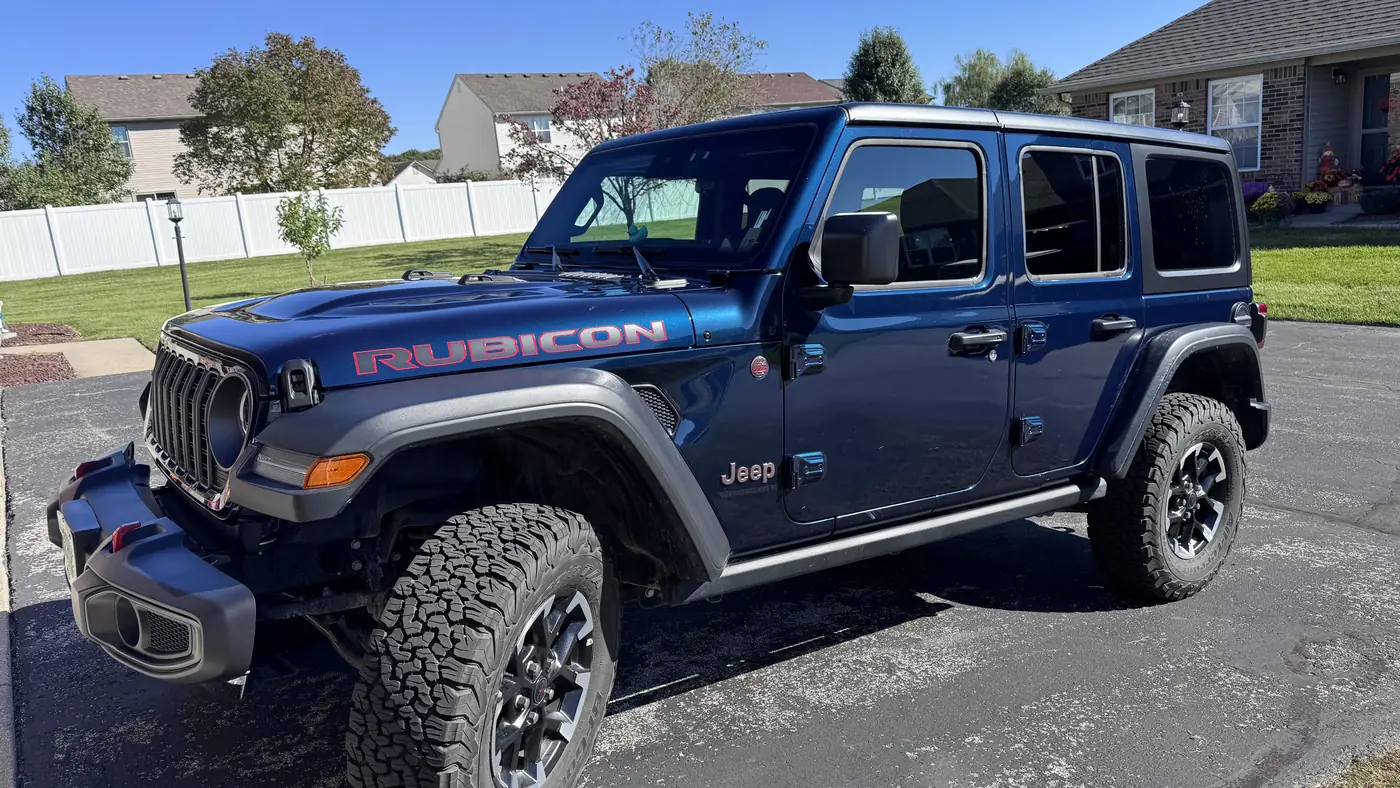
- Tall off-roaders such as the Jeep Wrangler, Ford Bronco and Toyota 4Runner, big body-on-frame SUVs, and pickups like the Ford Ranger and Jeep Gladiator have the highest rollover risk of current vehicles.
- Electronic stability control, required on all new light vehicles since September 2011, prevents many rollovers, but the rating still tells you how a vehicle’s shape affects the risk if a crash happens.
An SUV’s rollover risk is NHTSA’s estimate of the chance it rolls over if it’s in a single-vehicle crash. For recent SUVs that figure typically sits around 16.4%, roughly 1.7 times a typical car’s. This guide uses NHTSA’s ratings for every tested vehicle to show which SUVs, pickups and cars have the lowest and highest rollover risk, how the numbers have changed, and what you can do about it.
How NHTSA measures rollover risk
Rollover is the one part of NHTSA’s 5-Star Safety Ratings that isn’t a crash test. NHTSA explains it this way:
“The rollover resistance rating is based on an at-rest laboratory measurement known as the Static Stability Factor (SSF) that determines how ‘top-heavy’ a vehicle is, and the results of a driving maneuver that tests whether a vehicle is vulnerable to tipping up on the road in a severe maneuver.”National Highway Traffic Safety Administration, 5-Star Safety Ratings
The static stability factor compares half the vehicle’s track width (the distance between the left and right wheels) with the height of its center of gravity. A wider, lower vehicle has a higher factor and is harder to tip. NHTSA turns these measurements into two numbers you’ll see on a vehicle’s rating: a star rating from 1 to 5, and the rollover risk percentage. The percentage is more precise, so use it to compare models. Unlike frontal crash stars, rollover ratings can be compared across all vehicle types and weights.
Ratings apply to the tested version. Two-wheel drive and all-wheel drive versions of the same SUV can differ, so the tables below name the drive type of the version each figure comes from.
Rollover risk by vehicle type
For vehicles rated for the 2024–2026 model years, using NHTSA’s own body-style labels:
The averages hide a lot. An electric SUV can have a lower rollover risk than many sedans, and a compact off-road SUV can be riskier than most full-size pickups. That is why the model, not the category, is what matters. Our safety ratings guide explains the other crash tests and how the overall star score is built.
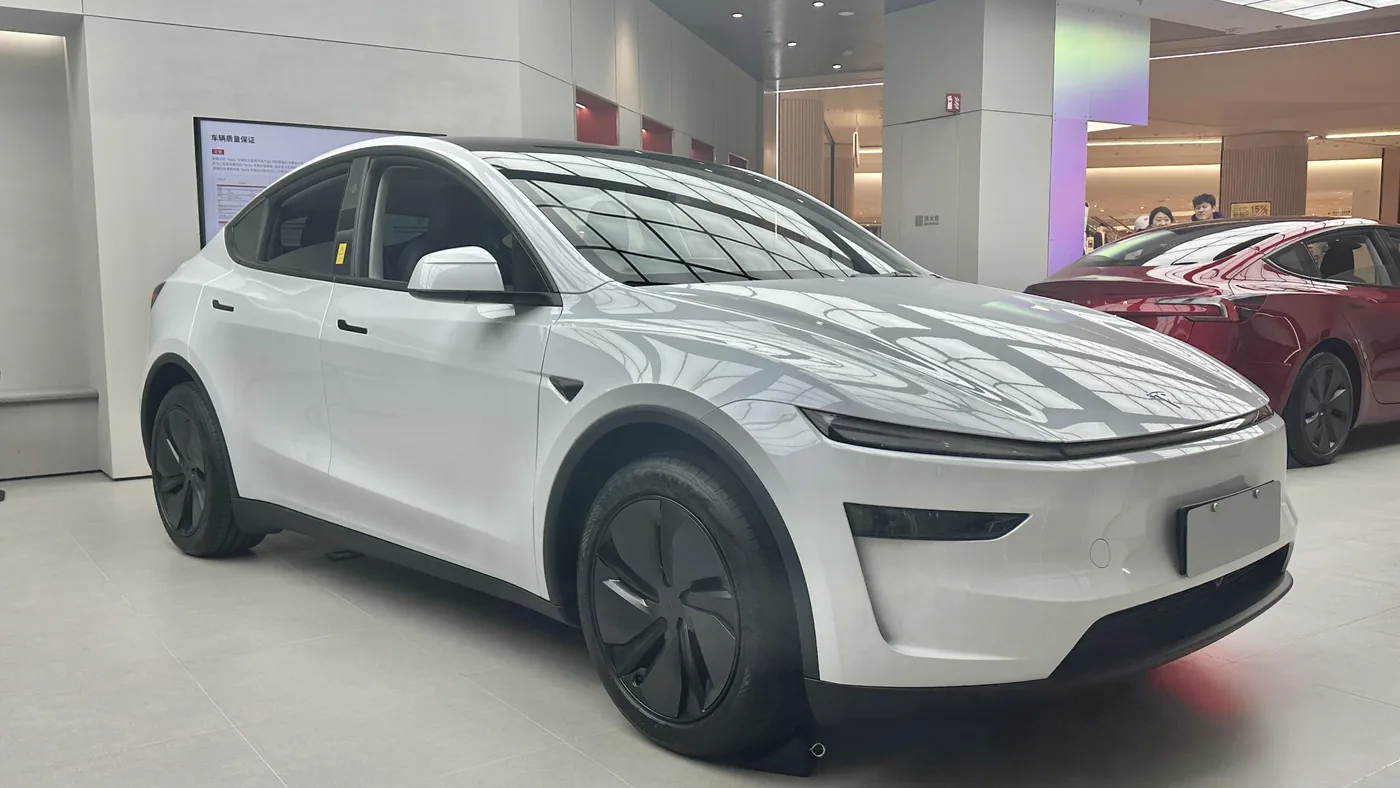
SUVs with the lowest rollover risk
These SUVs, from the 2024 model year onward, have the lowest rollover risk in NHTSA’s ratings, one row per model:
| Model | Model years rated | Tested drive | Rollover stars | Rollover risk |
|---|---|---|---|---|
| Tesla Model Y | 2025–2026 | AWD | 5 | 7.9% |
| Genesis GV60 | 2024–2026 | AWD | 5 | 8.2% |
| Kia EV6 | 2024–2025 | AWD | 5 | 8.2% |
| Hyundai Ioniq 5 | 2024–2026 | AWD | 5 | 8.3% |
| Acura ZDX | 2024 | AWD | 5 | 8.7% |
| Cadillac Lyriq | 2024–2026 | AWD | 5 | 8.9% |
| Chevrolet Blazer EV | 2024–2026 | RWD | 5 | 8.9% |
| Tesla Model X | 2026 | AWD | 5 | 9.3% |
| Chevrolet Equinox EV | 2024–2026 | FWD | 5 | 9.7% |
| Nissan Ariya | 2024–2025 | 4WD | 5 | 9.9% |
Rollover risk is NHTSA’s estimated chance of rolling over in a single-vehicle crash, for the best tested version of each model. Vehicle type follows NHTSA’s own body-style label. Source: NHTSA NCAP ratings file, retrieved Oct 6, 2026; computed by PlainVIN.
Every SUV near the top of this list is electric. A battery pack that can weigh more than a thousand pounds sits under the floor, lowering the center of gravity far below that of a gas SUV of the same height. Among cars, the lowest-risk models are also mostly low-slung electric sedans. Open any model’s report for its full ratings by year; for example, see the Tesla Model Y.
Vehicles with the highest rollover risk
At the other end, the highest rollover risk among recent SUVs and pickups:
| Model | Model years rated | Tested drive | Rollover stars | Rollover risk |
|---|---|---|---|---|
| Jeep Wrangler | 2024–2026 | 4WD | 3 | 26.7% |
| Ford Bronco | 2024–2026 | 4WD | 3 | 25.6% |
| Toyota 4Runner | 2024–2026 | 2WD | 3 | 24.6% |
| Ford Expedition | 2025–2026 | RWD | 3 | 23.7% |
| Infiniti QX80 | 2024 | RWD | 3 | 23.7% |
| Nissan Armada | 2024 | RWD | 3 | 23.7% |
| Jeep Wagoneer | 2024–2025 | RWD | 3 | 22.8% |
| Jeep Grand Wagoneer | 2026 | RWD | 3 | 22.8% |
Rollover risk is NHTSA’s estimated chance of rolling over in a single-vehicle crash, for the worst tested version of each model. Vehicle type follows NHTSA’s own body-style label. Source: NHTSA NCAP ratings file, retrieved Oct 6, 2026; computed by PlainVIN.
| Model | Model years rated | Tested drive | Rollover stars | Rollover risk |
|---|---|---|---|---|
| Ford Ranger | 2024–2026 | RWD | 3 | 27.9% |
| Jeep Gladiator | 2024–2026 | 4WD | 3 | 26.7% |
| Nissan Titan | 2024 | 4WD | 3 | 22.8% |
| Nissan Frontier | 2024–2026 | 4WD | 3 | 20.4% |
| Chevrolet Silverado 1500 | 2024–2026 | 4WD | 4 | 19.8% |
| GMC Sierra 1500 | 2024–2026 | 4WD | 4 | 19.8% |
Rollover risk is NHTSA’s estimated chance of rolling over in a single-vehicle crash, for the worst tested version of each model. Vehicle type follows NHTSA’s own body-style label. Source: NHTSA NCAP ratings file, retrieved Oct 6, 2026; computed by PlainVIN.
Two groups dominate: off-road-oriented SUVs built for ground clearance, such as the Wrangler, Bronco and 4Runner, and large body-on-frame SUVs such as the Expedition, Armada and Wagoneer, plus midsize pickups. That doesn’t make them unsafe to own. It means rollover is the crash type to take most seriously, and the driving habits below matter more. Short-wheelbase off-road SUVs must carry a federal rollover warning label on the driver’s sun visor (49 CFR 575.105), the yellow-and-white label many Jeep and other compact-SUV owners will recognize. See the Jeep Wrangler and Ford Ranger reports for ratings, recalls and complaints by year.
Is rollover risk getting better?
Slowly. The typical SUV’s rollover risk has edged down since the 2011 model year as designs got wider and lower, and the gap between SUVs and cars has narrowed a little:
| Model year | Cars | SUVs | Pickups |
|---|---|---|---|
| 2011 | 10.5% | 18.5% | 19.1% |
| 2012 | 10.7% | 18.3% | 19.1% |
| 2013 | 10.9% | 17.9% | 19.8% |
| 2014 | 10.7% | 17.5% | 19.8% |
| 2015 | 10.7% | 17.4% | 19.8% |
| 2016 | 10.7% | 17.4% | 19.8% |
| 2017 | 10.7% | 17.4% | 19.8% |
| 2018 | 10.5% | 16.9% | 19.8% |
| 2019 | 10.5% | 16.9% | 19.8% |
| 2020 | 10.1% | 16.5% | 19.8% |
| 2021 | 10.1% | 16.4% | 19.8% |
| 2022 | 10.0% | 16.7% | 19.8% |
| 2023 | 9.9% | 15.9% | 19.8% |
| 2024 | 9.9% | 16.4% | 19.1% |
| 2025 | 9.7% | 16.4% | 19.1% |
| 2026 | 9.7% | 16.9% | 19.1% |
Median of all rated versions each model year; vehicle type follows NHTSA’s body-style label. Source: NHTSA NCAP ratings file, retrieved Oct 6, 2026; computed by PlainVIN.
The bigger change happened on the road rather than in the rating. Electronic stability control (ESC) brakes individual wheels to stop a skid before it turns into a slide and a rollover. The federal standard that requires it states its purpose plainly: to reduce deaths and injuries in crashes where the driver loses control, “including those resulting in vehicle rollover.” ESC has been required on every new passenger car, SUV, pickup and van under 10,000 lb built on or after September 1, 2011 (49 CFR 571.126). Research on single-vehicle crashes found that rollover rates in newer SUVs fell with both wider ESC availability and higher stability factors (Kallan, 2008).
Why some vehicles roll over more
- Height and width. A higher center of gravity relative to track width is the main factor, which is exactly what the stability factor measures.
- Load. Roof racks, roof-top tents and heavy cargo up high raise the center of gravity beyond what NHTSA tested. Check your owner’s manual for roof load limits.
- Tires. Under-inflated or worn tires reduce grip and can lead to a skid; a blowout can start a loss of control.
- Trips. Many rollovers start when a vehicle slides sideways and its tires dig into soft soil, hit a curb or drop off a road edge, so leaving the road at speed is a major risk.
- Lift kits and big tires. Raising a vehicle changes its geometry; its rollover rating no longer applies.
How to reduce your rollover risk
- Wear your seat belt. In a rollover, the belt keeps you inside the vehicle, where you are far more likely to survive.
- Slow down for curves, ramps and rural roads. Overcorrecting after a wheel drops off the pavement is a classic rollover trigger: ease back on gently.
- Keep tires at the pressure on the door-jamb label and replace worn tires. NHTSA’s tire guidance includes the penny test for tread depth.
- Load heavy items low and inside, and respect roof-load limits.
- When buying, compare the rollover percentage, not just the stars, and check the model year. Our used car inspection checklist covers the rest.
Rollover risk is NHTSA’s estimate for a single-vehicle crash, not a prediction for any particular driver. Data: NHTSA NCAP ratings file, retrieved as shown under each table.
Frequently asked questions
Which SUV has the lowest rollover risk?
In NHTSA’s ratings for the 2024 model year onward, the Tesla Model Y has the lowest SUV rollover risk, followed by other electric SUVs such as the Genesis GV60, Kia EV6 and Hyundai Ioniq 5. Their batteries sit low and lower the center of gravity.
What vehicles have the highest rollover risk?
Among recent models, the Jeep Wrangler and Gladiator, Ford Bronco, Toyota 4Runner, Ford Ranger and large body-on-frame SUVs such as the Expedition and Armada have the highest NHTSA rollover risk, in the low-to-high 20s percent for their riskiest tested versions.
Are SUVs more likely to roll over than cars?
Yes. For 2024–2026 models, the median NHTSA rollover risk is about 16% for SUVs versus about 10% for cars, because SUVs are taller relative to their width. The range within each type is wide, so compare specific models.
What does the rollover rating mean?
NHTSA’s rollover rating estimates the chance a vehicle rolls over if it’s in a single-vehicle crash, based on its static stability factor and a driving maneuver test. It comes as 1 to 5 stars and a risk percentage; the percentage is more precise.
Does electronic stability control prevent rollovers?
It prevents many by stopping skids before they become slides. ESC has been required on all new light vehicles built since September 1, 2011, but the rollover rating still matters if a crash happens.
Do lift kits increase rollover risk?
Yes. Raising a vehicle or adding larger tires raises its center of gravity, and its NHTSA rollover rating no longer applies. Heavy roof loads have a similar effect.
How can I reduce my risk of a rollover?
Wear your seat belt, slow down on curves and ramps, recover gently if a wheel drops off the pavement, keep tires properly inflated, and load heavy items low.
About the PlainVIN Recalls & Safety Desk
This desk covers recall campaigns and completion rates, owner complaints filed with NHTSA, and NHTSA 5-Star Safety Ratings.
Every figure in this guide links to its primary source. See our editorial policy, how we use AI and corrections log.
How this page was madeSources, processing, limits, review and changes
Data sources
- 5-Star Safety Ratings (rollover resistance, SSF)
NHTSA, read Oct 7, 2026 - NHTSA NCAP ratings file (rollover risk by model)
Retrieved Oct 6, 2026 - 49 CFR 575.105 — Utility vehicle rollover label
eCFR, read Oct 8, 2026 - 49 CFR 571.126 — Electronic stability control
eCFR, read Oct 8, 2026 - SUV Rollover in Single Vehicle Crashes (Kallan et al.)
PMC/NIH, 2008 - Jeep Wrangler and Tesla Model Y photos (CC0)
Wikimedia Commons

Processing
- Complaints are counted per component. One complaint can list several, so component totals add up to more than the total.
- Fuel cost = miles per year ÷ EPA combined mpg × EIA weekly price for your region.
Limitations
- Complaint counts are owner reports, not verified findings or failure rates. There is no sales denominator.
- Recall campaigns are listed for the model year. Only NHTSA and the automaker know whether a specific car was repaired.
- Recent model years are still collecting reports.
Review
Written and checked against primary sources by the Recalls & Safety desk.
Changelog
- 2026-10-06 Data refreshed from the official files.
Keep reading