Recalls (5)
NHTSA lists 5 recall campaigns for the 2011 GMC Savana. Check whether yours was repaired with NHTSA's free VIN lookup ↗
Only NHTSA and your automaker know whether your specific car was repaired. PlainVIN shows every recall campaign listed for a model year, with the official text and how many cars have been fixed so far.
Check on NHTSA ↗Rear HVAC Electrical Circuit May Overheat
- Summary
- General Motors, LLC (GM) is recalling certain 2003-2023 Chevrolet Express Cutaway and GMC Savana Cutaway incomplete vehicles equipped with wiring for an optional rear heating, ventilation, and air-conditioning (HVAC) system. When the HVAC blower motor circuit is left unused with exposed connectors and wiring, the circuit can corrode and overheat.
- Consequence
- An overheated electrical circuit increases the risk of a fire.
- Remedy
- Dealers will properly seal the rear HVAC blower motor circuits at the left side B-pillar, free of charge. Owner notification letters were mailed May 2, 2023. Owners may contact Chevrolet customer service at 1-800-222-1020 or GMC customer service at 1-800-462-8782. GMC's number for this recall is N222386050.
Fire Extinguisher May Be Clogged or Inoperable
- Summary
- General Motors LLC (GM) is recalling certain 2009-2014 Chevrolet Silverado HD and GMC Sierra HD, 2009 GMC Topkick 5000, 6000, 7000 and 8000 Series and Isuzu F Series, and 2009-2018 Chevrolet Express, and GMC Savana vehicles, equipped with certain Plastic-Handle Fire Extinguishers or Push Button 'Pindicator' Fire Extinguishers. These extinguishers may become clogged, preventing the extinguisher from discharging as expected or requiring excessive force to activate the extinguisher. Additionally, in certain models, the nozzle may detach from the valve assembly with enough force that it could cause injury and also render the product inoperable. For a full list of the affected fire extinguisher models visit: https://static.nhtsa.gov/odi/rcl/2017/RMISC-17E062-5427.pdf
- Consequence
- In the event of a fire, if the fire extinguisher does not function properly, it can increase the risk of injury.
- Remedy
- GM will notify owners, instructing them to contact Kidde to get a replacement fire extinguisher, free of charge. The recall began June 11, 2018. Owners may contact Chevrolet customer service at 1-800-222-1020, GMC customer service at 1-800-462-8782, and Isuzu customer service at 1-866-441-9638. GM's number for this recall is 18146.
CNG Regulator Leaking Natural Gas
- Summary
- General Motors LLC (GM) is recalling certain model year 2011-2014 Chevrolet Express compressed natural gas (CNG)vehicles manufactured September 10, 2010, to April 28, 2014, and GMC Savana CNG vehicles manufactured May 23, 2011, to April 21, 2014. The affected vehicles may leak natural gas from the CNG high pressure regulator.
- Consequence
- A natural gas leak in the presence of an ignition source increases the risk of a fire or explosion.
- Remedy
- GM will notify owners, and dealers will replace the high pressure regulator, free of charge. The recall began February 13, 2013. Owners may contact Chevrolet customer service at 1-800-222-1020 or GMC customer service at 1-800-462-8782. GM's number for this recall is 14321.
Head Impact/FMVSS 201
- Summary
- General Motors LLC (GM) is recalling certain model year 2009-2014 Chevrolet Express and GMC Savana vans manufactured January 27, 2009, through March 7, 2014 with a gross vehicle weight rating of 10,000 pounds and less and equipped with front passenger air bags. In the affected vehicles, during a frontal impact below the air bag deployment threshold, if an unbelted front passenger's head hits the instrument panel above where the passenger air bag is located, the panel may not sufficiently absorb the impact. As such, these vehicles fail to meet the requirements of Federal Motor Vehicle Safety Standard number 201, "Occupant Protection in Interior Impact."
- Consequence
- In the event of a crash below the air bag deployment threshold, an unbelted front passenger seat occupant has an increased risk of injury.
- Remedy
- GM will notify owners, and dealers will modify the passenger instrument panel free of charge. Notices to the owners of the heavy duty vans were mailed on April 28, 2014. The recall began on May 19, 2014. Chevrolet owners may call 1-800-630-2438. GMC owners may call 1-866-996-9463. GM's number for this recall is 14082.
CNG Solenoid May Melt, Possibly Leading to a Fire
- Summary
- General Motors LLC (GM) and IMPCO Automotive Division of IMPCO Technologies, Inc. (IMPCO) are recalling certain model year 2011-2013 Chevrolet Express and GMC Savana Cargo vans that have a compressed natural gas (CNG) fuel system installed as original equipment by IMPCO. The fuel systems, manufactured February 14, 2011, through February 20, 2013, have a fuel shut-off solenoid connector to the CNG tank that may corrode and form a short.
- Consequence
- A short at the connector may cause overheating, resulting in an increased risk of fire.
- Remedy
- GM will notify owners and GM dealers/fleets will perform the remedy which will include replacing the solenoid assemblies and fuel pump fuses and adjusting the wiring routing. The recall began on August 5, 2013. GM's number for this recall is 13139. Impco's number for this recall is FA13GM001. Owner's may contact GM Fleet Action Center at 1-800-353-3867.
PlainVIN shows public government records for education. It isn't a vehicle inspection or legal advice. Check your own VIN with NHTSA or your dealer.
Owner complaints (1)
1 complaints filed with NHTSA (owner reports, not verified findings). The fuel/propulsion system is mentioned most often.
As reported by owners in their complaints. These are reports, not NHTSA findings.
Most-reported components
| Component | Complaints | % of 1 |
|---|---|---|
| Fuel/propulsion system | 1 | 100% |
How 2011 compares with other Savana years
Best and worst Savana years →| Model year | Complaints | Recall campaigns |
|---|---|---|
| 2007 | 6 | 3 |
| 2008 | 3 | 7 |
| 2009 | 2 | 8 |
| 2010 | 3 | 4 |
| 2011 | 1 | 5 |
| 2012 | 3 | 7 |
| 2013 | 2 | 9 |
| 2014 | 1 | 7 |
| 2015 | 2 | 4 |
| 2016 | 6 | 7 |
Counts are owner reports, not failure rates. Higher sales years tend to draw more reports. Owners are still filing reports for recent model years, so these counts will grow. Source: NHTSA ODI, retrieved Oct 6, 2026.
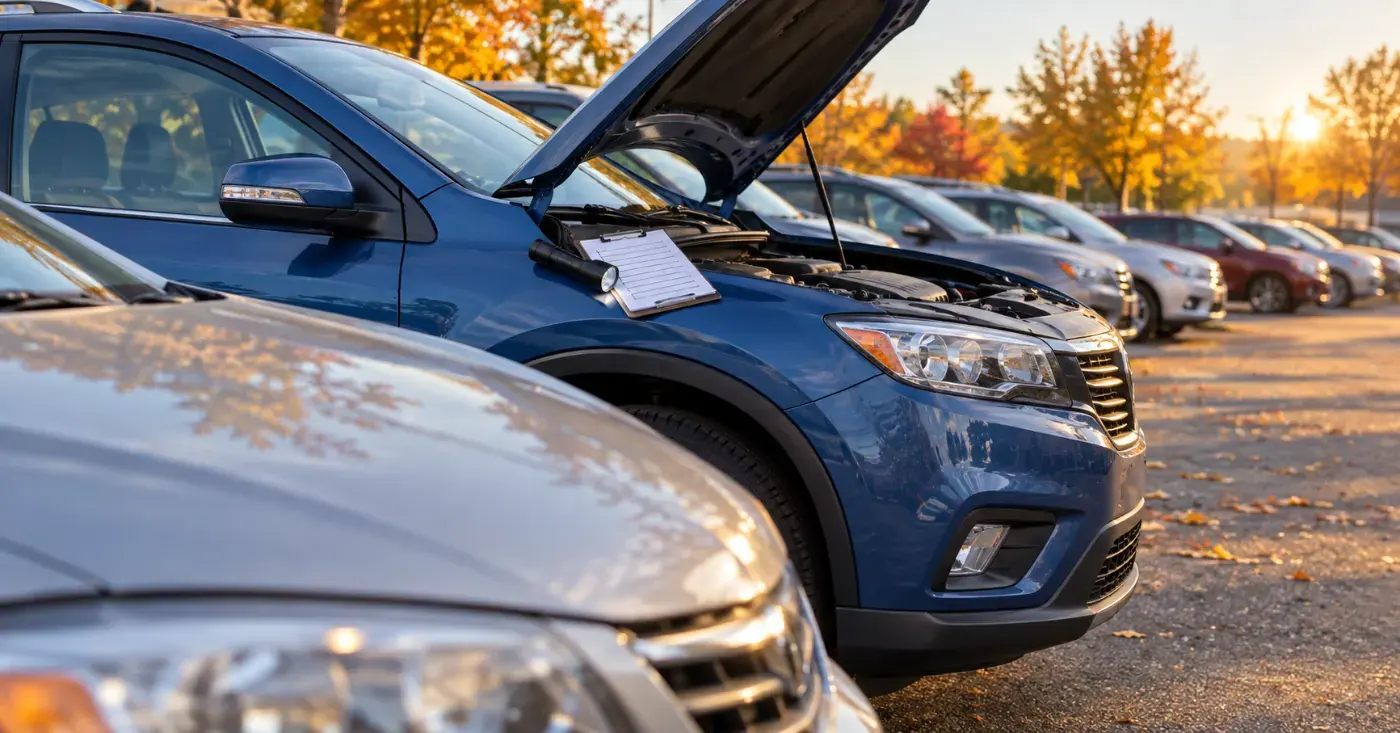
Looking at a 2011 Savana for sale?
Print a one-page buyer's checklist: each recall campaign with a box to tick when the seller shows proof of repair, the top complaint areas to inspect, crash stars, MPG, and a link back to this page.
Where to next
2011 GMC Savana FAQ
How many recalls does the 2011 GMC Savana have?
NHTSA lists 5 recall campaigns: 23V247000 (electrical), 18V267000 (equipment), 14V500000 (fuel system), 14V117000 (air bag), 13V225000 (fuel system). Use NHTSA's VIN lookup to see whether a specific car was repaired.
What are the most common 2011 GMC Savana problems?
Owners filed 1 complaints with NHTSA. Fuel/propulsion system (1) are mentioned most. These are owner reports, not verified findings.
How does the 2011 Savana compare with other years?
Among the 2007–2016 GMC Savana model years at least five years old, the 2011 drew the fewest complaints (1) and the 2016 the most (6). The 2011 drew 1. Counts are owner reports, not failure rates.
How this page was madeSources, processing, limits, review and changes
Data sources
- NHTSA recalls by vehicle
Retrieved Oct 6, 2026 - US DOT recall completion rates (data.transportation.gov)
Retrieved Oct 6, 2026 - NHTSA ODI owner complaints
Retrieved Oct 6, 2026 - NHTSA NCAP 5-Star Safety Ratings
Retrieved Oct 6, 2026 - EPA fuel economy data (licence confirmation pending)
Retrieved Oct 6, 2026 - EIA weekly retail gasoline prices
Weekly, all taxes included
Processing
- Complaints are counted per component. One complaint can list several, so component totals add up to more than the total.
- Fuel cost = miles per year ÷ EPA combined mpg × EIA weekly price for your region.
Limitations
- Complaint counts are owner reports, not verified findings or failure rates. There is no sales denominator.
- Recall campaigns are listed for the model year. Only NHTSA and the automaker know whether a specific car was repaired.
- Recent model years are still collecting reports.
Review
Data compiled automatically from the official files listed here.
Changelog
- 2026-10-06 Data refreshed from the official files.